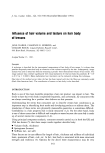
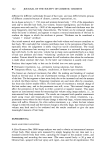
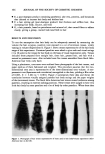
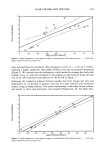
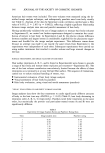
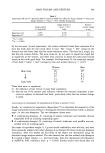
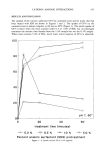
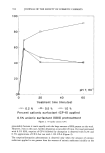
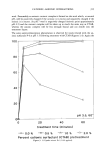
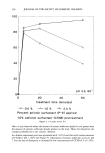
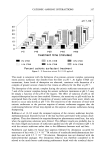
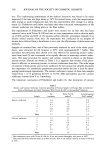
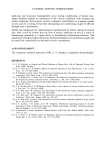
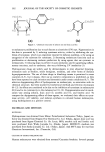
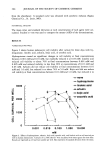
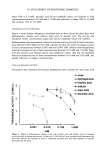
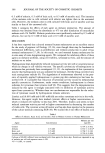
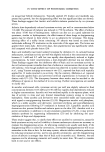
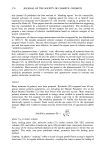
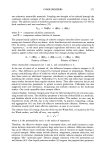
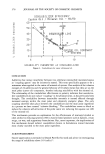
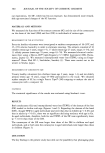
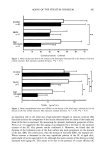
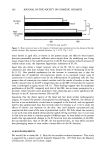
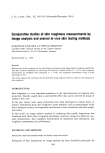
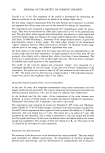
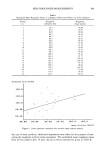
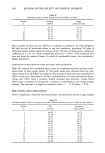
344 JOURNAL OF THE SOCIETY OF COSMETIC CHEMISTS ß E, a post-shampoo product containing panthenol, aloe vera, proteins, and botanicals that claimed to increase hair body and thicken hair ß F, a hair styling gel (post-shampoo product) that thickens and stiffens hair, thus increasing hair body, bounce, and hold ß G, a hair pomade, based on petrolatum and mineral oil, that caused fibers to adhere closely, giving a greasy, matted look (and feel) to hair RESULTS AND DISCUSSION To test the assumption that hair body can be adequately assessed by measuring the volume the hair occupies, panelists were exposed to a set of seventeen tresses, widely varying in volume (Experiment I). Figure 1 shows tresses representative of the hair body range of this experiment. Untrained panelists were asked to give rank and visual ratings (1 to 10 scale) to the tresses for hair body on the basis of visual examination only. Tresses included those prepared from straight hair, clean hair, greased hair, and hair with a natural or permanent wave. Also included were five tresses assembled from black Afro- American hair (very curly hair). Using a planimeter, tress areas were outlined from photographs of the hair tresses, and paper replicas of them fashioned and weighed. This procedure assumes that the two- dimensional tress area is representative of the three-dimensional tress volume. A non- parametric test (Spearman rank correlation) was applied to the data, yielding a Rho value of 0.865, Z = 3.461 (p 0.001). Figure 2 summarizes these data and shows the correlation between visually assigned panelist hair body ratings and the paper weights of the (seventeen) tresses. The black Afro-American hair tresses caused confusion among panelists, resulting in extreme ranking positions. These tresses were judged to have very little hair body by some panelists and a lot of body by other panelists. When these data Figure I. Photograph of hair tresses representative of those used in hair body/volume experiment (Afro- American hair on far left).

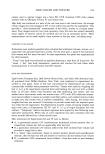
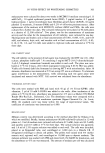
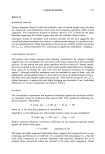
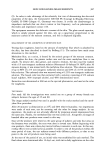
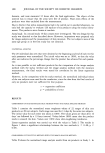
HAIR VOLUME AND TEXTURE 345 8 i i i i ! i • I i I i i i i i • 6 0 • 5 "' 4, ,a• , CI 3. O 2 1 O ß i i i I I ' I , i . i 0 .02 .04 .06 .08 .1 .1 2 .1 4 .1 6 Figure 2. Body assignment vs area (paper weight), including black Afro-American hair ..... 95 % Con- fidence bands for the true mean of ¾. were excluded from the correlation, Rho increased to 0.975, Z = 3.235 (p 0.001), implying a highly significant relationship between tress area and panelist assessment (Figure 3). We conclude that the technique is a valid method to estimate hair body with straight, wavy, or curly hair (see Figure 1) but perhaps not hair body for kinky hair like that of the Afro-American tress depicted on the far left of Figure 1. Following the correlation achieved between panelist hair body ratings and tress area (Experiment I), we decided to measure tress area in a more sensitive and convenient manner using an image analyzer. Ten tresses representing a wide range in hair volume, and similar to those used previously, were prepared (Experiment II). No black Afro- Figure fidenee 8 i i i I i i i I i i i i i i i •ll i •, d'•' 0 •, •, •.E •'• i .01 .02 .03 .04 .05 .06 .07 .08 .09 .1 AREA (PAPER WEIGHT) 3. Body assignment vs area (paper weight), excluding black Afro-American hair. ---- 95% Con- bands for the true mean of Y.
Purchased for the exclusive use of nofirst nolast (unknown)
From: SCC Media Library & Resource Center (library.scconline.org)