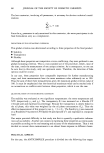
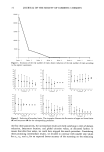
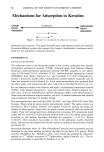
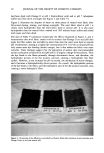
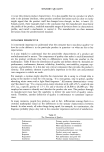
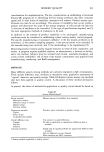
86 JOURNAL OF THE SOCIETY OF COSMETIC CHEMISTS Mechanisms for Adsorption to Keratins Charge Driven • Adsorption Continuum Hydrophobic • Driven Adsorption • Add Lipid • PH Figure 1. Schematic of a mechanism for adsorption to keratins. phobically driven process. This paper describes some experimental studies and literature for several different systems that support this charge to hydrophobic continuum mech- anism for the adsorption to keratin substrates. EXPERIMENTAL MATERIALS AND METHODS The surfactants used in the adsorption studies of the cationic surfactants were hexade- cyltrimethyl ammonium bromide (CTAB), technical grade from Eastman Organic Chemicals dodecyltrimethyl ammonium bromide (DTAB), prepared in our labora- tories (% Br found 26.01 calculated 25.95) ditallowdimethyl ammonium chloride (DTDMAC) from Sherex Chemical Co. and Culversoft S-75 (CS) (2-heptadecyl-1- methyl-1 [(2stearoyl amide) ethyl] imidazolinium methyl sulfate), originally sold by what was formerly Culver Chemical Co. Stock solutions/emulsions were prepared from the above quats, and sorption studies were conducted as described by Scott et al. (1). For the adsorption studies with cationics and lipids, cetyltrimethyl ammonium chloride (CTAC), from Henkel Chemical Co., and cetyl alcohol, from Aldrich Chemical Co., were used, as well as stearalkonium chloride (Ammonyx 4002), from Onyx Chemical. These were radiochemical sorption studies, and the C 14-1abeled surfactants and alcohols were synthesized internally by Andrew Charig. The amodimethicones used were Q2-8220, x2-8107, and Type II-X2-8107 from Dow Corning. These varied by amine content and molecular weight. The amine content was provided by Dow Corning however, the supplier would not provide the molecular weights of these species, except that the amine content decreased with the molecular weight. These were incorporated into a shampoo base containing 19% ammonium lauryl sulfate and 4% unilin 425 (linear primary alcohols with a 20 to 40 carbon chain length) according to the making procedure described for examples 1-4 of U.S. Patent 5,106,613. Hair treatment was similar to that in the adsorption studies described above, and the hair was analyzed for silicone content according to the procedure of Kohl and Gooch (9). Petrolatum (Protopet white 1S•-Witco/Sonneborn Chemical) was incorporated into the shampoos by the same making procedure described in the above U.S. patent. Wool swatches (Testfabrics Inc., Middlesex, N.J.) were treated and analyzed by radiotracer analysis for C•4-1abeled octacosane (C 28 hydrocarbon, Sigma Chemical Co.). The ex- perimental procedure is described by Robbins et al. (8).

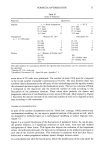
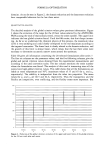
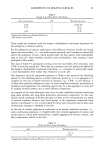
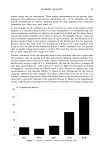
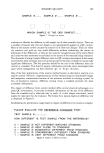
ADSORPTION TO KERATIN SURFACES 87 The wettability studies were conducted by first washing wool swatches with 1% sodium lauryl sulfate and then treating them with the appropriate dye or detergent solution for 60 seconds using an 8/1 solution to wool ratio (by weight). The fabric was then rinsed for 10 seconds under running tap water (80-ppm hardness), the excess water was squeezed out, and the fabric was allowed to dry overnight before testing. For the pH 1 experiments, solutions were brought to pH 1 with concentrated HC1 and to pH 7 with 0.4% phosphate buffer. After drying for 24 hours, single drops of tap water were placed on the swatches, and the time necessary for the drop to disappear into the fabric was observed with a stopwatch and recorded. Times for at least five drops (wetting time) was recorded per treatment. DISCUSSION To test this hypothesis of a mechanism for adsorption involving a continuum between a charge-driven process and a hydrophobically driven process, we explored existing literature and designed several experiments to test it. The variables we considered most relevant were: ß the structure of the adsorbing species ß changes in the charge nature of the keratin through pH variation STRUCTURE OF THE ADSORBING SPECIES: THE ADSORPTION OF CATIONIC SURFACTANTS TO HAIR The existing keratin literature shows that shorter-chain-length cationic surfactants have a lower affinity for both wool and human hair. For example, Steinhardt and Zaiser (2), decades ago demonstrated by measuring cation affinities to wool fiber that the affinities increase with increasing molecular weight or increasing hydrophobicity in the structure. More recently, Robbins et al. (1) demonstrated similar effects for hair by showing that cetyl trimethyl ammonium bromide (CTAB see structure 1 below) adsorbs to a greater extent onto human hair than dodecyl trimethyl ammonium bromide (DTAB see struc- ture 2 below) under a variety of test conditions. The data of Table I show this same effect for four different cationic surfactants at acid pH. H3+ CH 3- (CH2)15-N-CH 3 I CH 3 CTAB Br- (1) H + CH 3- (CH2)l• -N I - CH 3 CH 3 DTAB Br- (2)
Purchased for the exclusive use of nofirst nolast (unknown)
From: SCC Media Library & Resource Center (library.scconline.org)