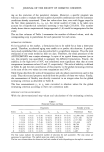
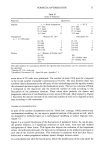
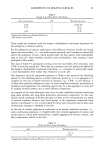
90 JOURNAL OF THE SOCIETY OF COSMETIC CHEMISTS Table III Adsorption of Amodimethicones to Hair Amount of silicone adsorbed to hair Amine equivalents One wash Five washes Silicone 1 2,000 0.04 0.06 a Silicone 2 4,200 0.06 0.16 a Silicone 3 30,000 0.09 a 0.45 a Indicates significant difference relative to other values in the same column at the alpha = 0.05 level. 2-in-1 shampoo system. In a sense, one might say that at very high molecular weights, the cationic functionality of amodimethicones is diminished and that their conditioning approximates that of dimethicone, derived primarily from hydrophobicity. ADSORPTION OF PURE HYDROCARBONS Structural variations of the adsorbing cationic species where increasing hydrophobic character is added to the cation have been described in this paper (see Tables I and III). In addition, the combination of fatty alcohols with long-chain quaternary ammonium compounds may be considered an additional structural variation wherein greater hydro- phobic character is added to the adsorbing species. In a sense, the extreme structural variation for providing the maximum hydrocarbon character is to completely remove the charged cationic grouping from a long-chain cationic species, leaving a pure hydrocarbon. This route was the next step we considered. The exact system chosen involved the adsorption of petrolatum in two different surfac- tant systems, 12.5% ammonium lauryl sulfate (ALS) + 2.5% sodium laureth-2 sulfate (SLES) vs 15% sodium deceth-2 sulfate (SDES). To follow the adsorption of the petrolatum onto hair, we spiked the formulas with radiolabeled octacosane, since the petrolatum selected contains about 2.8% octacosane. Therefore, the calculated adsorption of petrolatum is based on the change in radioac- tivity of the hair. Of the two surfactant systems selected, the 15% SDES is the more hydrophilic and the more polar. If the adsorption process in this system is primarily a hydrophobically driven process, then one would expect greater adsorption to the hair from the more polar medium. That is exactly what happens (see Table IV). This result is consistent with our proposal that we have forced this system to a hydro- Table IV Adsorption of Hydrocarbons by Wool Fabric From a Conditioning Shampoo System Containing 1.5% Petrolatum Surfactant Hydrocarbon adsorbed by wool (mg/gm) 12.5% ALS + 2.5% SLES 0.12 15% SDES 0.27 The values above are significantly different at the p -- 0.05 level.

ADSORPTION TO KERATIN SURFACES phobically driven adsorption process by structurally modifying the adsorbing species, and it lends support to the charge to hydrophobic continuum mechanism for the adsorption of conditioning agents to human hair. CHANGES IN THE ADSORPTION MECHANISM THROUGH PH VARIATION Four decades ago Vickerstaff (10) described the attachment of Carbolan dyes (anionic dyes see structure 5) to wool fiber at acid pH as occurring, "with the negatively charged hydrophilic sulfonic group on the positively charged fiber surface and the hydrophobic tail projecting outwards," thus creating a hydrophobic fiber. However, by changing the pH to neutral, he argued that the mechanism of dyeing changes and "will lead to adsorption with the hydrophobic part of the dye on the fiber surface and the hydrophilic sulfonic acid group projecting outwards," thus creating a hydrophilic fiber. o H II OH N- C- CH 3 C12H15-•N=N• SO3H SO3H (5) A Carbolan dye Therefore, more than forty years ago, Vickerstaff suggested that the dye orientation on the fiber surface for these anionic sulfonate dyes could be changed from hydrophilic to hydrophobic bonding by controlling the pH of the dyeing medium, a proposal consis- tent with the charge to hydrophilic continuum hypothesis. Vickerstaff's proof involved chopping the fibers into fine fragments and shaking these in a mixture of benzene and water. In this experiment, the fiber fragments that had been dyed in acid tended to collect in the benzene phase. However, those fiber fragments dyed at neutral pH tended to collect in the aqueous phase. N =N-• SO3Na (6) Orange II dye Since Vickerstaff's experiments involved finely chopped wool fiber fragments, questions about bonding to the internal fiber vs adsorption to the cuticle remained unanswered. Therefore, to test this hypothesis of the ability to change from a hydrophilic to a hydrophobic adsorption process with anionic dyes, we decided to examine a similar system, using Orange II dye (see structure 6) and to test the wettability of the keratin surface by observing the time required for droplets of water to wet out wool fabric that
Purchased for the exclusive use of nofirst nolast (unknown)
From: SCC Media Library & Resource Center (library.scconline.org)