98 JOURNAL OF THE SOCIETY OF COSMETIC CHEMISTS However, how closely monitored is the fragrance or odor quality of this moisturizer, or of the raw materials composing it? The motivation for purchasing a specific cosmetic or personal care product is influenced by the senses and what these senses tell the consumer about the product he or she is about to purchase. Color, fragrance, and texture are key elements stimulating the desire to buy (5). The sensory properties of skin care products are the first signals consumers receive regarding product performance, and they are often the most important reason for purchase. Once a consumer has purchased a product and made the decision to buy it again, the brand has a sensory identity in his or her eyes and any change in the future will not be well received unless it is understood and the reasons for the change are accepted. This is true even when the product attribute is not particularly important by itself, such as the fragrance in a moisturizer or bar of soap. The role of the fragrance in signaling product quality and consistency is strong in such cases. A slight odor change could cause a consumer to conclude that the product has been changed, even though he may not be aware that he used the fragrance signal to draw his conclusion. Quality control seeks to maintain product integrity despite numerous raw material and processing variables that may alter the sensory characteristics of a product and subsequently erode consumer loyalty (6). HYPOTHESIS This paper suggests that sensory quality is an intregral part of overall product quality and is critical to its success. It further suggests that there are simple and relatively foolproof sensory methods to monitor the sensory quality of product characteristics that are or may be important to consumers. It also states that it is now essential to control the key sensory parameters that identify the product for the consumer in a meaningful way. The consistent evaluation of the sensory quality of the raw materials, intermediates, and finished product is necessary because many of the raw materials themselves have odor and texture characteristics critical to the acceptance of the end product. For example, a raw material odor may be strong and unpleasant inherently and need to be "damage controlled" out of the end product. Or the product's perfume may be so superior that it offers the manufacturer a strong competitive advantage. In either case, it is imperative that the desired optimal overall odor impression be maintained in order to insure consumer confidence and satisfaction. DISCUSSION Sensory methods offer several advantages when incorporated into quality control pro- grams. Of the greatest significance is the fact that at times sensory evaluations are the only methods that directly measure perceived product characteristics. They often provide information that aids in consumer understanding. Further, they can measure interactive or "Gestalt" effects, yielding integrated responses rather than the discrete measurements provided by instrumentation. Sensory measurements are obtained using

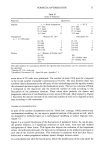
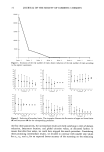
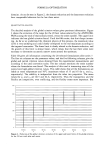
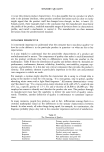
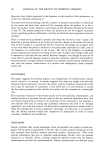
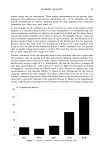
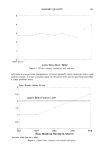
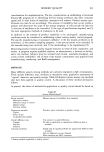
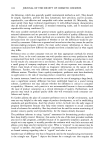
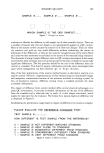
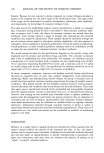
SENSORY QUALITY 99 human judges and not instruments. These sensory measurements do not provide infor- mation on the preferences, expectations, experiences, etc., of the consumer, but they provide measurement of sensory attributes using the same apparatus that consumers themselves use--their eyes, ears, noses, etc. A clear example of the usefulness of a sensory function as a part of the quality control program at a manufacturing facility is in crisis management. In troubleshooting con- sumer complaints, problems can often be uncovered and rectified quickly when there is sensory information available on the batch in question. For example, Figure ! shows the rise in consumer complaints for a moisturizer in a given month. The identification of the batches involved leads to the sensory evaluation of the batches and the raw materials. Results indicate that some of the raw materials are drifting out of control and have been doing so over the past several shipments. Figure 2 shows, retrospectively, the gradual shift in quality ratings from month to month. The solid line moving downward from left to right represents this change over time. Further, evaluation of the raw materials leads to the conclusion that one in particular, the sunscreen, may be causing both odor and texture problems. Sensory skinfeel eval- uations indicate that it may be too tacky. Figure 3 shows that tackiness scores of recent batches have reached a high of 2.5. Additionally, the last two lots have a stronger off odor than usual (Figure 4), with scores of 3.5 and 4.0. Based on the results of sensory investigation, manufacturing and R&D make a joint decision to tighten the odor specifications on this material (Figure 5), based on new information on the level of consumer tolerance for odor changes. The upper control limit will now be set at 2. O. Further, laboratory experiments show that modification of the formulation results in a reduction in perceived tackiness of the sunscreen (Figure 6). Based on the experimental results, a specification limiting the level of sunscreen tackiness to a sensory scaling value # Complaints/Month 30 25 • 207 i lO7 I i 51 OCT NOV DEC JAN Figure t. Consumer complaints, October 1992-February 1993. FEB
Purchased for the exclusive use of nofirst nolast (unknown)
From: SCC Media Library & Resource Center (library.scconline.org)