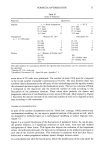
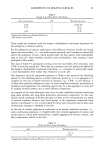
96 JOURNAL OF THE SOCIETY OF COSMETIC CHEMISTS Practically speaking, the issue is one of degree--what degree of difference will be acceptable to the consumer. Based on these considerations of total quality, the following points are critical to the installment of a useful and valid sensory quality function. BACKGROUND Companies in the United States have become very involved with quality control and quality assurance, and have developed elaborate methods to assay many properties of the products that they manufacture. The food and beverage industries have conducted quality surveillance on their products' sensory attributes--flavor, color, texture, etc.-- for many years because they realized early on that what they are selling is sensory satisfaction. Cosmetics and personal care companies have traditionally controlled things like water content, pH, viscosity, and active ingredient levels, and some have even paid cursory attention to color, fragrance, odor, skinfeel, etc. In fact, a skin care product's sensory characteristics are much more important and are worthy of much more attention at the QC level than they are usually given. Companies often set specifications for raw materials and finished products as "charac- teristic" or "typical" rather than establishing specific reference standards and ranges of variability. Table I displays the specifications for a raw material known to be odorous by nature. Note that an odor description is not provided for the analyst but that the notation of "characteristic" is found in the "Results" column for both odor and color. Specifications like these are crises waiting to happen at the most inopportune moment because they provide a huge margin of error in interpretation from one analyst to another. Further, they do not specify a range of acceptability within which to operate. In these situations it is very possible to produce a batch with several slightly "atypical" raw materials that when added together produce a large deviation from a "typical" finished product. In fact, such specifications offer no guidance at all, and in the hands of a new, inexperienced, or inadequately trained analyst, they are meaningless. The analyst has to know an apple from an orange before he or she can determine that the test sample is similar to either the apple or the orange. This demonstrates the need for sensory odor quality control even in products in which Table I Manufacturing Specification Sheet Sunscreen raw material: A clear, viscous liquid having a characteristic odor and color Specification/test Result Solubility/70% alcohol Conforms to NF Specific gravity 1.80-1.85 Optical rotation 1.5 ø Refractive index 1.26-1.29 Viscosity 5,000 cps Color Characteristic Odor Characteristic

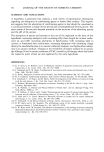
SENSORY QUALITY 97 it is not the primary product characteristic. It is also possible that in a product in which odor is the primary attribute, other product attribute deviations such as color or clarity might signal that the product itself has changed even though, in fact, it hasn't (3). Simply stated, these examples lead to the conclusion that the manufacturer must know the profile of the product, establish reasonable ranges of deviation from its characteristic profile, and install a mechanism to control it. The manufacturer can then measure deviations from the predetermined standard. CONSUMER PERSPECTIVE It is extremely important to understand what the consumer has to say about quality--or how he or she defines it in the particular product in question--or what are his or her expectations. It is also helpful to understand that the perceivable characteristics of a product are multidimensional in nature. The components of quality that make it multidimensional are the product attributes that help to differentiate items from one another in the marketplace. Table II lists the dimensions of quality and defines them (4). Included are performance, conformance, features, reliability, durability, serviceability, response, rep- utation, and aesthetics. It is this last very critical component that provides the product's identity. This aesthetic element is particularly important in the skin care and personal care categories in which we work. For example, a woman might describe the moisturizer she is using to a friend who is going to the market to look for it by saying, "It's a non-greasy, easy to spread, quickly absorbing white cream with a light floral fragrance." All sensory characteristics--every one! She doesn't say "It's a viscous oil-in-water emulsion with a pH of 6.5, a particle size of 0.1 Ix, a specific gravity of 1.5-1.59, and a viscosity of 20,000 to 28,000 cps." She employs her senses to identify and describe the product she uses. The product through its manufacturer must have the capability to deliver the same level of quality consis- tently. Therefore, another definition of quality is conformance to customers' expecta- tions. In many instances, people buy products, and in fact, differentiate among them in a crowded marketplace based on the differences in the sensory characteristics between brands. In other words, all other things being equal, for example, in a moisturizer, the fragrance probably plays a key role in the consumer experience and level of satisfaction. Table II The Dimensions of Quality Performance Features Conformance Reliability Durability Service Response Reputation Aesthetics Primary product characteristics Secondary product characteristics Meets specifications or standards Consistent performance Continued performance over time Product service and support Human interface characteristics Past performance and good will Product sensory characteristics
Purchased for the exclusive use of nofirst nolast (unknown)
From: SCC Media Library & Resource Center (library.scconline.org)