68 JOURNAL OF THE SOCIETY OF COSMETIC CHEMISTS The last constraint, involving all parameters, is necessary for obvious technical consid- erations: Z X = 100 i=l Since the x 3 parameter is only mentioned in this constraint, the water participates in the final formulation only as a complement. DEFINITION OF THE ESTIMATING CRITERION This global criterion was determined according to three properties of the final product: ß Stability ß Transparency ß Fluidity Although these properties are competitive or even conflicting, they were gathered in one global estimating criterion. This is a non-standard use of the procedure, which, most of the time, needs the measurement of one unique criterion. As a consequence, no one can be sure that in this study, only one optimum exists. Therefore, the detection of false optima could be crucial. In our case, these properties have comparable importance for further manufacturing steps, and their measurements have the same maximum value arbitrarily set to 100. Thus the sum of these three measurements gives the maximum global criterion value of 300. It must be emphasized that the theoretical maximum value can be reached only if no interactions or conflicts exist between these properties, which is not the case. QUANTIFICATION OF THE ESTIMATING CRITERION The stability was evaluated at two significant temperatures: the room temperature and 50øC (respectively y• and Y2). The transparency (L) was measured on a Minolta CT 210-Lab scale and expressed in percentage. Because the transparency is closely linked to the oil phase, this value was weighted by the oil phase concentration (Co). Thus the effective measurement of this property was: Y3 = L * C o. The fluidity (Y4) was measured on a Brookfield Viscometer LVT-Speed 60 rpm-Spindle nøl and expressed in centipoise (cps). One major practical difficulty in this study was first to quantify a qualitative informa- tion such as stability. Another one consists in expressing these properties as continuously as possible according to the real meaning and accuracy of the measurements. Thus it was decided to convert these measurements in an almost linear response in different classes. PRACTICAL ASPECTS For the user, the ANTICOMPLEX procedure is divided into the following four stages:

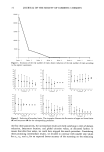
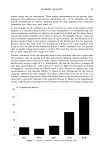
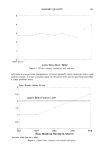
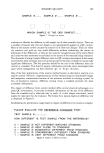
FORMULA OPTIMIZATION 69 1. RANDOM SAMPLING OF THE FIRST SERIES OF 20 TRIALS The exploration of the space parameters is devoted to the algorithm that determines the six parameter values for each of 20 points (point = trial) in agreement with all the constraints. 2. EXPERIMENTATION Each point corresponds to a trial to be carried out from which the estimating criterion is measured. Therefore, we obtained 20 estimating criterion values that were put into the program. 3. ANALYSIS AFTER THE FIRST SERIES OF TRIALS The algorithm calculates a weighted centroid (so-called barycenter), which mainly takes into account the best trials according to the estimating criterion. The concrete meaning of this barycenter is the best approximation of the optimum condition at this stage. A statistical analysis based on the dispersion of the 20 values for the six parameters leads to a reduction of the boundary limits. Every new domain of the six parameters is centered on the corresponding barycenter value. 4. CONVERGENCE TOWARD THE OPTIMUM For the second series and those following, the algorithm randomly defines 20 other trials in the six new parameter domains, and the iterative procedure is performed on the three previous stages with only a few modifications until a stopping criterion is reached. In this algorithm, it is very easy to give a graphical interpretation of the results by analyzing the fluctuations of the boundary limits and the corresponding barycenter values, as we can see in Figure 2. RESULTS AND DISCUSSION BOUNDARY LIMITS AND STEPS The lower and upper limits of the six parameters for the first series are respectively: 5 •x• • 50 0 •x 2 • 30 30 •x 3 • 80 0 • X 6 • 20 1 • X 5 • 20 0 • X 6 • 20 For the parameters x• to x 3, their steps for the four first series were set at 5.0. These values progressively decreased to 2.5 for the fifth series (in order to refine the optimum region) and finally to 0.5 for the two last series (in order to avoid artefacts due to constraint conditions involving subsets of parameters with different steps). This non- standard modification of step values can be argued either by theoretical consideration (higher accuracy) or by technical consideration (artefacts). The discretization of parameter values led to a finite number of possible values from which a theoretical number of combinations could be calculated at each series, depend-
Purchased for the exclusive use of nofirst nolast (unknown)
From: SCC Media Library & Resource Center (library.scconline.org)