194 JOURNAL OF THE SOCIETY OF COSMETIC CHEMISTS limits were not reported for either preservative. Sheppard and Wilson (5) described a fluorescence method for formaldehyde-releasing preservatives involving an analytical reaction of liberated formaldehyde with 2,4-pentanedione at 60øC for one hour to generate the fluorophore, and the yield of the reaction was calculated to be 50 percent. The performance of CZE as an analytical technique for the separation of charged species was demonstrated by Mikker and coworkers (6,7), who used 200 }xm i.d. glass and Teflon capillaries, and later by Jorgenson and Lukacs (8-10), who employed 75 }xm i.d. fused silica capillaries. The enormous power of CZE was further extended to neutral compounds with the introduction of MEKC by Terabe and coworkers (11,12). In this communication the use of these modes of capillary electrophoresis is described for the separation of preservatives found in commercial preparations. These techniques yielded excellent separation of complex samples and reproducible quantitative determinations. EXPERIMENTAL APPARATUS Experiments were performed on an Applied Biosystems (San Jose, CA) Model 270A-HT capillary electrophoresis unit with a variable wavelength detector operated at 190 nm and a rise time of 0.50 sec. A HP 3D capillary electrophoresis system (Hewlett-Packard, Palo Alto, CA) was also used for experiments requiring a photodiode array detector (PDA). The fused silica capillary of 50 }xm i.d., 355 }xm o.d. (Polymicro Technologies, Phoenix, AZ) measured 50 cm in length from injector to the detector window. Positive voltage of 30 kV was applied to the injection end of the capillary while the detector end was grounded. The capillary was thermostated at 30øC by forced air convection. Data acquisition was achieved with an IBM personal computer in which SpectraSystem soft- ware system PC1000, version 2. 127 at 30 Hz, was installed. Electropherograms were also displayed with a ChromJet integrator. SAMPLE INJECTION Hydrodynamic sample introduction into the capillary was performed via a controlled vacuum system (@ 5-in Hg) with an injection time of two seconds for most experiments unless otherwise specified. The volume of the sample injected was calculated by the following procedure. The detector was first zeroed with buffer in the capillary, and then the capillary was filled with sample. Buffer was injected into the capillary, and the elapsed time for the detector to reach zero response was noted. For a capillary length of 50 cm, the injection length per second was calculated to be 2.1 mm/sec, corresponding to an injection volume/sec of 0.42 nL/sec. For an injection time interval of two seconds, for example, the injected sample volume was 0.84 nL. CAPILLARY PREPARATION New capillaries were conditioned with 1 N NaOH for at least one hour and subsequently flushed with purified water for a minimum of 30 minutes. Prior to sample injection the capillary was flushed with 0.1 N NaOH for one minute, followed by a water rinse for

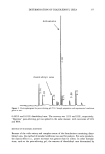
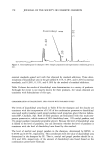
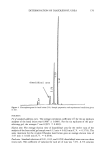
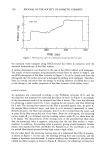
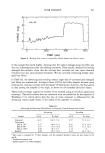
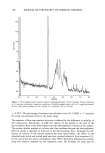
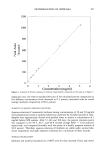
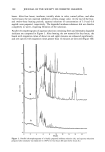
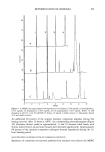
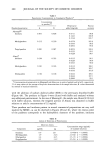
DETERMINATION OF IMIDUREA 195 two minutes, and then a rinse with buffer solution. A buffer equilibration time of at least four minutes produced the desired baseline stability manifested by no baseline perturbations occurring at migration times of the components of interest. Occasionally a capillary required reconditioning with 1 N NaOH, depending on the number of injections and complexity of the sample matrix. When a decrease in the electroosmotic flow was observed, a rinsing with 1 N NaOH regenerated the desired electroosmotic flow. REAGENTS The imidurea raw material samples were provided by Sutton Laboratories (Chatham, NJ). The parabens, ethyl-4-hydroxybenzoate (99 percent purity) and propyl-4- hydroxybenzoate (99 + percent purity) were obtained from Aldrich Chemical Company (St. Louis, MO). All other chemicals were purchased from Fisher Scientific (Pittsburgh, PA). Distilled water was purified through an IonPure System (IonPure Technologies Corporation, Lowell, MA), followed by a secondary purification with a Milli-Q UV Plus apparatus (Millipore Corp., Bedford, MA). Commercial products analyzed include Mas- sengill © disposable douche, bell-mai © powder scent (SmithKline Beecham, Pittsburgh, PA), and Almay © hypo-allergenic, anti-bacteria cleanser (Almay, Inc., New York, NY). These products were diluted with the appropriate electrophoresis buffer solution prior to injection. No additional sample pretreatment was performed. PROCEDURES Buffer solutions were filtered through 0.45-ptm Acrodisk filters (Gelman Science, Ann Arbor, MI) and stored at 4øC until needed. The pH of the potassium phosphate monobasic buffer solution was adjusted to the desired value with 1 N NaOH. Standard solutions of imidurea in water were prepared by appropriate dilution of a 10-mg/mL stock solution. In a separate study, thermally degradated samples of imidurea were dissolved in water and filtered through a 0.45-ptm filter before injection. RESULTS AND DISCUSSION A representative electropherogram of an aqueous solution (8.2 mg/mL) of the commer- cial imidurea product is presented in Figure 1. Imidurea is the major component eluting with the electroosmotic flow (t o) (methanol is used as the neutral marker), observed along with a number of minor components. The cluster of peaks with migration times greater than imidurea represent negatively charged species, the subject of a future investigation. The anionic species have not been identified, and thus no claim may be made regarding their antimicrobial effectiveness. The purity of the imidurea peak was confirmed by photodiode array detection. The PDA spectra of the impurity peaks, when compared with that of imidurea, exhibited no pronounced spectral deviations, strongly suggestive that these impurity peaks are associated with closely related imidurea- containing species. In Figure 2 a calibration plot is depicted for standard solutions of imidurea that exhibited linerarity over a concentration range from 0.1 to 5.0 mg/mL (r
Purchased for the exclusive use of nofirst nolast (unknown)
From: SCC Media Library & Resource Center (library.scconline.org)