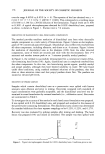
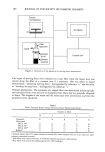
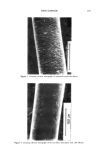
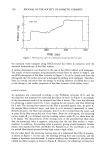
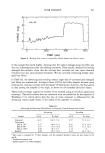
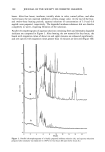
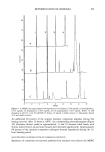
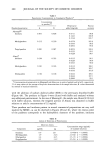
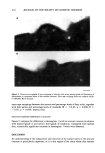
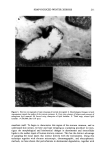
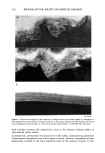
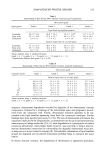
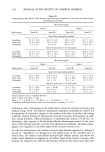
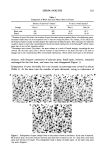
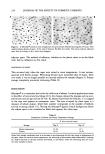
224 JOURNAL OF THE SOCIETY OF COSMETIC CHEMISTS Figure 2. In Sebutape © stored at room temperature the spots become bleached starting after 24 hours. This underestimates density of spots. A) At time of removal. B) After two weeks. The arrows indicate identical spots that are fading in fact, some may disappear. adjacent spots. The method of adhesion, whether on the plastic sheet or on the black card, had no influence on this result. WHITENING OF SPOTS This occurred only when the tapes were stored at room temperature. It was inconse- quential with freezer storage. Whitening became quite noticeable after 24 hours. After two weeks it was no longer possible to correctly analyze the samples (Figure 2). Freezer storage completely prevented whitening (Table II). DISCUSSION Sebutape © is a convenient device for the collection of sebum. Its main applications relate to the effect of topical and oral drugs (4, 5), the changes induced by diseases such as acne, and factors such as age and sex (6-10). As sebum issues from the follicles, it is trapped in the tape and appears as transparent spots. The area occupied by these spots is a measure of sebum output, while their number corresponds to the number of follicles actively secreting sebum (11). Placing the Sebutape © against a black background allows the sebum spots to be visualized as black dots against the white tape. Table II Comparison of Freezer and Room Temperature Storage % Area covered (mean) Storage Day 0 Day 14 Room temperature 12.42 13.5 Freezer 10.91 14.38 Under both storage conditions there is an increase in area beginning the first day owing to enlargement of the spots. After two weeks at room temperature, the whitening of spots makes them undetectable, resulting in a relative decrease in the area covered. Conversely, in the freezer, where the whitening does not occur, the value steadily increases.

SEBUM ANALYSIS 225 For reasons of practicability the samples are often stored before being subjected to analysis. However, marked changes can occur during storage. These have been hitherto overlooked they relate to enlargement and whitening of spots along with increased translucency of the tape. These changes have dramatic effects on the number of spots and the percentage area covered. These changes may give rise to major errors in quantification. Fortunately, they can be prevented by freezer storage and by fastening the Sebutape © to a plastic sheet. We found that placing the Sebutape © on a plastic sheet and storing it in the freezer yields the most reliable results. Room temperature storage is acceptable only if samples are evaluated within 24 hours, preferably immediately after removal. In any given study the samples should be analyzed at a constant time after removal. REFERENCES (1) A.M. Kligman, D. L. Miller, and K. J. McGinley, Sebutape©: A device for visualizing and mea- suring human sebaceous secretion, J. $oc. Cosmet. Chem., 37, 369-374 (1986). (2) G. E. Pierard and C. Pierard-Franchimont, "Sebum Analysis Using a Hydrophobic Lipid-Absorbent Tape (Sebutape©)," in Noninvasive Methods for the Quantification of Skin Functions, 2nd ed., P. J. Frosch and A.M. Kligman, Eds. (Springer-Verlag, 1993) pp. 83-91. (3) K. M. Nordstrom, H. G. Schmus, K. J. McGinley, andJ. J. Leyden, Measurement ofsebum output using a lipid absorbent tape, J. Invest. Dermatol., 87, 260-263 (1986). (4) J. L. Leveque, C. Pierard-Franchimont, J. de Rigal, D. Saint-Leger, and G. E. Pierard, Effect of topical corticosteroids on human sebum production assessed by two different methods, Arch. Dermatol. Res., 283, 372-376 (1991). (5) G. E. Pierard and C. Pierard-Franchimont, Effect of a topical erythromycin-zinc formulation on sebum delivery. Evaluation by combined photometric-multi-step samplings with Sebutape ©. Clin. Exper. Dermatol. 18, 410-413 (1993). (6) C. Pierard-Franchimont, G. E. Pierard, and A.M. Kligman, Rhythm of sebum excretion during the menstrual cycle, Dermatologica, 182, 211-213 (1991). (7) C. Pierard-Franchimont, G. E. Pierard, and A.M. Kligman, Seasonal modulation of sebum excre- tion, Dermatologica, 181, 21-22 (1990). (8) G. E. Pierard, C. Pierard-Franchimont, T. Le, and C. Lapiere, Patterns of follicular sebum excretion rate during lifetime, Arch. Dermatol. Res., 279, S104-S107 (1987). (9) G. E. Pierard, C. Pierard-Franchimont, and T. Le, Seborrhoea in acne-prone and acne-free patients, Dermatologica 175, 5-9 (1987). (10) C. Pierard-Franchimont, G. E. Pierard, D. Saint-Leger, J. L. Leveque, and A.M. Kligman, Com- parison of the kinetics of sebum secretion in young women with and without acne, Dermatologica, 183, 120-122 (1991). (11) G. E. Pierard, Rate and topography of follicular sebum excretion, Dermatologica, 175, 280-283 (1987).
Purchased for the exclusive use of nofirst nolast (unknown)
From: SCC Media Library & Resource Center (library.scconline.org)