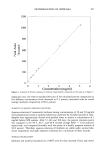
DETERMINATION OF DIAZOLIDINYL UREA 175 Ultrafiltration membrane cones (MW cutoff 25,000) were obtained from Amicon (Dan- vers, MA). Capillaries (Dionex) were of 50 •m i.d. and cut to 55 cm total length. The polyimide coating was burned off to create a detector window. The distance to the window was 50 cm. PROCEDURE The running buffer was vacuum filtered/degassed (0.45 •m) and further degassed by ultrasonication. The capillary was rinsed with 0.5 N NaOH by pressure injection for fifteen minutes, followed by pressure injection of water for fifteen minutes. The capillary was then rinsed with running buffer at least three times. The capillary was equilibrated at the run voltage for thirty minutes prior to any sample analysis. The operating buffer used was 20 mM borate (pH • 9.3). The following electrophoretic conditions were employed: Applied voltage: Temperature: Injection: Detection: 23 kV (i • 32 •tA) Ambient Gravity: 50 mm 30 s UV at 215 nm For HPLC determination of methyl and propyl parabens, a 70:30 water:isopropanol mobile phase acidified with phosphoric acid was used. The column was a Zorbax ODS (250 X 4.6 mm) C•g reversed-phase (Mac-Mod Analytical, Chadds Ford, PA), and detection was at 260 nm. Standard solutions of diazolidinyl urea were prepared from the solid. A 5% solution in water was prepared and diluted to 0.5% with water. The standards were then made by diluting the appropriate volume of the 0.5% stock solution with borate buffer. Samples were prepared by weighing the appropriate amount and diluting to 40 g with borate buffer (e.g., for a 5% sample solution, 2 g of sample was dissolved in 38 g of buffer). Mixing was achieved by vortexing for five minutes. The spiked sample solutions were prepared by pipetting the appropriate amount of 0.5% diazolidinyl urea into a glass vial and diluting to 10 mL with sample solution. Three spikes were prepared. The remainder of the sample solution was used as the unspiked sample. The vials were then shaken mechanically for one hour. After shaking, the samples were filtered through a 0.45-•m and a 0.20-•m disposable syringe filter. It was necessary to ultracentrifuge (cutoff 25,000 MW) shampoo samples to obtain an acceptable baseline. The unspiked and spiked sample solutions were in- jected in triplicate, and the amount of diazolidinyl urea was determined from the x-intercept of the fitted, standard additions curve (corrected for dilution). RESULTS AND DISCUSSION LINEARITY OF RESPONSE TO DIAZOLIDINYL UREA A calibration curve of peak area versus diazolidinyl urea content was linear (r 2 • 0.9900)

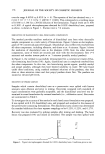
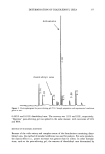
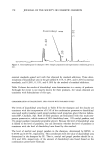
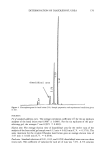
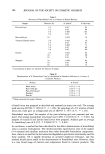
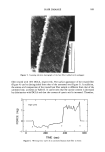
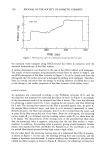
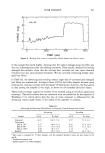
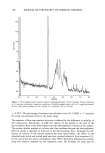
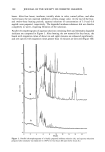
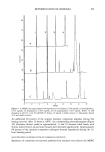
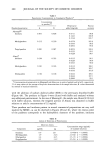
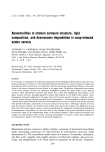
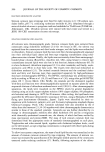
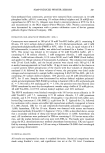
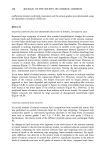
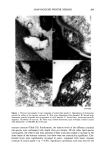
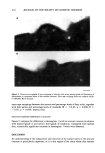
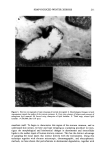
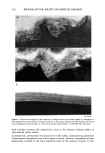
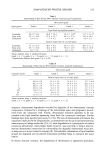
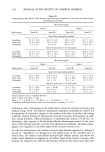
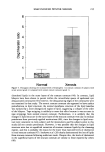
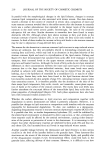
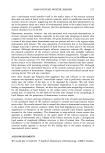
176 JOURNAL OF THE SOCIETY OF COSMETIC CHEMISTS over the range 0.005% to 0.05% (n = 4). The equation of the line obtained was y = (1.64 X 10⁷ --+ 7.5 X 10⁵)x + (60700 - 11600). This corresponds to a working range of 0.10% to 1.0% for a 20-fold dilution of the formulation. Typical levels are 0.10% to 0.30%. A typical electropherogram obtained for 0.02% diazolidinyl urea, prepared as above, is shown in Figure 1. Elution time is =4 minutes. RESOLUTION OF DIAZOLIDINYL UREA FROM SAMPLE COMPONENTS The method provides excellent resolution of diazolidinyl urea from other detectable sample components in a wide variety of formulations. Figure 2 shows an electrophero- gram of 5 % commercial pain-relieving gel. Diazolidinyl urea is effectively resolved from all other components, including allantoin, and elutes at ca. 4 minutes. Figure 3 shows the resolution of diazolidinyl urea in the shampoo (10%) from the other detected components, some of which are neutrals and elute with the electroosmotic flow (=3 minutes) and another intense peak at ca. 5 minutes (possibly methyl paraben). In Figure 4, the method is successfully demonstrated for a commercial vitamin E/lan- olin-containing hand lotion (5%). Again, diazolidinyl urea is completely resolved from the other components. In this case, two later-eluting species appear, possibly methyl and propyl paraben, although they have limited solubility in water. We have found under these conditions, using standard methanol solutions of the parabens, that they elute at these retention times and that propyl paraben elutes first. The parabens are ionized at elevated pH levels. RECOVERY OF SPIKED SAMPLES Samples which contain diazolidinyl urea as a preservative were spiked with known amounts upon dilution and prior to mixing. Recoveries compared with standards of equal concentration were generally acceptable, and the diazolidinyl urea level was de- termined in some formulations by external standards (i. e., calibration curve). Recoveries are summarized in Table I. To investigate the accuracy of the method a mock hand cream formulation was prepared. It was spiked with 0.2% diazolidinyl urea, and prepared and analyzed in the manner of the preservative-containing formulations. The diazolidinyl urea content was determined (by standard additions) for three separate samplings to be 0.22%, 0.22%, and 0.27%. Recovery was also evaluated by spiking samples after mixing and shaking. The hand lotion was prepared (5%) and mixed as described. The sample was then spiked with Figure 1. Typical electropherogram obtained for 0.02% diazolidinyl urea. Conditions given in text,
Purchased for the exclusive use of nofirst nolast (unknown)
From: SCC Media Library & Resource Center (library.scconline.org)