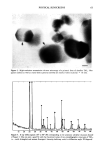
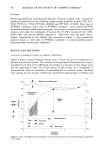
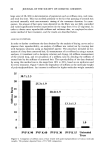
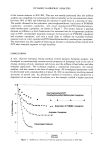
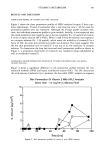
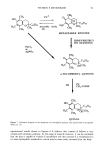
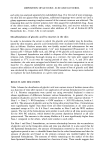
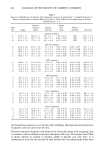
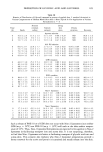
112 JOURNAL OF THE SOCIETY OF COSMETIC CHEMISTS After an interval of one week, to allow complete removal of sunscreen from the skin, adequacy of sunscreen application technique was assessed in the same subjects. In each person the surface area of the forearm from wrist to elbow was calculated using mea- surements of length and midpoint circumference. A quantity of sunscreen sufficient to produce an average thickness of 1 •I/cm 2 over one forearm was placed in the contra- lateral palm, and subjects were asked to apply the sunscreen "as if you were on the beach." The same quantity of sunscreen was then placed in the other palm, and the subjects were instructed to apply the cream "as evenly as possible" to the remaining forearm. This quantity of sunscreen was chosen since we wanted to study its distribution when applied at a surface density similar to that seen under natural conditions. Fifteen minutes after each application, fluorescence intensity was measured at 16 sites on each arm, with four sites along each of the dorsal, ventral, medial, and lateral surfaces. The mean of four readings was taken at each site. These results were converted to an equivalent thickness of sunscreen using the previously determined dose-response rela- tionship. STATISTICAL ANALYSIS Difference in median thickness was assessed by the Mann-Whitney U test. The null hypothesis of identical distributions of sunscreen thickness between crude and careful application was tested by the Kolmogorov-Smirnov test. RESULTS DOSE-RESPONSE The average (-+SD) fluorescence intensity measured in the five subjects at each appli- cation thickness is shown in Figure 2. The solid line through the experimental points is a function of the form: thickness = a(I - Io) b where I is the intensity of fluorescence. I o is the fluorescence signal obtained when no sunscreen is applied and is due to the auto fluorescence of skin. The coefficients a and b were obtained by regression analysis. Skin autofluorescence (1.44 -+ 0.43 arbitrary units) was low relative to sunscreen fluorescence. A strong correlation was seen between the logarithm of sunscreen surface density and the intensity of fluorescence (r = 0.99). APPLICATION TECHNIQUE The fluorescence intensity measured at each site was converted to an equivalent thickness (in •l/cm 2) using the dose-response relationship. Table I summarizes the distributions of thickness measured on the five subjects, while Figure 3 represents the pooled data. No significant difference was found between the median thicknesses of the pooled data following crude application (0.68 }xl/cm 2) and careful application (0.76 }xl/cm2). How- ever, there was a statistically significant difference in the distribution of surface densities between the two methods of application (p 0.007), with careful application showing much less variability in thickness, as expected. Moreover, following crude, but not

SUNCREEN APPLICATION TECHNIQUE 113 2O 15 10 r = 0.99 I I I I , , , [ [ I I ' I [ I I I [ 0.1 1 10 Sunscreen density (pl/cm 2) Figure 2. Dose-response relationship between surface density of Neutrogena SPF 15 © on the skin (}xl/cm 2) and intensity of fluorescence (arbitrary units) obtained from five subjects. Table I Summary Statistics on Thickness (}xl/cm 2) of Neutrogena SPF 15 © With Careful and Crude Application Subject I Subject 2 Subject 3 Subject 4 Subject 5 Careful Crude Careful Crude Careful Crude Careful Crude Careful Crude Median 0.63 0.97 0.57 0.56 1.19 0.16 0.86 0.64 0.92 0.71 Inter-quartile range 0.58 1.52 0.19 1.19 0.98 0.93 0.41 1.13 0.46 0.89 Full range 1.19 4.65 0.58 3.00 1.53 4.60 1.16 3.22 1.90 3.46 careful, application, most subjects were shown to have some sites where no sunscreen had been applied. DISCUSSION We have shown that the surface density of a sunscreen can be determined by quantifi- cation of product fluorescence on the skin. The method is simple, rapid, and com- pletely noninvasive, and could have a wide range of applications. The Neutrogena SPF 15 © cream was chosen because of its strong autofluorescence, but other products with weaker or no intrinsic fluorescence could also be tested following addition of a fluores- cent substance. Uniformity of sunscreen surface density on the skin was seen to be heavily influenced by application technique. Sayre et al. (16) reported that rubbing a sunscreen into the skin reduced the SPF, but they did not determine the product thickness. Whereas previous
Purchased for the exclusive use of nofirst nolast (unknown)
From: SCC Media Library & Resource Center (library.scconline.org)