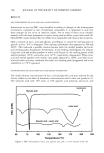
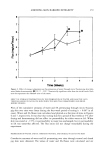
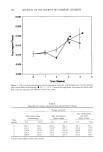
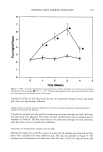
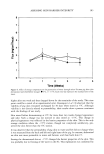
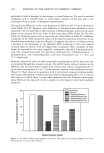
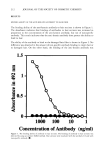
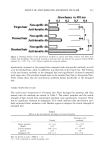
EFFECT OF ANTI-KERATIN ANTIBODY ON HAIR 213 Virgin hair Permed hair Brushed hair Non-spcific Ab. Anti-keratin Ab. Non-spcific Ab. Anti-keratin Ab. Non-spcific Ab. Anti-keratin Ab. 0 0.1 ! Absorbance in 492 nm 0.2 0.3 0.4 ! ! ! ! I **_]_ 1 I ' ** I Figure 2. Binding abilities of the anti-keratin antibody to various hair fibers. Various hair fibers were treated with antibodies. The antibody binding to each hair fiber was detected by using an indirect ELISA method. *p 0.05, **p 0.01, Dunerr method for statistical analysis. significantly increased in the permed hair compared with non-specific antibody, as well as in the brushed hair, while no difference was observed on the virgin hair. The binding of the anti-keratin antibody to the damaged hair was significantly increased compared with virgin hair. The antibody bound more to the brushed hair than to the permed hair. These results show that the anti-keratin antibody bound specifically to the damaged hair. TENSILE PROPERTIES OF HAIR The stress-strain characteristics of human hair fibers damaged by perming and then treated with the antibody are shown in Table I. The elastic modulus and the tensile strength of hair treated with anti-keratin antibody were significantly increased. There was no significant variation in elongation. This result indicates that anti-keratin anti- body increased elastic modulus in the Hooken region to improve the tensile strength of damaged hair. Table I Effects of the Anti-Keratin Antibody on Tensile Properties Control Treatment with antibody Elastic modulus (N/M 2) Tensile strength (g/cm 2) Elongation (%) 4.3 -+ 0.3 x10⁹ 1.48 _+ 0.11 x10⁶ 52.0 _+ 1.2 5.3 -+ 0.5* x109 1.55 -+ 0.03* x106 52.4 _+ 0.8 Data are shown as mean _+ SEM (n = 21). * p 0.05, compared to control by paired t-test.

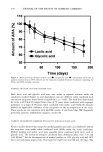
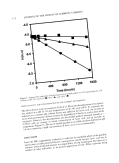
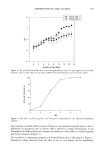
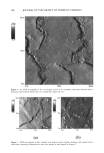
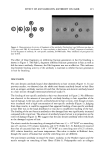
214 JOURNAL OF THE SOCIETY OF COSMETIC CHEMISTS FRACTURE GENERATION IN HAIR BY BRUSHING Fracture generation in hair treated with the antibody is shown in Figure 3. The fre- quency of fracturing of the hair treated with the antibody, but not non-specific antibody, was less then that of the control hair. This result indicates that the antibody also inhibited fracture generation in damaged hair by brushing. The effect of bivalent binding sites of the antibody on fracture generation was examined. F(ab') 2 and Fab fragments of the antibody were prepared using enzyme digestion of the intact antibody. Binding activity of the antibody fragments to hair keratin was dem- onstrated using the Ouchterlony technique (Figure 4). The F(ab')2 fragment formed the precipitin line with hair keratin the same as with the intact antibody, but not the non-specific antibody. The Fab fragment inhibited the portion of the precipitin line between human keratin and intact antibody in the area of diffusion of the Fab fragment. Those results show that their fragments performed well in restricting the binding activity to hair keratin. 40.1 20 0 200 400 Number of brushing (strokes) Figure 3. Effect of the antibody on inhibiting fracture generation in permed hair. The hair lock was treated with the antibody (¸), non-specific antibody (O), and solution buffer as a control ([•).
Purchased for the exclusive use of nofirst nolast (unknown)
From: SCC Media Library & Resource Center (library.scconline.org)