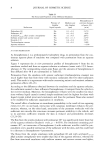
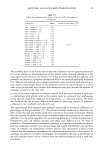
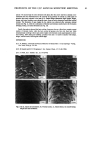
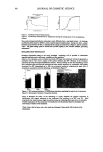
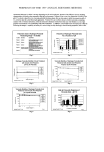
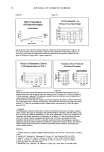
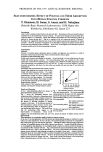
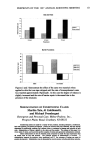
PREPRINTS OF THE 1997 ANNUAL SCIENTIFIC MEETING 47 NEWLY DEVELOPED EMULSIFICATION TECHNOLOGY FOR USE IN HIGHLY EFFICIENT COSMETIC AND SUNSCREEN FORMULATIONS RHEOLOGICAL, MICROSCOPIC AND SUN PROTECTION EFFICIENCY CHARACTERIZATION Liliana S. George, Ph.D., Stepan Company, 22 W. Frontage Rd., Northfield, IL 60093 INTRODUCTION: The aim of the present work was to develop a highly efficient emulsification technology. The technology describes several emulsifying systems for Oil in Water emulsions. The systems are comprised of a non-conventional theology modifier/emulsifier, in combination with a low HLB emulsifier and/or a polymer. The theology modifier/emulsifier also works as a suspending agent by itself The technology is useful in skin care products and sun care products, including creams and lotions for sensitive skin and water resistant SPF sunscreens. CONCLUSIONS: The advantages of the technology are summarized by the following key findings: 1. The emulsifying system, comprised of 2% of the theology modifier/emulsifier and 1% of a low HLB emulsifier (such as Glycerol Monostearate), is very versatile rendering stable emulsions with various oils and active ingredients over a wide range of HLB's (from 5 to 12). 2. The emulsifying system, comprised of 2% of the theology modifier/emulsifier and 1% of a low HLB emulsifier, is very efficient yielding stable oil in water emulsions with total oils emulsified ranging from 7.5% to 45%. 3. The emulsification technology improves the delivery of cosmetically active ingredients, such as sunscreens, silicones, moisturizers and vitamins, resulting in highly efficient formulations. 4. The emulsifying system has a synergistic effect with physical sunscreens and/or water soluble sunscreens in combination with organic sunscreens. 5. The emulsions developed based on this technology are extremely mild and have intrinsic water resistant characteristics, two attributes stemming from the presence of the theology modifier/emulsifier. RESULTS AND DISCUSSION: CHARACTERIZATION OF THE RHEOLOGY MODIFIER/EMULSIFIER BASED TECHNOLOGY The theology modifier, the key component of the technology, is the sodium salt of stearyl amidobenzoic acid. Its anionic nature renders activity at the oil/water interface* and its unique theological profile (Fig. 1) renders thixotropy and shear thinning characteristics to the emulsions employing it (Fig.2), eliminating the need for hydrocolloid thickeners. Figure 1: Rheological profile of stearyl amidobenzoic acid sodium salt (slurry in water). Figure 2: Rheological profile of O/W emulsion. Interfacial Tension Measurements recorded on Spinning Drop Tensiometer identified the optimum ratio of the components of the emulsifying system as 2:1, when the sodium salt of stearyl amidobenzoic acid is paired with a low HLB emulsifier. Figure 3 illustrates the interfacial tension reduction recorded for different concentrations of the sodium salt of stearyl amidobenzoic acid at the water/Isopropyl Palmitate interface vs. 0.5% low HLB emulsifier (G!ycerol Monooleate). A ratio of 2:1 of the components of the emulsifying system reduces the IFT of water/IPP below I mN/m.

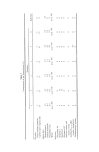
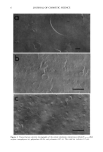
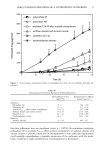
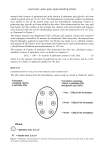
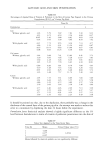
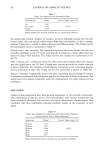
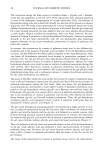
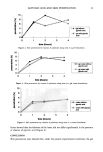
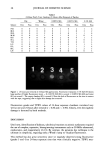
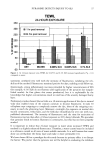
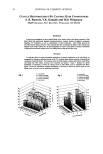
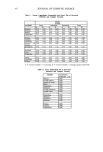
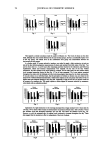
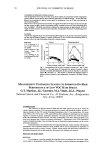
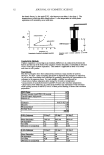
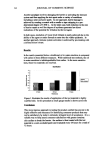
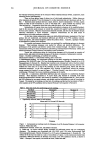
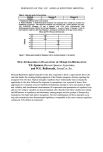
48 JOURNAL OF COSMETIC SCIENCE Figure 3: Interfacial Tension Measurements. Figure 4: Conductivity measurements vs. temperature during the cooling phase of the emulsification process. The newly developed emulsification technology works differently than a soap-based system: the rheology modifier/emulsifier dissolves @80øC •o form a lameliar liquid crystalline phase during cool down, a phase transition occurs between 35-45ø(2, as indicated by the change in conductivity in Figure 4, and the emulsion "sets". The phase change yields a network that provides rigidity at the oil/water interface, preventing EMULSIl•ICATION TECHNOLOGY Prototype formulations based on the newly developed technology will be provided to demonstrate important attributes such as efficiency, versatility and skin aesthetics. Some in-vivo evaluations, such as irritation test results, SPF static and waterproof will also be presented in correlation with in vitro work in support of the superior mildness and SPF efficiency of the emulsions employing the newly developed emulsification systems. The key findings are that the emulsifying system has a synergistic effect with physical sunscreens and water soluble sunscreens in combination with organic sunscreens. An SPF enhancement up to 40% (rs.conventional emulsions employing the same level of sunscreens) was achieved with this technology, as illustrated in Figure 5*. Figure 5: SPF enhanced emulsions vs. conventional emulsions employing the same level of sunscreens Figure 6: Microscopic evaluation of sunscreen emulsion. Figure 6 illustrates the ability of the technology to evenly distribute the physical sunscreens in combination with organic sunscreens in the continuous film resulting in an SPF over 30. Most importantly, the visual consumer signal is positive because no whitening effect upon rub in is noticeable. Possible explanations for the mechanism of emulsification will be presented based on rheological and microscopic evaluation of the emulsions. *Note: Due to lack of space, only a few results are illustrated. More results will be shown in the presentation.
Purchased for the exclusive use of nofirst nolast (unknown)
From: SCC Media Library & Resource Center (library.scconline.org)