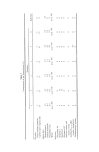
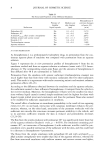
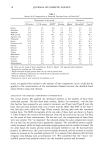
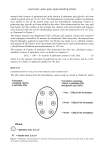
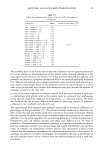
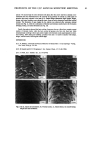
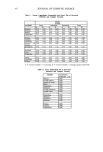
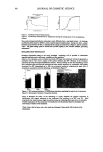
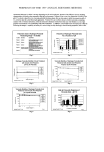
PREPRINTS OF THE 1997 ANNUAL SCIENTIFIC MEETING 49 RHEOLOGY MODIFICATION OF HYDROGEN PEROXIDE-BASED APPLICATIONS USING A CROSS-LINKED POLYACRYLIC ACID POLYMER Julie Schmucker-Castner and Dilip Desai BFGoodrich Company, Brecksville, Ohio 44141 Introduction: Hydrogen peroxide has been widely used as an oxidizer and bleach in hair care applications since the 1940s. Hydrogen peroxide is one of the most important ingredients in almost all hair color and permanent wave products on the market today. It is also used frequently in a variety of topical and oral care applications. As environmental regulations and consumer trends make the use of chlorine bleach less acceptable in detergent and household products, "oxygen" bleach will be used more widely. The focus of thickening hydrogen peroxide in this paper will be for the applications of hair bleach and two-part permanent hair color. Hydrogen peroxide, by nature of its reactive chemistry, is difficult to stabilize in many applications. There are many commonly-used ingredients that are incompatible with hydrogen peroxide. Careful selection of formula ingredients, thickeners, stabilizers, as well as the proper order of addition, pH, and processing equipment are all essential to ensure acceptable long-term physical and chemical stability of a finished product. Thus, achieving both the desired viscosity and appropriate rheological properties can be a challenging task in peroxide-based formulations. Although cross-linked polyacrylic acid polymers are currently being used in some hydrogen peroxide-containing personal care and topical pharmaceutical applications, no systematic studies have been done to evaluate different cross-linked acrylic acid polymers for specific hydrogen peroxide applications and the optimum conditions to achieve acceptable long-term stability. Recent systematic experiments have demonstrated that excellent long-term stability of hydrogen peroxide- based gels, thickened with cross-linked polyacrylic acid polymers, can be achieved. A fundamental study of the stability of hydrogen peroxide-based gels, thickened using cross-linked polyacrylic acid polymers, will be presented. The study evaluates different types of cross-linked polyacrylic acid polymers (as well as an associative acrylic polymer), several commercial sources of hydrogen peroxide, varying hydrogen peroxide concentrations, and the effect ofpH. Viscosity results from some of the combinations of these variables will be presented. The effect of accelerated aging on percent active peroxide and viscosity of the thickened peroxide gels will also be discussed. Materials and Methods: Experiments: Study I: Two separate studies of thickening hydrogen peroxide with cross-linked polyacrylic acid have been performed. The first study evaluated a single source of hydrogen peroxide (peroxide "D" and a single cross-linked polyacrylic acid polymer (Polymer A, fig. 1). Gels were made at four peroxide concentrations (3, 6, 9, 12 % •) and three pH values (3.5, 4.0, 4.5). These low pH values were selected because of the inherent instability of hydrogen peroxide at neutral or high pH. Ammonium hydroxide was used to adjust the pH of the gels. Study II: After learning a great deal from the first study, a second study was initiated. The second study focused on peroxide and pH values appropriate for two-part hair dye applications. Most of the discussion of this presentation will focus on the second study. Four cross-linked acrylic acid polymers, as well as a liquid acrylic associative polymer, were evaluated in the second study. Several commercial sources of hydrogen peroxide were used in the study at a concentration of 6.0 % •t. The gels were made at three pH values: 2.7 (no neutralizer), 3.6, and 4.0. As before, ammonium hydroxide was used to adjust the pH of the gels. Thickening Polymers: The polymers used in the study will be referred to as Polymer A, B, C, D, and E (fig. 1). All polymers were used at 1.0 % •n active solids level in the peroxide gels in both studies. Hydrogen Peroxide: Four types of commercially available hydrogen peroxide were evaluated in the two studies: Peroxide A and C are standard personal care grades, peroxide B and D are specially stabilized grades. They will be referred to in this study as Peroxide A, B, C, and D. Formula and Procedure: A standard 6 % •n active hydrogen peroxide gel formula and preparation procedure were used for both studies. Samples were made in plastic beakers and mixed with plastic stirrers. The test formula was made in the following order

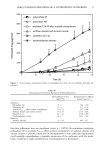
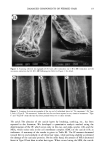
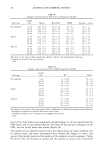
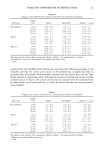
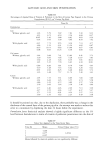
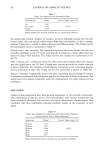
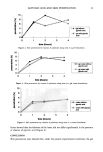
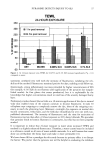
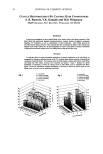
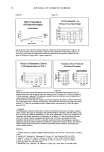
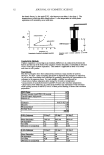
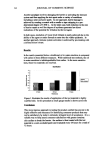
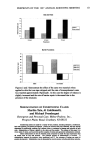
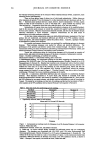
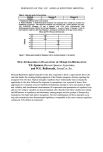
50 JOURNAL OF COSMETIC SCIENCE and consisted of the following: Deionized water 87.0 %, polymer 1.0 %, hydrogen peroxide (50%) 12.0%, ammonium hydroxide (29.9 %) q.s. to desired pH (by weight). Accelerated Aging of Samples: Triplicate samples of the peroxide gels were placed on stability at room temperature and at 45 ø C in opaque polyethylene containers. Samples were tested at intervals of 1, 2, 4, 8, and 12 weeks. Samples were evaluated for the following properties: pH, viscosity (Teflon coated spindles were used), % active peroxide, and appearance. The active peroxide was determined using the USP monograph assay for hydrogen peroxide (potassium permanganate titration). The peroxide gel samples were also tested for peroxide stability using an industry accepted peroxide "boil test". Application Testing of Samples: 1. High pH Viscosity_ Response: To test the high pH thickening efficiency of the peroxide gel samples, 5% •, ammonium hydroxide was added to each sample to achieve a pH of 10.0. The pH, viscosity, and appearance of each sample was recorded after 3 minutes. 2. Two-Part Mock Hair Color Formula: In order to test if the hydrogen peroxide gels would respond appropriately in two-part permanent hair color applications, a "mock" formula test was performed on each sample. The test was as follows: Equal portions of Part B was added to Part A and mixed. The polymer concentration in the final mixture was 0.5% •. The appearance, pH, and viscosity measurements were recorded after mixing at 3 minutes. Formula: Part A: Hydrogen Peroxide (6 % w• ) Gel Phase (1% w• polymer) Part B: High pH phase (8 % w• ammonium hydroxide) 3. Commercial Hair Dye: In order to test if the peroxide gel samples would thicken in an actual two-part hair dye application, five commercial permanent hair dyes were purchased. The "peroxide developer sample" made with Polymer D (pH 2.7) was selected to mix with the color phase of each commercial hair dye sample because of the data obtained from the previous two experiments. Results: Accelerated Stability Testing Results: 1. Study I The hydrogen peroxide stability in the gel samples after 24 weeks of accelerated stability at 45 ø C showed no loss of hydrogen peroxide over time, except when a high level of hydrogen peroxide (12.0 % w• ) and a high pH (4.5) was combined, where only about 4 % loss occurred ( data will be shown in presentation). The viscosity was also very stable in most samples until week 16, when some viscosity loss occurred. This viscosity loss only occurred in samples with a high level of peroxide (12.0 % w• ) and/or a high pH (4.5). 2. Study II: The initial viscosity of the peroxide gels made in this experiment (as seen in fig. 2) is directly related to pH. Gels made with the cross-linked acrylic acid polymers have a low viscosity at a pH of 2.7 and a hazy appearance. Gels made at pHs of 3.6 and 4.0 are a very viscous clear gel while the associative thickener (polymer E) did not thicken at any pH (see fig. 2). At the current writing of this article, we have completed 8 weeks of accelerated stability at 45 ø C of the peroxide gel samples. The accelerated stability of the hydrogen peroxide samples shows no loss of hydrogen peroxide (see fig. 3). The viscosity results of the gel samples made with peroxide "A" shows no loss of viscosity at a pH of 2.7, but do show some viscosity loss at pH values of 3.6 and 4.0 after 8 weeks of accelerated stability (see fig. 4 & 5). Application Testing Results: 1. High pH Viscosity. Response: Appearance, viscosity, and pH values were recorded after the addition of 5 % w• ammonium hydroxide to the peroxide gel samples. The pH for all samples was 10.0 +/- 0.1. The viscosity of the neutralized cross-linked acrylic acid gels ranged from 1,000 - 18,500 cP (measured after 3 minutes), while the gels made with a liquid acrylic associative polymer only attained viscosities of 55 - 1070 cP. Samples made with Polymer D resulted in the highest viscosities (see fig. 6). The neutralized gels appeared hazy except those made with Polymer D, which were very clear. 2. Two-Part Mock Hair Color Formula: Part A and Part B were mixed together as described above. The pH of all samples resulted in 9.9 +/- 0.1. The viscosity of the cross-linked acrylic acid neutralized gels ranged from 85 - 6,200 cP (measured after 3 minutes), while the gels made with a liquid acrylic associative polymer only attained viscosities of 10 - 25 cP. Samples made with Polymer D again resulted in the highest viscosities and best clarity. 3. Commercial Hair Dye: Five dark brown commercial permanent hair dyes were mixed according to their directions. The dye phase from each of these commercial hair dyes was also mixed at a 50/50 ratio with the "peroxide developer sample" made with Polymer D (pH 2.7). Viscosity and pH of the dye mixtures were all measured after 3 minutes. The pH values of the standard and test sample mixtures were very similar. The "Polymer D developer" produced much higher viscosities compared to that of the standard in most hair colors that were tested. For example, the viscosity of the hair dye "A" mixture was 1,230 cP (standard) and 7,470 cP (Polymer D developer). Conclusions: From the results of this study, it has been demonstrated that cross-linked acrylic acid polymers are very stable in peroxide containing systems and are an ideal thickener for two-part permanent hair dye applications. In particular, we
Purchased for the exclusive use of nofirst nolast (unknown)
From: SCC Media Library & Resource Center (library.scconline.org)