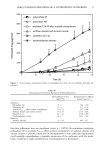
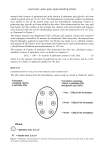
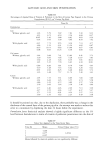
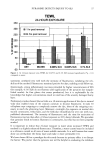
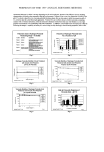
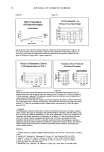
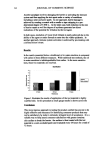
PREPRINTS OF THE 1997 ANNUAL SCIENTIFIC MEETING 59 bond contributes to the effectiveness of the formulation. Anhydrous hairsprays of the past had excellent wetting, with a contact angle between the formulation and hair that approached 0 ø. As the water content is increased, to attain low VOC formulations, the contact angle increases and wetting along the hair is hindered. In order to maximize performance, contact angle must be minimized. Capillary wicking is another wetting mechanism ')r the formation of hair/polymer bonds. This phenomenon is also maximized by low viscosity and contact angle. Wicking was measured by plotting weight gain of a hair bundle, in contact with a hairspray formulation, over time. In high water, low VOC systems dioctylsulfosuccinate resulted in large increases in wicking rates. VISCOSITY: High viscosity will impede the sprayability, flow out and film formation of a formulation on hair. Unfortunately for the formulatot and ultimately, the consumer, high water 55% VOC systems tend to result in the highest viscosity compared to higher VOC and alcohol-free systems. Lower molecular weight polymers are usually employed to counter this problem. However, these polymers tend to result in more brittle films and less hold compared to their higher molecular weight analogues. The use of additives and well designed blends of polymers have proven to be effective in approaching an optimum system. DYNAMIC SURFACE TENSION: Dynamic surface tension reduction is critical in achieving acceptable spray aesthetics. Although surface tension is mainly influenced by the solvent system (ie: amount of water in the formulation), additives can be employed that minimize the problem. The surface tension reducing agent must be able to migrate extremely quickly to the air / liquid intekface in order to be effective. The Kruss BP2 bubble tensiometer was used to demonstrate that cyclomethicone is a superior additive to address this problem. pH: The formulation pH and ionicity greatly affects the corrosivity of dimethyl ether / water systems toward tin plated steel cans. Polymer systems below a pH of 7.5 are more corrosive than those above that pH. Polymer composition and neutralization were examined relative to corrosion potential. POLYMER COMPOSITION: Polymer composition, molecular weight, neutralization and Tg were examined for their effect on solution surface tension and viscosity, fill toughness, and on-hair stiffness. The use of inorganic neutralization agents and polymer molecular weight had the largest impact on stiffness. Polymer molecular weight and composition had the largest effect on polymer toughness and viscosity. The hair fixative polymer identified by the INCI name of Acrylates Copolymer ( butyl acrylate/methyl methacrylate/methacrylic acid ) was used as the control in these experiments. CONCLUSIONS: For the hair spray formulatots in and the suppliers to the hairspray industry, it is obvious that in order to achieve water-containing hair sprays having performance which approaches that to which the consumer is accustomed, a thorough understanding of the physical and chemical mechanism of hair spray effectiveness is required. These studies have taken into account all aspects {af the hair spray system. This understanding has being obtained through the development of new and applied analytical techniques and fundamental studies. Preliminary results have given indications of how to approach these difficult formulation problems. In order to optimize the performance of water-containing low VOC hair sprays the number, strength and length of the polymer bond between hair fibers must 'be maximized. One method to achieve this was to maximize the flow of the formula once sprayed onto the hair. It has been shown that flow can be increased by reducing the viscosity and contact angle of theformulation liquid on hair. Polymer composition is an extremely important parameter in achieving the optimum system the polymer predominantly controls the spray aesthetics, stiffness, long term holding power, feel characteristics, and corrosivity. Several additives were identified which also aid in optimizing the desired performance. The ideal high water low VOC hairspray systems must be built from the ground up taking advantage of the newest technology in all formulation aspects. Polymer, solvent, propellant, additive, and delivery system must be optimized interdependently to achieve a hairspray which will satisfy a discerning consumer. REFERENCES: 1. California Code of Regulations, Title 17, Subchapter 8.5 2. G.T. Martino, J. V. Russo, N. A. Morawsky and J. J. Guth, Spray Tech. and Marketing, 2, 3, 34 (1992) 3. N. Morawsky, G. Martino and C. Bushy, Spray Tech. and Marketing, 3, 5, 57 (1993) 4. J. Guth G. Martino, and J. Russo, Selfen-Ole-Fette-Wachse, 117, 13, 464 (1991)

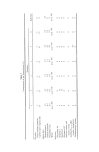
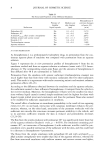
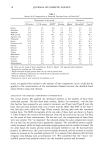
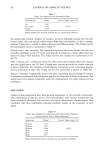
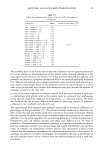
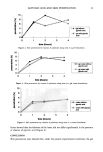
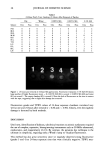
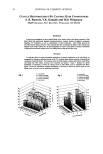
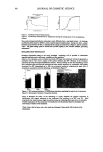
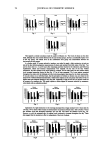
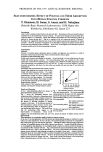
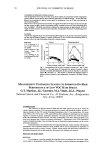
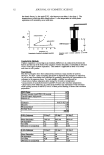
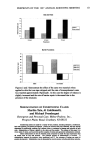
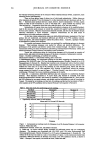
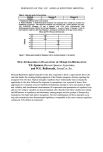
60 JOURNAL OF COSMETIC SCIENCE CHAP•CTERIZATION OF ANTIPERSPIRANT ACTIVES USING SIZE EXCLUSION CHROMATOGRAPHY AND LIGHT SCATTERING DETECTION Allan H. Rosenberg, Ph.D., Walter Carmody, Summit Research Labs, Huguenot, New York 12746 Introduction Size Exclusion Chromatography (SEC) has been successfully applied to characterization of antiperspirant actives in terms of their polymer distributions (1). This information was crucial for fully understanding the chemistry of antiperspirant actives with subsequent development of high performance (enhanced efficacy) actives which were synthesized and manufactured to contain particular polymer distributions which enhanced clinical performance (2, 3, 4). Not withstanding the success of SEC it still remains difficult to obtain accurate absolute molecular weight data from SEC analysis due to the lack of satisfactory "marker" compounds necessary to accurately calibrate SEC columns for the type of polymer species present in antiperspirant actives (highly charged cationic polymers). Since light scattering has been used to obtain molecular weights of polymers in solution, the idea was to combine SEC with light scattering detection to determine on-hne molecular weights of the separated polymer species present in antiperspirant actives. Methods On-line determination of molecular weights of aluminum polymers present in aluminum chlorohydrate (ACH) actives were obtained by separating the aluminum polymers on a Sephadex G-25 (S) column followed by light scattering detection (measuring the scattering intensities) of the separated polymers using the Dawn DSP Multi-angle Laser Light Scattering Photometer (Wyatt Technology) followed by refractive index (RI) detection of the eluent stream exiting from the Dawn Photometer. Molecular weights are calculated from the scattering intensities and RI responses using the Wyatt Technology Astra program. dn/dc values (change 6f refractive index versus change of concentration) of the aluminum polymers being evaluated are required for the molecular weight calculations. In the case of antiperspirant actives it is virtually impossible to isolate and measure dn/dc values for each individual polymer present in the active. Therefore, dn/dc values for the bulk solution of active is used for each of the aluminum polymers. This approximation will perturb the resultant molecular weight value of each polymer, the degree of which is dependent upon the difference between the bulk drddc value and the "true" dn/dc value of the individual polymer. BuLk dn/dc values were determined in separate experiments using an Optilab 903 Refractometer which is specially designed for such measurements. Operation and calibration of the Dawn Photometer was checked by determining the molecular weight of a pullenen standard. For this work a value of 47,000 daltons was obtained which is within 2.5% of the stated value of 45,800 daltons. Results and Discussion Figures 1 and 2 show aluminum polymer distributions for a standard ACH active (Summit ACH-323) using hght scattering and RI detection, respectively. Both profiles are similar with four distinct aluminum polymers observed. This is typical for ACH characterization using Sephadex G-25 (S) columns. The similarity in relative peak heights for both profiles indicates that the molecular weight range between peak I polymer and peak 4 polymer is not very large since scattering intensities are strongly dependent on molecular weight. Table 1 summarizes SEC-light scattering results for ACH-323. Also included are literature values of molecular weight ranges for the aluminum polymers compiled from a variety of experimental techniques (5). TABLE 1 SEC-Light Scattering Characterization of Summit ACH-323 Literature MW From Peak MW Ranges SEC-Light Scattering i 5,000 - 8,000 7,600 2 3,000 - 4,000 6,000 3 1,500 - 3,000 5,000 4 500- 1,500 2,100
Purchased for the exclusive use of nofirst nolast (unknown)
From: SCC Media Library & Resource Center (library.scconline.org)