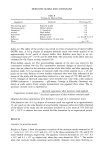
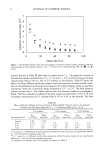
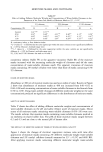
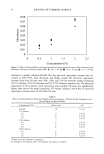
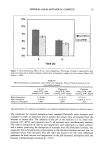
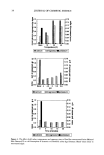
16 JOURNAL OF COSMETIC SCIENCE S100A3 was segregated in the endocuticle of cuticular cells and in the matrix that surrounds macrofibril bundles in cortical cells. In the matured hair shaft, the S100A3 molecule was postulated to be attached by cross-linking with hair keratin or hair matrix proteins via the disulfide bridges. Thus, S100A3 provides structural integrity to the hair fiber and may be the key molecule associated with hair damage. Based on the results of our previous work, we hypothesized that hair damage caused by grooming practices, weathering, or chemical preparations, such as by permanent waving and bleaching, were all associated with the elution and denaturation of S100A3. In this study, we demonstrate that the loss of S100A3 from the cuticle of hair fiber occurs during washing and rinsing, especially from chemically treated or irradiated fiber. Additionally, we propose a model of hair damage based on the elution characteristics of S100A3 from hair, taking into account the chemical properties and distribution of S100A3. MATERIALS AND METHODS MATERIALS A novel multiple-antigen peptide (MAP) was synthesized on MAP resin 4-branch (Ap- plied Biosystems) according to the carboxyl-terminal sequences 84-101, Leu-Tyr-Cys- His-Glu-Tyr-Phe-Lys-Asp-Cys-Pro-Ser-Glu-Pro-Cys-Ser-Gln, of S100A3, and then im- munized to rabbit as previously described (3). Specific antibody for S 100A3 was purified from the resultant rabbit antiserum using the MAP antigen-bound Affigel 10 column (Bio Rad). Recombinant S100A3 was prepared from the maltose-binding protein-fused product in Escherichia coli according to the method previously described by F/3hr et al. (8). NATURAL AND DAMAGED HAIR Natural human scalp hair fiber cut for hair dressings was collected from Japanese men and women who had not employed chemical treatments such as perming or dyeing. The collected samples were classified into two types. One was 2 cm long on average and derived from men with short hair aged 30 to 52. The other was approximately 20 cm in length derived from individuals with long hair, one male aged 36 and seven females aged 6 to 50, and all had longer hair than the short-hair sample providers. The root and tip end parts, 7 cm in length, were cut from the long-hair samples. The short-hair samples, and the root and tip ends of long-hair samples, correspond to the root, middle, and tip parts of natural hair fiber, respectively. UV-irradiated and permed hair were prepared from the root part of natural fiber. For preparation of UV-irradiated hair, the hair was exposed to UV-B light (302 nm, 10 J/cm 2 hr) using a trans-illuminator (TDM type, UVP Inc.) at a distance of 3 cm for 100 hr. Permed hair was prepared by employing permanent waving lotions. Briefly, the waving procedure consisted of immersing 600 mg of hair in 30 ml of a waving agent (6% ammonium thioglycolate at pH 9.0) for 15 min, followed by rinsing with water. Subsequently, the hair was soaked in 30 ml of 7% sodium bromate for 10 min, and then rinsed thoroughly with water.

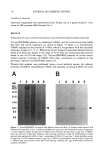
HAIR DAMAGE WITH S 100A3 ELUTION 17 PROTEIN ASSAY Protein contents were measured by a dye-binding assay (9) using bovine serum albumin as a standard. IMMUNOBLOT ANALYSIS Extracts and effluents from hair fiber were subjected to immunoblot analyses for S100A3. Western blots were prepared by electroblotting onto a polyvinylidene difluo- ride (PVDF) membrane (Immobilon P, Millipore) following size separation on a tricine/ sodium dodecyl sulfate/polyacrylamide gel electrophoresis (SDS/PAGE 16.5%T, 6%C) (10). Slot blots were prepared by condensing and blotting onto the PVDF membrane using Bio-Dot SF (Bio-Rad). Both blots were sequentially reacted with antibody for S100A3, biotinyl goat anti-rabbit IgG antibody, and streptavidin-horseradish peroxi- dase conjugate, and then finally visualized with either diaminobenzidine or chemilu- minescent substrate (ECL, Amersham). The amounts of S 100A3 were estimated through the comparison of the signal intensities with those of diluted recombinant S 100A3 using image analysis software (Biomax 1Dx, Kodak). EXTRACTION OF TOTAL PROTEINS Cuticle fragments were physically isolated from hair fiber as described before (11). Hair fiber or cuticle fragments (100 mg) were extracted in 5 ml of 200 mM Tris-HCl buffer (pH 9.0) containing 8 M urea and 200 mM dithiothreitol, with vigorous shaking for 16 hr at 37øC. After passing through a cellulose acetate filter (0.8 lam, Dismic 25CS, Advantech Toyo), the resulting extracts were subjected to protein assay and western blot analyses. ELUTION TEST The elution of S100A3 and protein from hair fiber was examined under three conditions as follows: 1. Permanent treatment condition: Two cold permanent lotions, mentioned above, were applied to the sample of short hair at room temperature. The treatment was repeated for three cycles, and the resulting effluents of each treatment step were collected. After passing through a cellulose acetate filter, the effluents were condensed using an ultra- filtration membrane (YM-3, Amicon) and then subjected to protein assay and western blot analysis. 2. Non-reducing condition: Natural, UV-irradiated, and permed hair (300 mg) were shaken in 3 ml of 200 mM Tris-HCl (pH 9.0) for 16 hr at 37øC. After filtration, the resulting effluents (200 lad were subjected to slot-blot analysis. 3. Reducing condition: The root, middle, and tip parts of hair fiber (600 mg) were shaken in 30 ml of 200 mM Tris-HCl buffer (pH 9.0) containing 200 mM 2-mercaptoethanol for 16 hr at 37øC. After filtration and condensation, the resulting effluents were sub- jected to protein assay and western blot analysis.
Purchased for the exclusive use of nofirst nolast (unknown)
From: SCC Media Library & Resource Center (library.scconline.org)