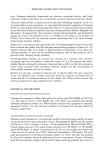
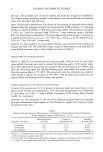
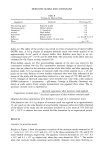
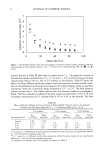
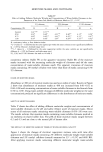
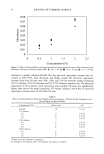
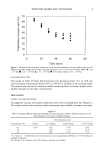
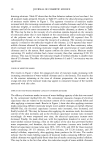
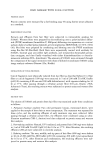
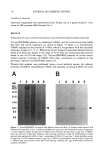
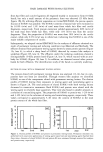
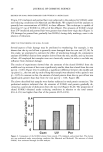
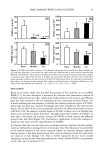
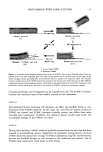
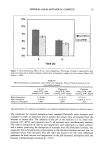
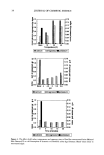
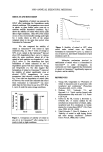
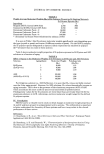
20 JOURNAL OF COSMETIC SCIENCE ELUTION OF S100A3 FROM DAMAGED HAIR WITHOUT A REDUCTANT Virgin, UV-irradiated, and permed hair were subjected to the analyses for S100A3 under non-reducing conditions (see Materials and Methods). We adopted slot-blot analyses to quantify low concentrations of S100A3 in these effluents. This technique is capable of detecting 0.5 ng of S100A3 in 200 pl of the effluent. The amounts of S100A3 eluted from UV-irradiated and permed hair were greater than those from virgin hair (Figure 3). UV-damaged or permed hair gradually lost S100A3 during daily washings, even in the absence of reductant. EFFECT OF WEATHERING ON S100A3 IN HAIR Several aspects of hair damage may be attributed to weathering. For example, it was shown that the tip end of hair is generally more damaged than the root end (15,16). In this study, we attempted to estimate the effect of weathering through the comparative analyses of S 100A3 elution from samples derived from the root, middle, and tip sections of hair. All employed hair samples were not chemically treated in order to exclude any influence from chemical damage. The results of experiments showed that the amounts of the eluted S100A3 from the middle and tip sections of hair were significantly smaller than that eluted from the root part (p 0.001 Figure 4A). In addition, a significant difference between the middle and tip parts (i.e., the root and tip ends of long-hair sample) was obtained with a paired t-test (p 0.05). In contrast to this, the amount of eluted protein from the tip part of hair was significantly greater than that from the root part (p 0.01 Figure 4B). The above-described hair samples were further subjected to total protein extraction. The performed analysis indicated that the amounts of S100A3 and protein gradually de- creased as a particular of dislocation from the root end (Figure 4C,D). The proportion of eluted S100A3 obtained under reducing conditions in relation to the total extract (0.6-4.3%) was higher than that of the protein (0.05-0.2%). 0.4 =tO2 •.• . o0.1 Cont UV Per Figure 3. Comparison of the S100A3 elution from natural, UV-irradiated, and permed hair. The elution test was performed under non-reducing condition (See Materials and Methods). The amounts of eluted S100A3 were estimated through slot-blot analyses.

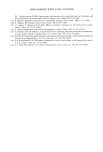
HAIR DAMAGE WITH S100A3 ELUTION 21 80 .c 60 • 40 o 20 (^) lOOO 800 600 400 200 0 1.5 800 T (c] • • 600 '-1 E E 400 0.5 .- o +.,e 200 o o (D) Root Middle Tip Root Middle Tip Figure 4. S100A3 and protein contents in the effluents and extractions of natural hair. Root, middle, and tip ends were subjected to an elution test under reducing conditions and to total protein extraction (See Materials and Methods). The amounts of S100A3 and protein were estimated through western blot analysis and protein assay, respectively. Elution of S100A3 (A) and protein (B) from the three parts of hair fiber under reducing conditions, and the contents of S100A3 (C) and protein (D) in the three parts, are presented. Each value is an average of eight samples. Bars indicate standard deviation. Significant differences in the values of the root-end part are indicated. *, p 0.05 **, p 0.01 ***, p 0.001. DISCUSSION Based on an earlier study that included fractionation of hair proteins on tricine/SDS/ PAGE (17), we have developed a procedure for sensitive and quantitative analysis of S100A3 derived from hair fiber. Application of this method to the extracts and effluents from hair fiber resulted in efficient separation of their constituent proteins (Figure 1A). A novel antibody was also prepared to identify the carboxyl terminal region of S100A3, which does not show any sequence homology with other members of the S100 protein family. On the basis of the recently proposed model for the three-dimensional structure of S100A3 (18), the carboxyl terminal region of S100A3 is likely to be the flexible part, which is not involved in dimer formation. Through western blot analysis of S 100A3, we were able to determine the accurate contents of S100A3 in both extracts and effluents derived from hair fiber (Figure lB). Furthermore, application of slot-blot analyses al- lowed an even more sensitive quantification of S100A3. It is known that the cuticular scales after prolonged waving treatment become delami- nated as evidenced by scanning electron microscopy. Since the endocuticle was identified as the weakest element of the cuticle structure subject to extensive damage especially during waving, it has been hypothesized that a loss of substances from the endocuticle can continue to hair damage (16). This is further supported by our recent studies employing ultrastructural immunocytochemistry, which showed S100A3 incorporation in the inner part of endocuticle (7).
Purchased for the exclusive use of nofirst nolast (unknown)
From: SCC Media Library & Resource Center (library.scconline.org)