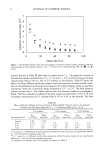
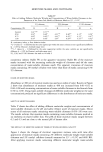
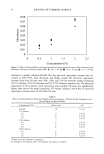
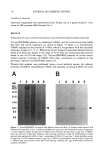
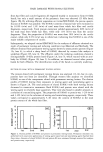
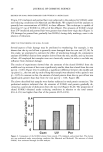
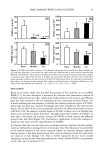
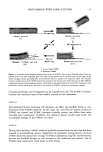
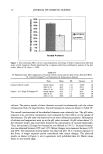
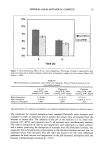
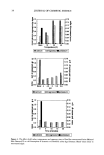
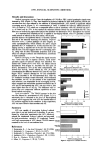
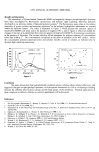
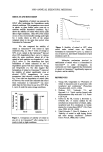
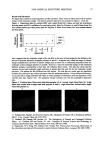
22 JOURNAL OF COSMETIC SCIENCE We have explored whether S100A3 is stable following exposure to permanent waving lotion. The protein could react with reductants or oxidants and might be involved with the breaking and reforming of disulfide bridges in hair proteins (19). Cysteine residues of S100A3 are thought to be involved in cross-linking reactions via disulfide bonds. In particular, it is important to clarify the stability of the S100A3-rich layer (i.e., the inner part of the endocuticle). Our result showed substantial amounts S100A3 in the effluents of permanent waving lotions (Figure 2). It may be concluded from this result that the scale lifting resulting from the permanent treatment may be a consequence of degra- dation of the S100A3-rich layer. Delaminated cuticle was also frequently observed with hair fiber that had been exposed to repetitive shampooing and drying treatments (20). These treatments resulted in a release of material from the endocuticle (21). This kind of hair damage can be also associated with weathering, including exposure to UV radiation (22). It has been pro- posed that the amounts of eluted protein correlated with the degree of hair damage (23,24). Also, we were able to show that S100A3 was eluted from UV-irradiated hair, as well as permed hair, under non-reducing conditions (Figure 3). A possible mechanism of damage may include cleavage of the disulfide bridges of S100A3 by UV radiation. Our result suggests that the combination of daily UV irradiation and shampooing may contribute to a gradual release of S100A3 from hair and ultimately result in cuticle delamination. A contrast profile was obtained between elution of S100A3 and protein from distinct parts of hair fiber under reducing conditions. The amount of eluted S100A3 was lower in the tip end of hair as compared to the root end (Figure 4A). In contrast to this, the total amount of protein was higher in the tip end of hair (Figure 4B). This result is consistent with previous data showing that greater amounts of protein were extracted from damaged hair than from intact hair (23,24). In addition, the data suggest that almost all of the S100A3 to be released has already been lost in the tip section of hair. Thus, the tip part has a lower proportion of S100A3 than total extractable protein (Figure 4C,D). The difference between the proportion of S100A3 to protein in the effluents (15% from the root end, 1.6% from the middle, and 0.4% from the tip end [compare Figure 4A versus 4B]) may reflect that S100A3 is preferentially eluted from hair during everyday grooming operations. Therefore, S100A3 is affected to a larger extent by weathering as compared to other proteinous hair structure constituents. This susceptibility of S100A3 may be attributed to its localization in cuticle and to its solubility in water. The results of our experiments suggest that S100A3 is solubilized and eluted in the course of hair damage. Given the fragility of the S100A3-rich layer, we propose a new four-stage model that assumes S100A3 elution is a major cause of hair damage (Fig- ure 5): STAGE I Newly emerging hair from a follicle is characterized by smooth-edged scales. STAGE II A mechanical stress in intact hair can lead to cracking of the endocuticle (25). As a result

HAIR DAMAGE WITH S100A3 ELUTION 23 Intact cuticle (I) Grooming Perming Actual cuticle (•) I UV-exposure . S100A3 -'• ........... ' ' - Daily Damaged (lifted) cuticle washing Denatured cuticle (•v) (•) e Cross-I inked S100A3 e Denatured S100A3 Figure 5. A model of hair damage emphasizing the loss of S100A3 from cuticle. Smooth-edged scales are present in the hair shaft emerging from the scalp (I), but cuticle can be chipped away at the edges of the scales through normal grooming (II). Environmental stresses, namely UV radiation, affect the disulfide bonds or conformation of the S100A3 molecule located in the bottom part of the endocuticle (III). S100A3 is gradually eluted in daily washings of hair, which leads to the delamination of cuticle (IV). Treatment with permanent waving lotion alone can lead to the elution of S100A3 without environmental stresses. of normal grooming, cuticle fragments can be chipped away (26). The S100A3-rich layer becomes the outermost layer of hair readily exposed to hair treatments. STAGE III Environmental factors, including UV-radiation, can affect the disulfide bonds or con- formation of the S100A3 molecule. At this stage, the cross-links of cysteine residues of S100A3 are cleaved, and S100A3 becomes a soluble protein that differs from other insoluble hair constituents. Therefore, this chemical process would cause latent but considerable damage to the S100A3-rich layer. STAGE IV During daily washing, S100A3 would be gradually released from the hair that had been exposed to environmental stresses. Application of permanent waving lotions can elute S100A3 from the natural hair of stage II without undergoing stage III transformation, because the disulfide bridges are not resistant to the reductant and oxidant. Loss of S100A3 from endocuticle could result in scale lifting.
Purchased for the exclusive use of nofirst nolast (unknown)
From: SCC Media Library & Resource Center (library.scconline.org)