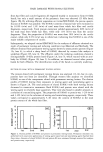
1999 ANNUAL SCIENTIFIC MEETING 43 carotene photobleaching assay. The photobleaching of beta-carotene is known to occur by a free radical mechanism. The test site was painted with a solution of beta-carotene and allowed to dry. Once dry, the test formulations were applied over subsites of the beta- carotene treated skin while maintaining one subsite as an untreated control. Each subsite was then exposed to several different amounts of UVA radiation. The color of each irradiated site was measured and compared to the color of the control site {beta-carotene only treated site} receiving the same amounts of UVA radiation. Human Clinical Studies: The effectiveness of the finished product formulations containing the mixture of antioxidants was determined through a series of clinical studies lasting from four to twelve weeks. In addition to evaluating the skin for signs of irritation, the skin was evaluated for the reduction in the appearance of fine line and wrinkles using image analysis of dental silicone skin replicas, for increased skin moisture using a NovaTMMeter, for changes in skin resilience using a Cutometer TM, and from changes in skin coloration using a Chromameter TM Results and Discussion: The safety of the mixture of antioxidants as well as the individual component materials was demonstrated using cell culture technology. None of these materials exhibit cytotoxicity at the concentrations tested as shown by either the Percentage Cellular Viability assay or the Prostaglandin Ee assay. The efficacy of the antioxidants in protecting human skin cells from the free radicals generated by exposure to solar simulated ultraviolet light was demonstrated using cell culture technology. The Percentage Cellular Viability results clearly showed that the mixture of antioxidants is more effective than the individual component ingredients comprising the mixture. Similar results were found for the antioxidant mixture using the Prostaglandin E2 assay method. Although the cell culture results clearly document the efficacy of the antioxidant mixture, they do not necessarily demonstrate that this same mixture is efficacious when applied to intact human skin from finished product formulations. Using the beta-carotene photobleaching assay, the effectiveness of this mixture of antioxidants was clearly shown for three different formulations. This antioxidant effect has also been shown to improve the effectiveness of sunscreen product formulations. Those results will be presented at the American Academy of Dermatology in March, 2000 in San Francisco, California. The same ingredients that comprise the antioxidant mixture also exhibit some very impressive effects on improving the appearance and texture of the skin. In order to demonstrate those effects, human clinical testing was conducted. The results of those four to twelve week studies clearly demonstrate that the skin treated with the formulations containing this antioxidant mixture significantly improved the resilience of the skin, the look of fine line and wrinkles, the evenness of the skin color and an increase in the moisture content of the treated skin. A dramatic improvement in skin resilience was found for a moisturizing skin care formulation containing the mixture of antioxidants as measured by a Cutometer. The use of this same formulation resulted in a significant reduction in the appearance of fine lines and wrinkles as measured by image analysis of silicone skin replicas. Furthermore, the skin treated with this moisturizing formulation showed the significant increase in moisture content. These results clearly demonstrate that the formulation containing the same ingredients shown to exhibit significant antioxidant effects have profound effects upon the appearance and texture of the treated skin. Conclusions: Given currently available technologies, formulations can be developed and shown to exhibit significant antioxidant efficacy while simultaneously dramatically improving the appearance and texture of the treated skin. By the incorporation of carefully chosen antioxidant ingredients, these desired efficacies can be obtained from the same mixture of ingredients.

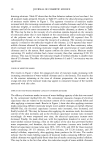
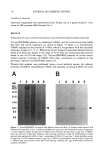
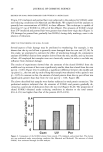
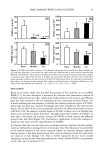
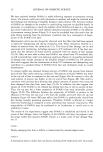
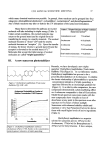
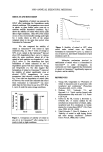
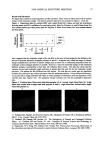
44 JOURNAL OF COSMETIC SCIENCE PROTECTIVE EFFECTS OF ASCORBYL 2-PHOSPHATE AGAINST UV-GENERATED RADICALS IN SKIN Toshi Tsuzuki •, Eiko Masatsuji •, Shinobu Ito', Eiji Ogata' and Yuichi Fusyo • •Showa Denko K.K. Central Research Laboratory, Chiba, Japan, 2Showa Denko K.K. Speciality Chemicals Division, Tokyo, Japan and 3Showa Denko America Inc. New York Introduction Ascorbyl 2-phosphate (AP) is well known as a 'stable' vitamin C. With the sensitive hydroxyl group chemically protected with phosphoryl ester, the compound is resistant to the atmospheric oxygen (Figure 1). Since vitamin C has various valuable physiological effects and extremely low toxicity suitable for cos- metics, AP, with a satisfactory stability, is considered to be a very good alternative choice. Currently AP is increasingly utilized as an active ingredient to remove skin pigmentation or freckles. Clinical studies also have shown its efficacy. to improve skin brightness (1). AP is hydrolyzed to biologically active ascorbate by phospha- tase during permeation into skin (2). Having investigated AP's chemical and physiological properties, we found that not only hy- drolyzed ascorbate but also AP itself had a remarkable capability of scavenging UV-generated radicals. It has been also reported that AP prevents skin troubles caused by UV irradiation, such as peroxidation of cell membrane and DNA damage (3). Those skin damages are quite possibly caused by radical species (4). However, the AP's protective mechanism is not fully revealed. Popular experiments with homogenized skin samples cannot always represent the in vivo events. Only a few works have been done to detect radicals in the whole skin (4), though the whole cell experimental system is necessary to verify the intradermal effects of any anti-oxidative agents. In this presentation, AP's significant capability of hydroxTl radical scavenging is reported with data obtained through several ESR-spin trap experiments including ones using whole skin sam- ples. A relatively new, another ascorbate derivative, ascorbyl 2- glucoside (AG) was also examined in comparison. Experimental Materials. Sodium ascorbyl 2-phosphate (APS) of a commer- cial grade (Showa Denko, trade name Ascorbyl PM) was used. 5,5'-Dimethyl-l-pyrroline-N-oxide (DMPO) and all other reagents were commercially available ones from domestic suppliers. Male hairless mouse, aged 5 weeks, was employed as the skin source. ESR measurements. Active oxygen species were detected and determined by ESR using JES-RE1X (JEOL) equipped with UV irradiation system and a UV-D35 filter (JEOL) to cut off UVC. APS was dissolved in phosphate buffered saline (PBS, pH 7.0) containing 50mM DMPO in a quartz testing tube. Measurements were carried out under a continuous UV irradiation at an energs.' of 20 kJ/m2. Intmdermal radicals were detected with the same ESR system. Carefully prepared fresh hairless mouse skin was pretreated for two hours with APS solution attached to its epidermal surface, then was cut into a small piece (3mm x 3mm) to fit the ESR tis- sue-cell LTC-10 (Labotec). 5pl of 9.2M DMPO was added to the skin surface, and stood for 5 minutes to allow the appropriate per- meation. Washed thoroughly with distilled water a•.d wiped with ascorbyl 2-phosphate (A2P) OH Chemically stable Radical-scavenging • OH Physiologically inactive I OH ascotbit acid (AsA) OH Radical-scavenging Physiologically active Figure 1. Ascorbyl 2-phosphate (AP) is converted into biochemically active ascorbate via phosphatase-catalyzed hydrolysis. AP is quite a stable compound against oxygen, but possesses the radical- scavenging activity. 20mM AsA 20ram APS Figure 2. When UVA/B was irradiated to PBS, ESR detected signals of hydroxy radicals (solid triangles). They were reduced by addition ofAPS. Ascorbate (AsA) also reduced them, but a:s. corbyl radicals newly appeared (open triangle) filter paper, the skin sample xvas set onto the cell and the ESR measurements were carried out under the same condition as described above. TBARS measurements. The amount of thiobarbituric acid-reacting substance (TBARS), a good indica- tor of lipid peroxidation in skin, was measured by the method described by Kobayashi et al (3).
Purchased for the exclusive use of nofirst nolast (unknown)
From: SCC Media Library & Resource Center (library.scconline.org)