2 JOURNAL OF COSMETIC SCIENCE o/w skin lotion containing 0.1 g of high-molecular-weight chitosan shows an improving water-binding of skin, indicated by decreasing transepidermal water loss (TEWL) and an increase in the torsional strength of the skin. The skin is perceptibly softer and smoother. Hair care products containing chitosan show superior film-formation ability, combabil- ity, stiffness, and curl retention to synthetic polymer (10-12). Chitosan and microcrys- talline chitin have surface-active properties and can be used to enhance emulsion sta- bility (13,14). Water-soluble chitinous materials can be prepared by a variety of methods: (a) Chemical modification can produce succinyl chitosan (9), carboxymethyl chitosan (8,15), N- sulfofurfuryl chitosan (16), N-trimethyl acetate chitosan (17), and mercapto-chitins (18). (b) Acid hydrolysis using nitric acid can produce a 40% degree of deacetylation chito- sans, or oligomers can be obtained by using nitric acid (19-21). (c) Enzyme hydrolysis uses glycosidase, lysozyme, or chitinase to hydrolyze chitins, or chitosanase to hydrolyze chitosans (22). (d) Mechanical methods such as those reported by Shyur (23) and Li (24) use ultrasonic treatment to prepare water-soluble chitosans of different molecular weights. Chang (25) used shear, ultrasonic, or combined shear and ultrasonic treatments to prepare water-soluble chitosans. It is necessary for skin to maintain a certain level of moisture for normal functioning and vitality. When skin moisture content decreases to a certain level, it loses its normal softness and pliability and becomes hardened and embrittled. The major factor affecting skin moisture content is a natural moisturizing factor (NMF) existing in the stratum corneum. It has moisture absorption properties and is crucial to maintaining a proper moisture level in the skin. Besides, on the surface of the skin, water, water-soluble compounds, and lipids form a protecting film that assists the stratum corneum in minimizing the evaporation of water and alleviating intrinsic and extrinsic detrimental factors such as age, body temperature, humidity, and seasonal changes (26). The loss of the water-holding capacity of the stratum corneum results in dryness of the skin. Of the two types of humectants used in moisture products, occlusive humectants form a hydrophobic film to retard the evaporation of the water from the skin surface. The effect of occlusive humectants on transepidermal water loss (TEWF) can be expressed as the inhibition percentage of TEWF: Inhibition percentage of TEWF = (TEWLch/TEWLco) x 100 Here, TEWLch is the transepidermal water loss after application of a water-holding humectant, and TEWLco is the transepidermal water loss without application of a humectant. The lower the inhibition percentage of TEWL, the better the water-holding properties of the humectant used. Common occlusive humectants are petrolatum, fatty acids, and cholesterols (27). Viscosity, molecular weight, chemical structure, and hy- drophobic and hydrophilic properties of the humectants used can affect the TEWL inhibition percentage. Of the homologous humectants used, the higher the molecular weight, the better the TEWL inhibition percentage. The second type of humectant is an absorbing humectant. These compounds have strong water-absorbing properties and will prevent dryness and cracking of the skin in low-humidity environments. An ideal absorbing humectant has the following properties: (a) Good absorption, (b) consistency in water absorption, (c) lower evaporative loss, (d) water-holding capacity on the skin and in products themselves, and (e) no irritative or burning feeling when added to the

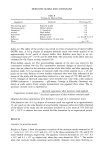
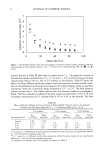
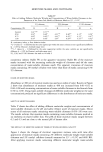
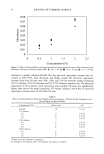
MOISTURE MASKS AND CHITOSANS 3 skin. Common absorbing humectants are glycerin, propylene glycols, and high- molecular-weight humectants such as hyaluronic acid and chitinous materials (28,29). Chitinous materials have (a) good occlusive and water-absorbing properties (9,28-31), (b) good surface activity properties, (c) very good film formation properties of chitosan (8,30,32), and (d) good thickening properties. Knorr (13) reported that microcrystalline chitin has better emulsion properties than does microcrystalline cellulose. Magdassi and Neiroukh (14) reported that chitin particles include both hydrophobic and hydrophilic groups and tend to be absorbed on the o/w interface of oil drops. In the presence of 0.005% (w/w) Tween 80, the emulsion system containing only 0.5% (w/w) chitosan showed good emulsion stability. Sakurai et al. (32) reported that application of 0.3% hydroxypropyl chitosan to skin will form a smooth and pliable film that has good water-holding properties. Gross et al. (33) reported chitosan film to be stable in high-humidity environments. It has better ab- sorbing properties on hair than do traditional polymers used in hair products, and it prevents static charging during brushing. N-carboxymethyl chitosan can increase the viscosity of a solution. The viscosity- increasing capacities are related to molecular weight (8). Li (24) reported that water- soluble chitosans obtained by ultrasonic treatment have an effect on the flow consistency index, which increased with increasing molecular weight and the concentration of water-soluble chitosans used in the system. Results of a one-time, cumulative irritation test on shaved rabbit skin and a one-time ocular test indicated that chitinous materials caused no irritation on shaved skin or cornea and left no extraneous material on the cornea (30). Those results indicate that chitinous materials are good ingredients for cosmetics. MATERIALS AND METHODS PREPARATION OF WATER-SOLUBLE CHITOSANS Chitosan was prepared by alkali deacetylation on chitin with 50% NaOH at 100øC for 3 h. The ratio of chitin to 50% NaOH was 1:20. Chitin was prepared from shrimp (Solemocera prominentitis) waste (34). Water-soluble chitosans were prepared by ultrasonic treatment (35) for 3, 30, and 120 rain to obtain U3 chitosan, U30 chitosan, and U120 chitosan, respectively. CHARACTERISTICS OF WATER-SOLUBLE CHITOSANS Molecular weight determination. The molecular weight of prepared water-soluble chitosans was determined with high-performance liquid chromatography (HLPC) by the method of Chen et al. (36). A column (7.8 mmx 30 cm) packed with TSK gel G5000 PWxL (Tosoh, Japan) was used. The mobile phase consisted of 0.2 M HOAc, 0.1 M NaOAc, and 0.008 M NaN 3. A sample concentration of 0.1% (w/v) was loaded and eluted with a flow rate of 0.5 ml/min by an LDC Analytical ConstaMetric 3500 pump. The elute peak was detected by an RI detector (Gilson, model 132, USA). The data was analyzed by Chem-Lab software (Scientific Information Service Corporation, Taiwan). Chitosans with known molecular weights (determined by light-scattering method) were used as a
Purchased for the exclusive use of nofirst nolast (unknown)
From: SCC Media Library & Resource Center (library.scconline.org)