68 JOURNAL OF COSMETIC SCIENCE Strategies using Regulation of Gene Expression to Repair Aging Skin Barrier From the above findings it is postulated that regulation of the expression of genes controlling all of the underlying barrier repair entities such as the enzymes discussed above is a more plausible approach to repairing damaged barrier in the future. Nuclear hormone receptors are transcription factors that regulate many cellular functions including cell differentiaton and proliferation. Nuclear hormone receptors which heterodimerize with RXR, such as retinoic acid receptor (RAR) and the vitamin D receptor have been shown to regulate keratinocyte proliferation and differentiation. In transgenic mice that overexpress either an RAR or RXR dominant negative mutant, epidermal differentiation is abnormal. Retinoic acid is the first FDA aproved drug that treats some of the problems of aging skin, especially wrinkles and fine lines, mottlied hyperpigmentation, and tactile roughness of facial skin (PDR 1999). It is also indicated for years for the treatment of acne. It is a nuclear hormone receptor agonist and upregulates transcription of specific regions of the DNA and ultimately translation of RNA to express specific proteins that induce proliferation of keratinocytes at least in in vitro studies. This shift in balance appears to lead to resolution of certain abnormalities of skin and to the development and perscription marketing of Renova© for photodamage. Other nuclear hormone activators like Vitamin D3 (calcipotriene) activate the Vitamin D receptor and have a slightly different effect on skin. This activator also heterodimerizes with RXR but tends to shift the cellular phenotype balance to enhanced differentiation. This is substantiated by the expression of differentiation markers, e.g. filaggrin, involucrin, and others and a decrease in keratin K67, a marker for proliferation (Gottlieb, A. J. Cutan. Path. 23,419-430, 1996). This drug appears in the perscription drug- Dovonex and is an effective treatment for psoriasis, a hyperproliferative skin disease. It seems plausible that such a drug may have applications to treatment of aging skin problems involving abnormal barrier like dry, rough, wrinkled, hyperpigmented skin. The underlying question is whether shifting the balance in these lesions to a differentiated cellular phenotype will ameliorate the condition. The newest class of nuclear hormone receptors are peroxisome proliferator activated receptors (PPARs) and the alpha form also heterodimerizes with RXR. PPARc• is activated by many chemicals including the lipid lowering drug clofibrate and by a variety of fatty acids (Feingold, K., J. Cosmet. Sci. 186-189, 1999). It has been shown that PPARc• activators stimulate epidermal barrier development in fetal skin explants and in utero and increased differentiation in keratinocytes. In induced hyperproliferative conditions in animal models, such as by tape stripping or essential fatty acid deficiency, activators of PPAR successfully ameliorated the condition and switched the skin to a differentiated phenotype thereby correcting the cutaneous pathology. It remains to be seen as to the future value of these nuclear hormone receptor agonists in treating the diseases of the aging skin.

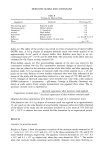
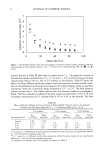
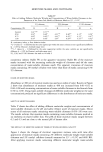
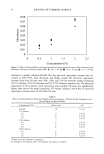
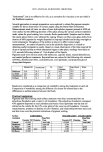
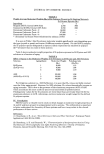
1999 ANNUAL SCIENTIFIC MEETING 69 CHARACTERIZATION OF ZIRCONIUM POLYMER DISTRIBUTIONS IN ANTIPERSPIRANT ACTIVES USING SIZE EXCLUSION CHROMATOGRAPHY (SEC) AND LIGHT SCATTERING (LS) TECHNIQUES Allan H. Rosenberg, Ph.D. Summit Research Labs, Huguenot, NY 12746-0626 I. Introduction Size exclusion chromatography (SEC) has been used to characterize aluminum polymer distributions in antiperspirant active ingredients such as aluminum chlorohydrate (ACH) and aluminum-zirconium-glycine salts (AZG). This technique has also been used to characterize zirconium polymer distributions in zirconium starting reagents used to synthesize AZG as well as in AZG actives themselves (1). The ability to determine the above polymer distributions is critical in understanding A1 and Zr chemistry occurring in antiperspirant active systems. Additionally the nature of these distributions has great impact on the clinical performance of these actives. Although valuable information on polymer distributions has been obtained from SEC studies, accurate information regarding the actual molecular weights and polydispersity properties of the individual A1 and Zr polymers are difficult to obtain from SEC due to a lack of good "marker" compounds that are needed to construct reliable molecular weight calibration curves. The use of SEC/LS to characterize A1 polymers in ACH was previously reported by Rosenberg and Carmody (2). This paper describes our work on obtaining molecular weight and polydispersity data for zirconium polymers present in antiperspirant systems using combination SEC/LS techniques. II. Methodology The method essentially consists of first separating the polymer species using SEC and then passing the SEC stream into a light scattering detector and then into a refractive index detector. The light scattering intensities for each polymer species and the R.I. response are then used to calculate molecular weights and polydispersity. The Wyatt Multi-Angle Dawn DSP photometer was used to obtain the light scattering data and high pressure SEC columns were used for polymer separation. The use of a multi-angle light scattering detector is very important for SEC/LS studies which require the use of aqueous mobile phases for the SEC columns as is the case for characterizing antiperspirant active systems since aqueous mobile phases are difficult to clean with respect to background light scattering noise resulting in unacceptable background readings for some scattering angles. Operation and calibration of the Dawn Photometer was checked by determining the molecular weight of a pullenen standard (45,000 daltons). Generally, values within _+ 2.5% of the standard are obtained. III. Results Table i summarizes SEC/LS studies on zirconium ingredients used as starting materials to synthesize aluminum-zirconium-glycine (AZG) antiperspirant actives.
Purchased for the exclusive use of nofirst nolast (unknown)
From: SCC Media Library & Resource Center (library.scconline.org)