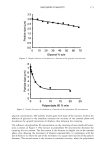
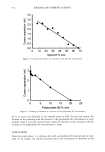
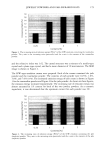
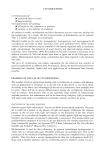
JEWELRY POWDERS AND FAR-INFRARED RAYS 179 18 16 .o_ 12 r•l 0 •- 8 ,• 6 • 4 2 0 O.25 1 3 7 Contents(%) Figure 3. The increasing ratio of radiation energy (W/m 2) of the O/W emulsion containing the tourmaline powder. The y-axis is the increasing ratio (percentlie) and the x-axis is the contents of the tourmaline powder. and the refractive index was 1.62. The crystal structure was a mixture of a needle-type crystal and a plane-type crystal, and had a mean diameter of 10 micrometers. The SEM image is shown in Figure 2. The O/W-type emulsion creams were prepared. Each of the creams contained the jade powder and the tourmaline powder. The contents of each powder were 0.25%, 1.0%, 3.0%, and 7.0% (w/w). The estimated emission energy of each cream is shown in Figure 3 for the tourmaline powder and Figure 4 for the jade powder. As shown in these figures, the emission energy increased exponentially. The increasing rate of emission energy was almost saturated at 1% content for both of the two jewelry powders. As a cosmetic ingredient, it was determined that the optimum content for each powder was 1%. 18 16 • 14 -2 12 rr10 •- 8 • 6 c 4 -- 2 0 0.25 1 3 7 Contents(%) Figure 4. The increasing ratio of radiation energy (W/m 2) of the O/W emulsion containing the jade (nephrite) powder. The y-axis is the increasing ratio (percentlie) and the x-axis is the contents of the jade (nephrite) powder.

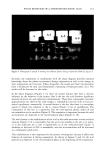
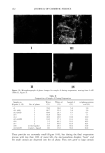
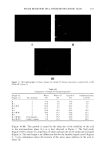
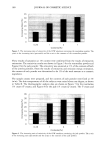
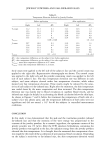
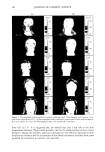
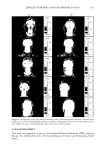
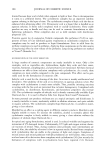
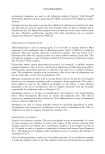
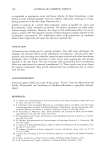
180 JOURNAL OF COSMETIC SCIENCE 35 3O %' 25 ._ rr 20 -• 15 •10 -- 5 0 0.25 1 3 7 Contents(%) Figure 5. The increasing ratio of emissivity of the O/W emulsion containing the tourmaline powder. The y-axis is the increasing ratio (percentile) and the x-axis is the contents of the tourmaline powder. These results of saturation at 1% content were confirmed from the results of emissivity estimation. The emissivity results are shown in Figure 5 for the tourmaline powder and Figure 6 for the jade powder. The emissivity was saturated at 1% of the contents of both of the jewelry powders. From the results of emissivity and emission energy estimation, the content of each powder was determined to be 1% of the total amount as a cosmetic ingredient. The sample creams were prepared, and the contents of each powder were fixed at 1% (w/w). The skin temperatures of all the subjects were raised about one degree, as shown in Table II. The thermographic analysis data are shown in Figure 7 for the tourmaline 1% cream (T-cream), and Figure 8 for the jade 1% cream (J-cream). The T-cream and 35 30 'S' 25 ._ rr 20 halo 5 o 0.25 1 3 7 Contents(%) Figure 6. The increasing ratio of emissivity of the O/W emulsion containing the jade powder. The y-axis is the increasing ratio (percentile) and the x-axis is the contents of the jade powder.
Purchased for the exclusive use of nofirst nolast (unknown)
From: SCC Media Library & Resource Center (library.scconline.org)