j. Cosmet. Sci., 54, 9-20 (January/February 2003) Skin hydration effects, film formation time, and physicochemical properties of a moisture mask containing Monostroma nitidium water-soluble mucilage RONG HUEI CHEN and WEEI YUU CHEN, Department of Food Science, National Taiwan Ocean University, Taiwan. Accepted for publication May 3, 2002. Synopsis The objectives of the study were to explore the effects of using the water-soluble mucilage of Monostroma nitidium to replace the humectant and half of the thickening agent on the rheological properties, color, storage stability, water-holding capacity, and film formation time of moisture masks thus prepared. Results showed that moisture masks containing water-soluble mucilage were pseudoplaxtic fluids. The apparent viscosity of these moisture masks decreased with increasing shear rate but increased with increasing con- centration of the aqueous extracts used. The water-holding capacity of moisture masks containing 1% aqueous extracts and 1% hydroxyethyl cellulose (HEC) were similar to those containing 2% HEC and 5% 1-3 butadiene (humectant) but better than those containing 2% methyl cellulose (MC) and 5% humectant. The film formation time of moisture masks containing different concentrations of aqueous extracts decreased with increasing concentration of the aqueous extract used. The storage stability of a moisture mask con- taining 1% aqueous extract and 1% HEC was similar to that containing 2% HEC and 5% humectant and better than those containing 2% MC and 5% humectant. The safety test resulted in no erythema based on the Draize score test. The pH was between 7.1 and 7.5 for all moisture masks studied. INTRODUCTION Monostroma nitidium, a green laver, is readily obtainable because it is cultured as a food in Japan (1,2). Maeshige (3) reported that low-molecular carbohydrate fractions in Monostroma nitidium were analyzed as fructose, glucose, and sucrose. Lii (4) reported that storage polysaccharide in green alga were or-l,4 and or-l,6 linkage polyglucoses. The major component sugars were rhamnose, glucose, xylose, and galactose. It is necessary for skin to maintain a certain level of moisture for normal functioning and vitality. When skin moisture content decreases to a certain level, the skin loses its normal softness and pliability and becomes haMened and embrittled. The major factor affecting skin moisture content is a natural moisturizing factor (NMF) existing in the stratum corneum. Besides, on the surface of the skin, water, water-soluble compounds, and lipids form a protecting film that assists the stratum corneum in minimizing the evaporation of water and alleviating intrinsic and extrinsic detrimental factors such as age, body temperature, humidity, and seasonal changes (5). Of the two types of humec-

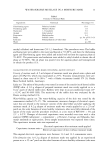
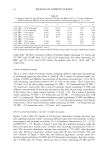
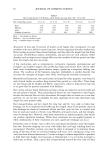
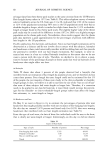
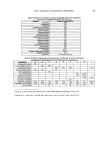
10 JOURNAL OF COSMETIC SCIENCE tants used in moisture products, occlusive humectants form a hydrophobic film to retard the evaporation of the water from the skin surface. Common occlusive humectants are petrolatum, fatty acids, and cholesterols (6). The second type of humectant is an ab- sorbing humectant. These compounds have strong water-absorbing properties and will prevent dryness and cracking of the skin in low-humidity environments. Common absorbing humectants are glycerin, propylene glycols, and high-molecular-weight hu- mectants such as hyaluronic acid and chitinous materials (7,8). Ross-Murphy (9) reported that cellulose was applied to shampoo and hair conditioner as a suspension and viscosity enhancer. Davidson (10) reported the industrial use of car- rageenan as a binder in toothpaste and as a bodying agent to provide slip and emollience in lotions and creams. Brode (11) reported that polysaccharides have been applied in many cosmetic products such as skin moisturizers or conditioners, soaps, sunscreens, cleansing creams or body lotions, gels or lotions, toothpastes, foam builders, mousses, shampoos, and nail lacquers. Chen and Heh (12-14) reported that water-soluble chitosan improved the efficacy of sunscreen lotions, moisture masks, and vital moisture creams. Mekidecke and Briand (15) reported that seaweed extracts provide an anti-aging effect and a fat-removing effect, as well as maintaining elasticity of the skin, preventing skin aging, and providing a sun-screening effect. Therefore, seaweed extracts are excellent cosmetic ingredients. Since it is the precursor of dimethylsulfide, one of the desirable and characteristic seaweed aromas, dimethyl-[B-propiothein is abundant in green algae and can be effec- tively extracted by the use of a hydrophilic solvent from dried algae (2,16-18). Chlo- roform-soluble and aqueous fraction show anti-oxidation capacity (19). Water-soluble mucilage of Monostroma nitidium shows good emulsifying properties (20,21) and thick- ening properties (22). The mucilage of Monostroma nitidium may be applied as a natural, renewable cosmetic ingredient. Therefore, the effects of using the aqueous extracts of Monostroma nitidium to replace half of the thickening agents and humectants in a mois- ture mask formula on the rheological properties, color, storage stability, water-holding capacity, and film formation times of moisture masks were explored. MATERIALS AND METHODS PREPARATION OF MONOSTROMA NITIDIUA4 AQUEOUS EXTRACT We washed the dried alga to remove impure materials such as sand. We added 50 volumes of distilled water, homogenized the mixture briefly for 3 min with a blender (Osterizer), then homogenized it again at 9000 rpm (Polytron PT 300, Kinematic AG, Switzerland) for 7 more min. We heated the homogenized solution, stirring in an oil bath at 100øC for 4 h. We centrifuged the heated homogenates at 3500 x g for 30 min (Hitachi SCR20BA, Hitachi Co., Tokyo). We discarded the residues and lyophilized the supernatant with a freezer-dryer (UNITOP 800L Virtis Company Inc., USA) to obtain the products (4,20). The approximate compositions were determined with the AOAC method (23). PREPARATION OF MOISTURE MASK The formula for the moisture mask is shown in Table I. Monostroma nitidium water- soluble mucilage (0.5% to 2.0% w/v) was used to replace the thickening agent (2.0%
Purchased for the exclusive use of nofirst nolast (unknown)
From: SCC Media Library & Resource Center (library.scconline.org)