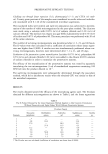
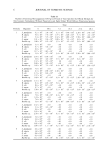
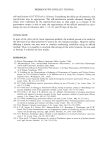
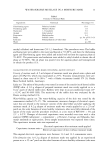
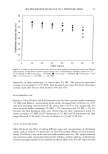
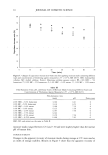
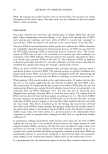
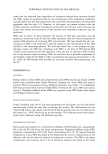
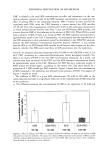
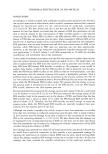
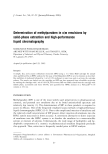
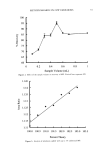
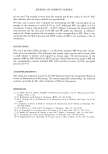
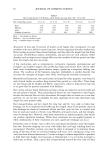
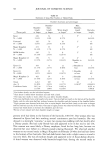
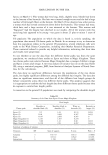
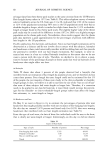
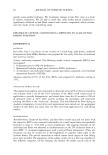
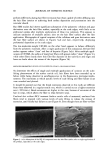
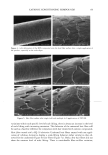
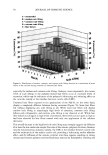
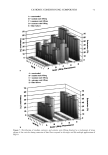
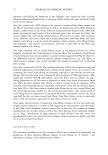
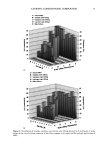
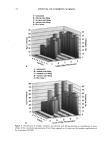
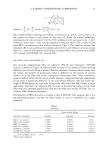
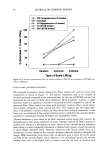
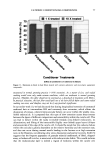
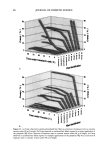
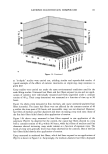
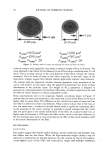
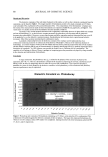
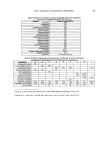
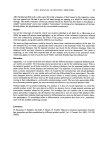
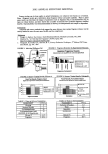
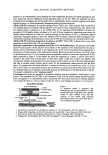
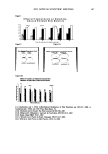
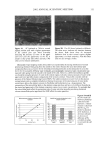
2002 ANNUAL SCIENTIFIC MEETING 97 Sensory testing can be done easily on actual formulations over whatever time frames are of interest. Phase 1 fragrance results give information about fragrance release and panel capability. Phase 2 panel assay results can determine the impact of parameters such as fragrance (Fig 3) and formulation (Fig 4) types on release kinetics, and have shown that a number of silicones have potential fragrance retention benefits. Reproducibility was demonstrated (data not shown), but interpretations are sample-set dependent. Conclusions Analytical and sensory methods both suggest the same silicones may sustain fragrance release, but the sensory method is more relevant, more flexible, and less complicated. References 1. Pringle, L. Explore Your Senses: Smell Benchmark Books, Marshall Cavendish, NY 2000 2. Marchie, M., "A Fresh Start for Fragrance" HAPP1, April, 2002 http://www. happi.com/current/Apri1022.htm 3. Meilgaard, M, Civille, G.V., and Cart, B. T., Sensory Evaluation Techniques, 3 ra Edition, CRC Press, Boca Raton, pg. 292, 1999 FIGURE 1: Individual Diffusion Cell mP• FIGURE 2: Fragrance Retention by Experimental Silicones Analytical Fragrance Results Colored bare are aig diff from control at alpha=O.05 6OO 300 15g Fragrance Component al Dimethicone, 10 cs [] Silicone A El Silicone B, hi DP FIGURE 3: Sensory Testing Results, Silicone A Panel Test I•sults, Fragrance Impact Stippled bar is sig dlff from control by binomial distribution 50 40 2O 10 0 Fragrance formulation B control [] 5% Sil A wlAL, 15 hr I•$%S Aw/PF, 10 hr TABLE l: Water-in-Silicone Formulation INGREDIENT WT % ,,, Glycerin 5 Sodium Chloride 1 Cyclopentasiloxane 10 Cyclopentasiloxane (and) 10 PEG/PPG-18/18 Dimethicone Silicone X 2-5 Fragrance 0.5 - 1 FIGURE 4: Sensory Testing Results, Silicone B Panel Results, Formulation Impact Checkered bar is alg diff from control at alpha =0.05 TABLE 2: Water-in Oil Formulation INGREDIENT WT % Carbomer (1% soln) 8.5 Water q.s. Steareth-2 2 isododecane i0 Silicone X 2-3 Fragrance 0.5-1

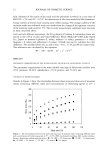
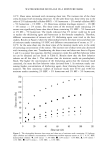
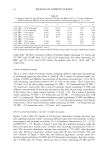
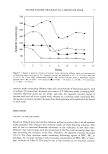
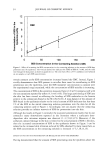
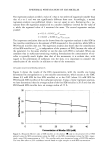
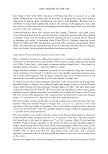
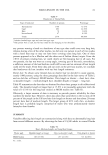
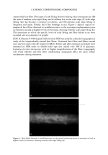
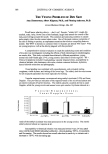
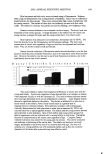
98 JOURNAL OF COSMETIC SCIENCE A LIE-DETECTOR INVESTIGATION TO MEASURE NEUROMODULATING ACTIVITY OF A TOPICALLY APPLIED PEPTIDE: DOUBLE BLIND CLINICAL STUOY OF N-ACETYL-TYR-ARG-CETYLESTIR Vlmsus PLACEBO Karl Lintner ', Ph.D., Claire Mas-Chamberlain •, Philippe Mondon •, Ph.D., Olivier Peschard •, Ph.D, Patrick Beau 2, Ph.D., Charlotte Musnier 2 and Arnaud AuberP, Ph.D. ZSederma, Le Perray en Yvelines, France 2Spincontrol, Tours, France SUniversity of Tours, France Key words :sensitive skir• neuropeptides. endorphin• Introduction Sensitive skin, real or perceived, is a subject of intensive research in cosmetic science. It is a fact that physical, chemical and psychological stress can be felt at the skin level by an increasing number of consumers. According to Lacharri•re [!], a clear correlation between the subjective feeling "I have sensitive skin" and an objectively measurable skin reaction to various forms of stress (climate, chemicals) can be established in a large portion of the population. Three levels of severity must then be distinguished: "sensitized skin" is a truly allergic reaction that implies the immune response. Irritation and redness are caused by the release of cytokinins and subsequent vasodilatation itching, burning, stinging and more or less painful sensation involves neurological molecules and mechanisms that particularly upset the state of well- being of the individual. In cosmetic terms, the three levels cited are approached in different ways: everything possible is done to avoid truly allergic, sensitizing substances in the formulations. The risks of irritation and local inflammation may be reduced by using only ingredients known to be mild themselves and by the addition of anti-irritant substances (allantoin, bisabolol, bacosides, darutoside and others). To reduce the unpleasant feeling of itch and sting, however, requires ingredients that act on the signal transmitting cells in the skin, i.e. the nerve endings (Merkel Cells, Meissner Bodies, C-fibers etc. [2]). The dipeptide Tyr-Arg has been shown to have analgesic potency in mouse brain via the release of enkephaline, an endogenous opiate peptide [3]. The closeness of developmental origins of brain and skin led us to investigate the potential use of this peptide in cosmetic application. This paper describes the neuromodulating activity of the derivatised peptide (N-Ac-Tyr-Arg-hexadecylester=Ac-YR-OHex) topically applied to the skin in view of reducing the cutaneous neural response to disagreeable stimuli. Materials and Methods Ac-YR-OHex is obtained by classical liquid phase peptide synthesis and purified to 98%. The peptide was formulated into a O/W emulsion at a level of 300 ppm. In vivo tests are carried out on a panel of 20 volunteers with informed consent. Each person served as her own control as vehicle and active emulsions were tested by application to the forearm until complete penetration. To measure an objective signal related to "unpleasantness", the electrodermal (or galvanic skin-) response was determined with the help of a physiograph MK III from Narco Bio System ("lie-detector"). The Ohmic Duration Response (ODR) is the parameter of the recorded signal that best reflects the emotional charge induced by the stimulus [4]. The stimulus consisted of sandpaper of different graininess being passed over the inside of the open hand. On the contra-lateral hand, the EDR probe is applied to the fingertips. The first measurement is done before application of the products (TO), the procedure is then repeated 1, 2 and 3 hours after product application. Simultaneously, the panelists express a subjective score (on a scale from 0 to 10) of 'unpleasantness' during the sand paper movement. Placebo and active product were randomly applied to either right or left hand. Statistical analysis by unilateral Student's test for paired series at the 5% level. Results: Electrodermal response in vivo Preliminary studies with the lie-detector equipment, carried out as a training phase for the panelists, allowed us to demonstrate that the correlation between subjective discrimination of different graininess and the electrodermal response was excellent. Thus the ODR signal could be used as a measure of the strength of emotional response to the chosen stimuli. Would the sensitivity of the method allow for sufficient discrimination between placebo and active product? Figure I shows that over the entire span of the experiment, a decrease of up to 20% in the response time (ODR) of the skin can be observed, both for the placebo and the active cream. Up to three hours afler product application, the signal attenuation is greater on
Purchased for the exclusive use of nofirst nolast (unknown)
From: SCC Media Library & Resource Center (library.scconline.org)