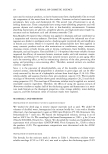
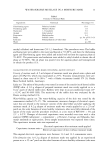
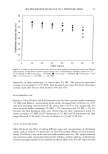
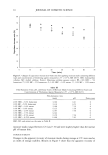
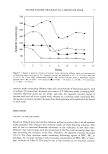
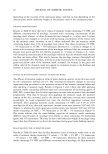
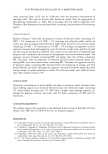
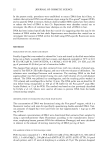
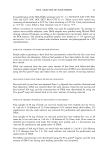
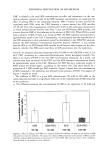
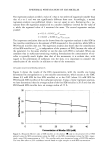
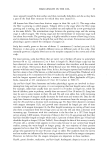
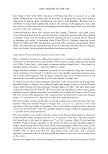
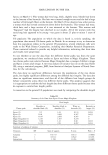
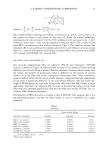
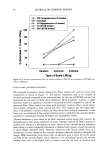
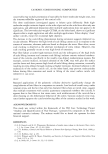
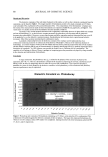
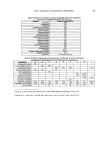
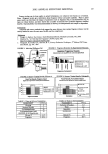
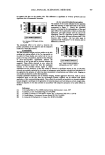
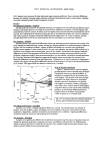
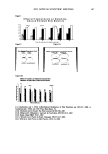
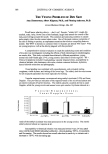
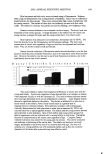
2002 ANNUAL SCIENTIFIC MEETING 99 the treated side than on the placebo side. This difference is significant at T=lhour (p0.05) and not significant, but still measurable, thereafter. • •0. o 70 T:,0 T•I h T,:2h T"3h Fig.l: decrease of ODR signal vfith time. *= p•O.05 The remarkable effect to be noted is, however, the perfect coincidence of the objective and the subjective result at T = 1 hour (fig. 2 and 3). Conclusion: The data presented confirm previous studies on the skin soothing and calming effects of the Tyr-Arg peptide on the skin [5]. These studies, also carried out in vivo on panels of 16 resp. 20 panellists, had shown that 300 ppm of N-Ac-Tyr-Arg-Ohex significantly reduced the sensitivity of skin to heat and to chemical irritation by capsaicin. These effects observed in vivo, where the purely perceptional, neural link from the unpleasant stimulus to the recorded electric signal is clearly In vivo: sensorial (subjective) perception The analysis of the scores indicated by the panelists after each stimulus on either hand leads to the results summarized in Figure 2 . Clearly, the volunteers perceive a decrease in the unpleasantness of the sand paper effect this is particularly evident one hour after application, and again persists until the end of the experiment. There is a significant (p0.05) difference at the T=lh time point, the trend continues until T=2h however, after 3 hours, the two sides seem to experience both "habituation" to the stimulus and no difference is observed. 80 T• T•h T•h T•h EI Ac-YR-Ohex ß Place bo [ Fig. 2: change in tactile perception of unpleasantness over time * =p0.05 established and the sensitivity of the skin surface is reduced in significant amount by the Ac-YR-Ohex molecule are probably explained by the release of endogenous opiate peptides endorphin and enkephaline in the epidermis, the presence of which has been documented in keratinocytes and Merkel cells. Ongoing in vitro studies are slated to confirm this hypothesis. Everyday unpleasant sensations such as chemical stinging, climatic aggression from heat, wind or cold or mechanical stress on the skin from the environment (clothes, surfaces) can be reduced with topical application of this neuromodulating peptide. These effects do not qualify as anesthetic nor strongly analgesic but are designed to participate in the generation of sensorial pleasure and well-being so actively sought today. Rarely do objective in vivo data correlate so successfully with subjective perception of so subtle effects on the skin. References [ 1 ] O. de Lacharri•re in: Proc. XIXth Journees Europ. Dermocosmet., Lyon, 1997 [2] N. Johnson, J. Clin. Neurophysiology 17, 539 (2000) [3] H. Takagi, H. Shiomi, H. Ueda and H. Amano, Eur. J. Pharmacol. 55, 109-111 (1979) [4] N. Vernet-Maury, J. Autonomic Nervous System 75 176-179 (1999) [5] K. Lintnet & O. Peschard Int. J. Cosmet. $ci. 22 207-218 (2000)

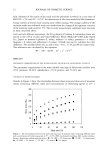
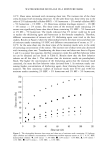
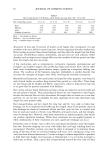
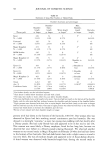
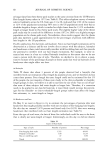
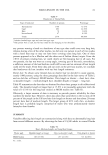
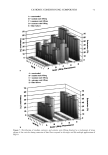
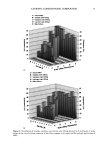
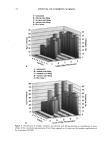
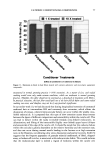
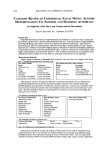
100 JOURNAL OF COSMETIC SCIENCE CATEGORY REVIEW OF COMMERCIAL FACIAL WIPES: SENSORY DIFFERENTIATION VIA SKINFEEL AND HANDFEEL ATTRIBUTES Lee Stapleton, Clare Dus, Lynn Carlone and Pat Mercadante Sensory Spectrum, Inc., Chatham, NJ 07928 Introduction - Disposable facial wipes, both dry and pre-moistened, are marketed as a convenient way to cleanse the face and are a growth area in domestic and international skin care. Consumer features include portability, pre-measured dosing, easy cleanup, and a host of general and specific benefit claims. Apart from the advertising copy used to sell these products, what perceived product attribute differences exist? Sensory Spectrum, Inc. conducted a descriptive analysis project to determine the skinfeel and handfeel attributes of a representative set of wet and dry disposable facial wipes. A Spectrum Descriptive Analysis Panel, with 9 highly trained panelists, documented the wipes in 3 ways: half-face evaluations of in-use properties of the clotlffcleanser system, effects on the skin after use. and tactile evaluation of the wipe materials. Materials and Methods- Sensory Spectrum obtained 12 disposable facial wipes that were available ill tile Northern New Jersey area. The products purchased for tile study were: Dry Facial Cloths Brand Distributor Cleml mid Clear Johnson and Johnson Dove Lever Brothers Equate Wahnart Neutrogena Neutrogena Corp. Noxzema Procter and Gmnble Oil of Olay - Normal/Dry Procter and Gamble Oil of Olay- Total Effects Procter m•d Gamble Pre-Moistened (Wet) Facial Wipes Brand Distributor Basis Beiersdorf Biore Andrew Jergens Clean and Clear Jotmson and Johnson CVS CVS Pharmacy, Inc. Ponds Age Detying Chesebrough-Ponds USA Nine panelists trained in tile Spectrum Personal Care Products Descriptive Analysis Method were provided detailed protocols for skinfeel and tactile haudfeel evaluation of wet and dry facial wipes. Skinfeel protocols were designed to simulate file consumer experience. Panelists had a minimum of 200 hourg training in descriptive analysis and received approximately eight hours of orientation prior to file stndy. Physical intensity references were presented for all attribntes, and evaluation terminology and techniques were reviewed. The Skinfeel evaluation attributes were: Dry Facial Cloths Only Both Product Types Wet Facial Cloths Only Amonnt of Lather Gloss Cooling (Afterfeel) Bubble Size Facial Lines/Creases Bubble Variation Stickiness Rinsability Slipperiness Stickiness Amount of Residue Slipperiness Type of Residue Amount of Residue Roughness Type of Residue Moistness Tautness The Handfeel evaluation attributes were: Amount of Product Gritty Grainy Lumpy Fuz• Slipperiness Thickness Force to Gather Fullness/Body Note: Dry Wipes were evaluated both dry and wet. Evaluation was divided by sample type (wet/dry). Within each type, the order of presentation was randomized with 2 reps. In-use and post use skinfeel attributes were evaluated using half-face testing. Handfeel attributes were evaluated by placing the wipe on a horizontal surface. Data was analyzed by Analysis of Variance (ANOVA) usiug the following model: sample. judge, judge X sample, alpha level =
Purchased for the exclusive use of nofirst nolast (unknown)
From: SCC Media Library & Resource Center (library.scconline.org)