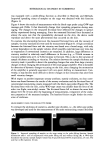
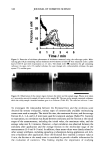
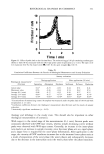
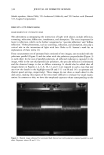
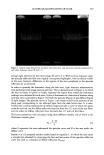
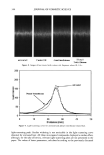
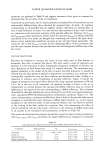
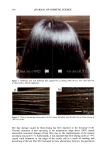
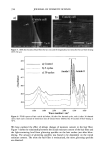
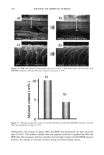
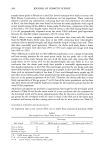
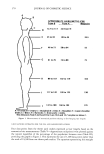
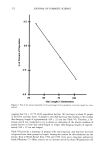
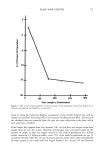
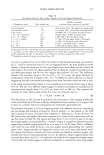
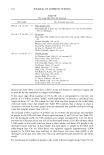
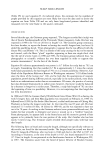
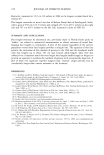
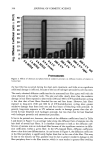
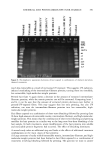
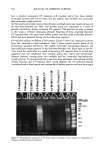
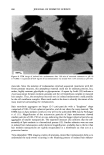
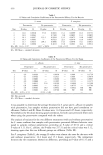
374 JOURNAL OF COSMETIC SCIENCE Figure 4. The long hair of Crystal Gayle. Hair to the ankles can be observed in only a small percentage of the population. (Published with permission of Gayle Enterprises, Inc.) six and 17 feet) than listed in these websites, but we believe that our discussion below shows that our primary conclusions will not change appreciably even if there are more persons with hair between these lengths. Figure 3 is a plot made by combining the data on hair length from our USA theme park studies with the data of Table VII. In this graph, we assume that the USA data (percentages) represent data for the whole world. For the developed world this assump- tion probably holds reasonably well. However, for developing-world countries like India, China, and Indonesia, with a higher percentage of very young people (Table II) and where there is less cutting of hair, especially among females, this assumption will likely provide low estimates. Obviously, this assumption provides greater deviation at shorter hair lengths because of the limits imposed by common anagen growth periods, usually cited at two to six years

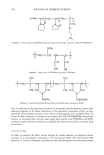
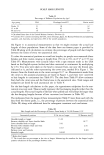
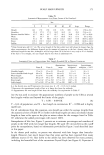
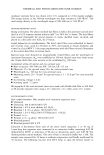
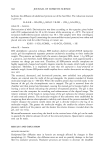
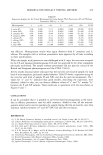
SCALP HAIR LENGTH 375 Table VI Calculations From the Data on Hair Length in USA and Larger Populations* % Population (site) Hair length (cm) Number of persons (calculated from equations A and B)** 12.04 (shoulder) 34 1.88 (shoulder blade) 53.5 0.281 (waist) 73.5 1.78 x 10 -2 (buttocks) 103 8.45 x 10 -4 (knees) 134.5 3.3 x 10 -5 (ankles) 168.5 9.6 x 10 -6 183 1.5 x 10 -7 305 6.0 x 10 -s 488 26.6 million USA 118 million developed world 4.2 million USA 18.6 million developed world 620,000 USA 2.75 million developed world 39,300 USA 175,000 developed world 1,900 USA 8,400 developed world 73 USA 324 developed world 1,500 world 21 USA 93 developed world 400 world 0 USA 1 developed world 7 world 0 USA and developed world 3 world * Population of USA = 270 million, but since approximately 82 percent of the USA population (15) are age 12 and above, use 221 million as the adult population for the USA. Since approximately 75 percent of the world's population (10) are 12 and above, use 4.5 billion as the adult population of the world. ** Numbers rounded off, except where fewer than 100. (1 1,12) or at about 25 to 76 cm (10 to 30 inches) in hair length (assuming a growth rate of 12.7 cm (five inches) per year) (13,14). As suggested above, the three graphical points (Figure 3) from the literature, for the very longest hair, most likely do not contain all the people in the world with those lengths of hair, making the number of people and our calculated percentages low for the very longest hair (beyond 183 cm). The difference between this literature value at 183 cm (2.9 x 10⁻⁷%) versus the point obtained by extrapolation of the line in Figure 2 (96 x 10-7%) differs by a factor of about 33, further suggesting that this conclusion (percentages from these literature values are low) is true. In the graph represented by Figure 3, two straight lines are formed intersecting at about 183 cm. The two very different slopes suggest a different mechanism or explanation for maximum hair lengths from 34 to 183 cm versus 183 to 488 cm. The equation de- scribing the latter three points of this line from the literature data is: Y = - 14.266 - 0.00473X (B) The data point at 183-cm hair length (from the literature) is close enough graphically to the point from the USA hair study (by extrapolation from equation A) to suggest that at least on a relative basis our assumptions are reasonable approximations. Nevertheless, the point at 183-cm length provides very different values for calculating the percentage and numbers of people at 183-cm length, i.e., two people in the USA from equation B versus 21 people from equation A, differing by a factor of about 10. We believe that the higher value from equation A is closer to the actual value, and we use that value in Table VI. The region and slope from 35 cm to 183 cm (one to six feet) hair length appears to be governed by a "normal" anagen to catagen to telogen transition, suggesting a normal anagen period of up to as long as 12 to 14 years. This is a different view from the past belief of about a six-year anagen period approaching the "normal" upper limit. Anagen periods are frequently cited as two to six years and several weeks for catagen and telogen however, few have actually attempted to measure anagen time periods and only on small populations (11,12). In addition, longer anagen periods than six years have been cited (11). As indicated, the slope in the longer-hair-length region (183-to-488 cm) might suggest a different mechanism to control this extra-long anagen
Purchased for the exclusive use of nofirst nolast (unknown)
From: SCC Media Library & Resource Center (library.scconline.org)