J. Cosmet. Sci. 1 57, 455-463 (November/December 2006) Free-choice-profile descriptive analysis of sticks with conditioning agents ADRIANA GAMBARO, MARIA EMMA PARENTE, and ANA GIMENEZ, Secci6n Evaluaci6n Sensorial (A. Ga., A. Gi.) and Catedra de Qufnzica Cosmetica ( M.E.P.), Facultad de Qufmica, U niversidad de la Republica Oriental def Uruguay, A vda. Graf. Flores 2124, C.P. 11800, Montevideo, Uruguay. Accepted for publication August 25, 2006. Synopsis Nine formulations to be used as stick bases were manufactured using sodium stearate, propyleneglycol, and water, adding different concentrations of the following conditioning agents: octyldodecanol, PPG-5-ceteth- 20, and PPG-15-stearyl ether. Free-choice-profile methodology was used to select the most adequate concentration of the agents in order to improve sensory properties. The sensory descriptors were grouped into four categories: stick aspect, sensations dming application, sensations immediately after application, and sensations five minutes after application. Formulations containing 4% and 6% octyldodecanol and 2% PPG-15-stearyl ether were considered inad equate, since they showed unwanted qualities such as exudation, a slow absorption rate, high oiliness, and residue. Formulations containing 2% octyldodecanol 2%, 4%, and 6% PPG-5-ceteth-20 and 4% and 6% PPG-15-stearyl ether presented different characteristics regarding the four categories of descriptors evalu ated, all of them being acceptable considering the properties sought. INTRODUCTION The current use of the stick form in a wide variety of cosmetic and dermatologic products offers advantages such as limiting the action site, clean application, and ease of transportation. A wide variety of bases, ranging from those that are highly lipophilic with an occlusive effect to easily washable emulsions, can be formulated, with active substances in suspension, dissolved, or in emulsions. Get-type formulations offer the possibility of incorporating polar components and, at the same time, condition skin due to their moisturizing and emollient components. Previous studies on these gel-type formulations with sodium stearate, using propyleneglycol and water as solvents, showed that these types of samples present characteristics such as acceptable penetration, adequate aspect, and good stability over six months, but that they have poor slipperiness and are hard to the touch (1). To continue these studies, Address all correspondence to Adriana Gambaro. 455

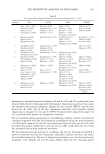
456 JOURNAL OF COSMETIC SCIENCE sticks were reformulated, reducing sodium stearate concentration and adding ingredi ents that might improve slipperiness while acting as skin conditioners. These charac teristics require an appropriate sensory tool for evaluation. Descriptive analysis is a method currently used in the sensory evaluation of food. In 1987, Aust et al. (2) applied this methodology to cosmetic emulsions, and recently Parente et al. (3) applied it to evaluate cosmetic ingredients. Conventional descriptive analysis methodologies such as flavor profile, texture profile, quantitative descriptive analysis (QDA), and Spectrum® constitute useful tools to solve diverse problems asso ciated with quality control, shelf life, product development, and consumer preferences, but they demand an important number of training sessions (4-6). This technique involves the selection of terms and the development of a consensus list of descriptors. To avoid this long and difficult step, free-choice profile (FCP) has been proposed as an alternative (7). In FCP, each judge chooses his or her own terms to describe perceived sensations (8,9). Williams and Arnold (10) showed that FCP with the scores analyzed by general pro crustes analysis (GPA) gave results similar to those of conventional profiling and simi larity scaling. Assessors are required to be objective, use intensity scales, and develop a list of attributes and a consistent vocabulary (11). It is interesting to explore the use of this technique to evaluate personal care products due to the advantages it offers and its widespread and successful use in food products (12-14). The aim of the present work is to select agents with improved slipperiness and skin conditioning properties for stick formulations based in propyleneglycol and water, with sodium stearate as gelling agent, and to determine the adequate concentrations of the different conditioning agents using FCP methodology. MATERIALS AND METHODS SAMPLES Formulations to be used as stick bases were manufactured using sodium stearate, pro pyleneglycol, and water (Table I), adding three different concentrations of each of the following conditioning agents (15, 16): • Octyldodecanol: oily component used in emulsions, deodorants, and antiperspirants, having good spreadability. Table I Sample Composition Samples Component (%) Al A2 A3 Bl B2 B3 Cl C2 C3 Sodium stearate 6.5 6.5 6.5 6.5 6.5 6.5 6.5 6.5 6.5 Propylenglycol 68.5 67.0 65.5 68.5 67.0 65.5 68.5 67.0 65.5 Deionized water 23.0 22.5 22.0 23.0 22.5 22.0 23.0 22.5 22.0 Octy ldodecanol 2.0 4.0 6.0 PPG-5-ceteth-20 2.0 4.0 6.0 PPG-15-stearyl ether 2.0 4.0 6.0
Purchased for the exclusive use of nofirst nolast (unknown)
From: SCC Media Library & Resource Center (library.scconline.org)