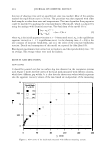
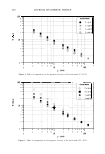
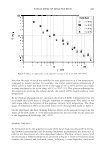
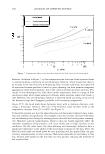
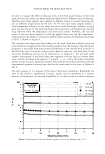
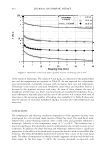
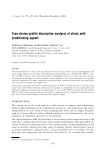
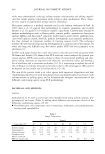
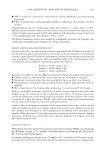
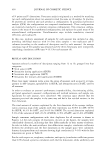
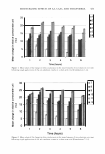
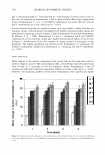
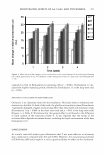
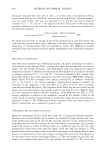
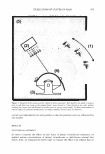
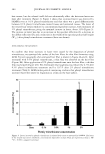
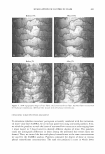
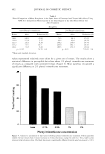
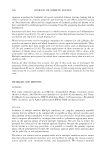
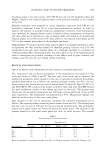
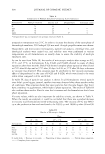
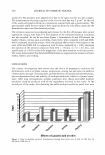
- Ill � 0.100 8 6 4 2 0.010 4 FACIAL MASK OF DEAD SEA MUD ['gJ * 447 Polysaccharids solution lwtO/o • T = 5 °C T = 15 °C ■ T = 25 °C ■ ['gJ * T = 35 °C --------------�------•-----------!------------------------------------- -------�-------� -�-��-�-�--------- 6 I • • 4 10 6 8 ['gJ • • 100 I � = 4 y (1/s) 6 8 1000 4 6 8 10000 Figure 3. Temperature dependence of the rheological behavior of polysaccharide. On the other hand, Figure 3 shows that at high shear rates (above 300 s- 1 ) the apparent viscosity of the polysaccharide decreases with temperature, which means that the gel structure is destroyed under the effect of high shearing. The high temperature softens the granules of the polysaccharide, and the stresses imposed on them are large enough for deformation and flow, which in turn results in the decrease in viscosity with tempera ture. The effect of temperature on the rheological behavior of the Dead Sea facial mask is shown in Figures 4-6. The investigated facial mask demonstrates an unexpected behav ior with temperature. This behavior can be divided into three stages. In the first stage, which covers the temperature range of 5°C to 20°C, the apparent viscosity of mud behaves like the normal liquid, i.e., the apparent viscosity decreases as the temperature increases (see Figure 4). However, an interesting behavior has been observed in the second stage, which covers the temperature range of 20°C to 40°C. As shown in Figure 5, the apparent viscosity of the facial mask increases with temperature. Above 40°C, the mud mask behaves typi cally in that the apparent viscosity decreases with temperature. This stage is demon strated in Figure 6. It seems that the presence of the stabilizer "polysaccharide" is responsible for the unusual behavior of the second stage. It should be stated here, that the rheological measurements on the facial mask were carried out in the low region of shear rate (below 200 s- 1 ) (compare Figures 4-6). In this shear-rate region, it has been shown that the polysac charide viscosity increases with temperature (see Figure 3). This explains the atypical behavior of the facial mask with temperature in the second stage. It can be concluded

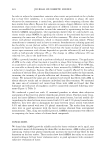
448 - UI � - UI � � 100 8 6 4 2 10 4 1 JOURNAL OF COSMETIC SCIENCE I I I I I I ! l I I I I --------------..I------- -- - - • - -_-._-•-----.L-----.J----.J-- • • • -- • --- ----'- • -• --• -- -----• • ------ J I j I I I Facial Mask I I I I I I I l I I I I I I I I I I --------------1--------------r------r·----1--·-1---------------r-------------- ------- • T = 5 °C --------------1---------------j--------:-----1----1---------------j-------------- ------- * T = 10 °C - T = 15 °C ' I , , , , , 6 ············i···· 1[ ········i ·····[····[ ··· ·· · l · ·········· "----'--___ $ T 2_ ____,, 0 c - : : t : : : :::: :::T::::::::::J .:L:i:f.. ::::::::r·,·:::: :: ::L::I: T::: :::::: : : : : : : $ ! : : : : : : : : : ffi : : : i i i : i i w i �: i I i 11 I Ir$ 4 6 8 10 2 y (1/s) 4 6 8 100 Figure 4. Effect of temperature on the apparent viscosity of the facial mask (5 ° -20°C). 100 8 6 4 2 10 4 2 1 1 t I I I I I 1 I I I I I I 1 --------------..1•---•----•-----L--------L-----.I-••• .J •• _____________ ._ ___ ___________ ,L ____ _ I I I J J I j Facial Mask I I I I I I I I I t ! I I I I I I I J I I --------------..1---------------l..--------1------.J----..1---------------1---------------"------ $ _____________ /� _________ j _____ _j ___ J ___ ___ _________ _j ___________ )_____ ■ T = 25 °C -- T = 20 °C :� 0: : : : : : � T =30 °C --------------il---------0�-------6----(---(--------------�--------------i----- _____ o __ T=4_o _ _ 0 ___ c -- ! !) � : 6 : : ' ' ■ ' ' ' ' ' ' ::: ::::::: __ --r::::::::::::: :� ::: :: :: �-::: :: :� :: : ::: :: :: : ::� ::::::: ::::::::' :::::::: :: :::r::r::::::: _: :::: , , , , ' CD , , , , J· ·· 1 +:. · ff/�+ +r -------------+-----------+-----+---+--+----------------------------+------+---t------------------::······r : / : j j : / j : : � 4 6 8 10 2 y (1/s) 4 6 8 100 Figure 5. Effect of temperature on the apparent viscosity of the facial mask (20°-40°C).
Purchased for the exclusive use of nofirst nolast (unknown)
From: SCC Media Library & Resource Center (library.scconline.org)