498 JOURNAL OF COSMETIC SCIENCE when in an alkaline solution. It has been suggested that the examples of applications are discussed. The 2 ]st century is isomeriz.ation of BJ should similarly proceed to the quarter said to be the era of environmental protection and many ammonium hydroxide fonn of cyclohexadienylidene with attempl'l are being made to create a recirculation-based the same maximum wavelength, The effect of temperature society, which 1s imparitive for future generations. The on decomposition was also observed. Jt is suggested that starting paint in manufacturing beqins by developing the color tone of Bl when in an alkaline solution should not fabrication processes that have a minimal burden on the change in a short time because the decomposition of BJ 1s earth, where goods are intended to maintain and improve slow at a low temperatures. necessary function.� in the daily lives of people. Two concrete examples using surface technology to build healthy and comfortable dwelling spaces are explained. Human and Environment-Friendly Materials for Dwelling One is hydrothermally solidified mesoporous materials S pa ces using soil to control indoor humidity autonomously and adsorb VCX::s. The other is on anti-stain surface treatment. Norifumi lsu One of the biggest tasks at home is cleaning around the kitchen area where water is used. Much energy and General Research Institute of Technology, JNAX resources are consumed for removing dirt or stains at home Corporation, 3-77, Minato, Tokoname 479-8588, Japan as well as in buildings. An anti-stain surface treatment that resembles the characteristics of a snail shell was applied to In this paper, the fundamental technologies related to the sanitary wear surface to prevent soluble silicic acid human and environment-friendly manufacturing and two scaling from tap water.

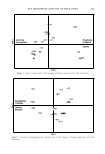
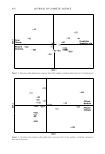
]. Cosmet. Sci., 57, 499-501 (November/December 2006) Abstracts IFSCC Magazine Vol. 9, No. 3, 2006* Objective Evaluation of the Placebo Effect in Cosmetic Treabnentq -A Randomized Controlled Study Fernanda Distante•, Valerie Pagani•, Adriana Bonfigli•, Luigi Rigano• and Joachim Fluhr# •JSPE - Institute of Skin and Product Evaluation, Via Bruschetti, 1, 20125 Milano, Italy #De pa rtment of Dermatology, University of Jena, Germany A product's packaging and claimed efficacy may stimulate pleasant emotion during the use of cosmetics, thus enhancing their perceived benefits. The aim of this study was to evaluate if smart packaging and strongly claimed efficacy attributes can influence the objectively measured efficacy, allowing a true placebo effect to be associated with a given cosmetic treatmenl A marketed anti-aging gluconolactone-based fonnulation was selected for the study and packaged both in a fancy sophisticated jar and in an unbranded plain container. Thirty-six female volunteers (age range: 30-55 years) with facial photoaging were selected for the study and randomly assi gn ed to the fancy or plain packaged producl Pre-agr-eed messages aimed at extolling the product's cosmetic effects accompanied delivery of the fancy-packaged product to panelists. The given product was applied to the face twice a day for 8 weeks. In�trumental measurements of the skin color (a• and L• pa rameter), skin capacitance, skin tensile properties (RO, R2, R6), skin thickness and skin microrelief parameters (Ra and Rz) were taken at baseline and after 4 and 8 weeks of use. Clinical and subjective evaluation were also carried out at each control visit Moreover, the amount of cream con'iumed during usage was calculated by weighing the given jars at each visit Statistica I anal )'l! is of the data obtained showed a si gn ificant improvement in all instrumental parameters for both groups ('fancy' and 'plain' packaging), although no significant differences were detected between the two groups at any time. The improvement was higher in the 'plain' group for most instrumental pa rameters except for micro-relief pa rameters where the outcome was better in the 'fancy' group. Promotion of facial muscle relaxation deriving from the application of the fancy packaged cream could be a possible explanation for this finding. Also the product's efficacy and sensory properties were perceived with a higher positive impact in the fancy group. The better perfonnance of the plain packaging group could be related to daily application of the 'proper' amount of cream. In fact, this group consumed a larger amount of cream than the 'fancy' group. These results show that a true placebo effect cannot be induced by pa ckaging characteristics, although they can slightly influence the degree of the expected skin benefits in different wa)'l!. Moreover, proper daily dosage of the product appea to be a key factor in improving the biophysical skin properties related to anti aging and restoring effects. A Non-Destructive Method for Aisessing Hair Interior and Surface Damage by Near Infrared S pec troscopy Yuta Miyamae1 ', Yumika Yamakawa1 , and Yukihiro Q7..1ki2l I) POLA Chemical Industries, Inc., 560 Kashi0ho, Tot�uka ku, Yokohama 244-0812, Japan 2 ' School of Science and Technology, Kwan1ei-Gakuin University, Sanda 669-1337, Japan This paper reports a non-destructive method for evaluating hair interior and surface damage based on near-infrared (NIR) diffuse reflectance (DR) spectroscopy. It is important to know the extent of chemical damage in the interior and surface proteins of the hair in order to choose an appropriate restoration agent or chemical treatment. Unfortunately, though there are many simple and non-destructive methods for evaluating the hair surface, the existing evaluation methods for monitoring chemical changes in the interior proteins are very complicated and destructive. Therefore, we have attempted to develop a new non-destructive method to evaluate the damage of the hair interior and surface simultaneously by using NIR-DR spectroscopy. The key to this study was the combined application of NIR-DR spectroscopy and principal component anal )'l! is to development of a method for the evaluation of hair damage and finding the most suitable wavenumber region (5060- 4500 cm- I) for thii evaluation. In this study, we developed a new evaluation method that can indicate hair interior and surface damage condition.'! induced by chemical treatment in a simple, rapid, non-destructive manner based on NIR-DR using a fiber probe on hair. * These abstracts appear as they were originally published. They have not been edited by the Journal of Cosmetic Science. 499
Purchased for the exclusive use of nofirst nolast (unknown)
From: SCC Media Library & Resource Center (library.scconline.org)