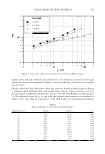
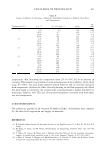
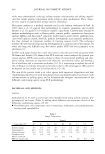
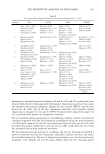
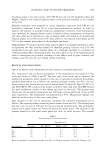
490 JOURNAL OF COSMETIC SCIENCE Table II Composition of Multiple Emulsions Containing Active Substances Formulations Multiple emulsion Glycolic acid G 75 25 GD 70 25 GS 70 25 GDS 70 25 * Dexpanthenol was incorporated into primary emulsion (Table I). Dexpanthenol 5 5* Strontium nitrate 5 5 preparation temperature was 25 ° C. In order to increase the density of the outer phase of the multiple emulsion, 2% Carbopol 934 was used. A triple propeller mixer was chosen. Organoleptic and microscopic investigations, particle size analysis, centrifuge tests, and rheological analysis were carried out, and stability tests were performed at various temperatures on all formulations, as usually done to assess the stability of multiple emulsions (23). As can be seen from Table III, the results of microscopic analysis after storage at 4°C, 25 ° C, and 37 ° C, in formulations F-G, F-GD, and F-GDS showed no signs of phase separation after three months. Only F-GS showed complete phase separation when stored at 25 ° C after 60 days and at 37 ° C after 30 days. In F-G, at 37 ° C after 90 days, a decrease in viscosity was observed. This situation may be attributed to the viscosity-increasing effect of dexpanthenol in the cases of F-GD and F-GDS, which were found to be more stable when compared to F-G and F-GS. In Table IV, data of particle size analysis is shown. In all formulations tested, particle sizes didn't grow bigger instead, smaller sizes were observed after three months under all conditions. This situation shows that since particles don't become bigger, they don't have a tendency to agglomerate, which leads to phase separation. The results of Table III also confirm these results. Particle sizes don't increase and the formulations don't have phase separation. Viscosity values, which are also important for stability criteria, are shown in Table V. When the results are analyzed, it could be concluded that there was a gradual decrease in viscosity in all formulations tested with passing time. The viscosity of F-G was 40467 cp at the production date and was found to be 2093 3 cp and 18600 cp after 60 and 90 Table III Results of Microscopic Analysis Days 40 ± 1 °C 25° ± 1 °C 37° ± 1 °C Formulations 7 30 60 90 7 30 60 90 7 30 60 90 F-G s s sf s+ s s s s+ s s S' + F-GD s s s s s s s s s s s s F-GS s s + + + +++ ++++ +++ ++++ F-GDS s s s ss s s s S' s s+ + + S: stable form. +: Decrease in viscosity. + +: Beginning of phase separation. + + +: Partial phase separation. + + + +: Complete phase separation.

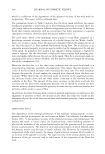
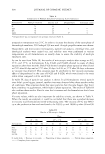
GLYCOLIC ACID IN W/0/W EMULSION 491 Table IV Data of Particle Size Analysis (µm) by Microscope Method Days 4°c 25°c 31 ° c Formulations PD 30 60 90 30 60 90 30 60 90 G 9.025 7.976 7.413 6.095 7.019 6.477 5.066 6.664 5.480 4.966 GD 10.182 9.701 8.766 6.658 6.590 6.560 5.290 6.769 6.556 6.505 GS 8.078 7.058 5.673 5.274 6.899 GDS 10.710 9.688 8.225 5.636 8.210 7.660 6.378 6.919 5.938 5.135 PD: production date. Table V Viscosity Values of the Formulations at 25°C Days PD 7 30 60 90 Viscosity SD Viscosity SD Viscosity SD Viscosity SD Viscosity SD Formulations (cp) (±) (cp) (±) (cp) (±) (cp) (±) (cp) (±) F-G 40467 385 30500 509 21800 355 20933 478 18500 216 F-GD 43933 997 33967 1483 28867 612 26567 498 20567 498 F-GS 16000 216 12933 124 F-GDS 19200 163 16433 124 12133 612 14133 834 10900 294 PD: production date. days, respectively. The viscosity of F-GDS was 19200 cp at the production date and was found to be 1413 3 cp and 10900 cp after 60 and 90 days, respectively, at 2 5 °C. This much decrease in viscosity doesn't affect stability, which is also confirmed by organo leptic controls and microscopic and particle size analyses. Multiple emulsions containing GA, GA and D, GA and S, and GA, D and S were investigated and compared on ten volunteers' inner arms by using panel tests to examine chemical peeling and its side effects. The purpose of this study was to evaluate whether GA improves skin barrier function when preventing skin irritation by strontium nitrate. Skin care products are complex formulations that may cause sensory irritation symptoms, characterized by stinging, burning, and itching. Substances capable of counteracting sensory irritation are of great practical interest. Collagen hydrolysates are reported to be used for this purpose (24). Strontium salts have been demonstrated to inhibit sensory irritation and inflammation when applied topically. In our study, we evaluated the efficacy of strontium nitrate in reducing chemically induced skin sensory irritation in ten subjects. SKIN SENSORY TEST DESIGN Ten healthy subjects (aged 27 +/- 5 years) entered the study. The test site was the forearm of each subject. Each test site was 6 cm x 4 cm in size. Four different formu lations and an untreated control were applied to the test sites as in a similar referenced
Purchased for the exclusive use of nofirst nolast (unknown)
From: SCC Media Library & Resource Center (library.scconline.org)