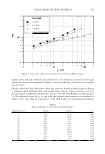
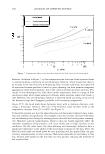
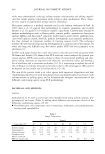
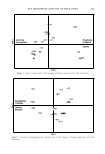
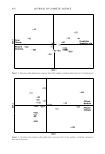
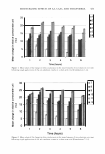
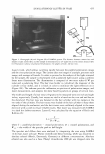
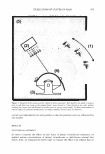
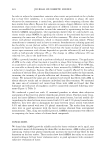
EVALUATION OF LUSTER IN HAIR · · . :�·:···,··· .. ,, ··::: . . ,:.-.·.'.· • ': - · "·· · -.· · . - . . , ' . . , . ' . . . . . . . . . . - 479 (1) Figure 2. Diagram of the system used for subjective shine assessment. Each panelist was asked to assign a rank to each hair tress, using a scale ranging from 1 (most luster) to 5 (least luster) at one time, without touching the tresses, bur was allowed to see the tresses at various visual angles. (1) Shine measurement at various angles, (2) polarized illumination, (3) sample cylinder, (4) hair tress, (5) dark box. carried out independently for each panelist so that the panelists were not influenced by one another. RESULTS INSTRUMENTAL ASSESSMENT In order to examine the effects on hair luster of phenyl trimethicone treatment, we applied various concentrations of phenyl trimethicone to dark-brown oriental hair tresses. First, we measured the luster value to evaluate the effect of an ethanol base on

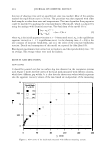
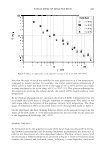
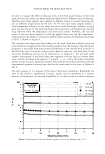
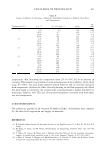
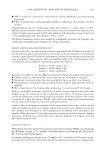
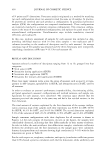
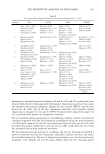
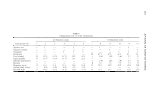
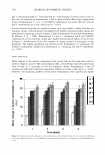
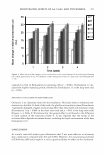
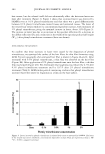
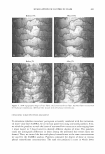
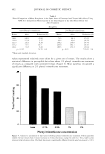
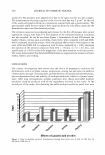
480 JOURNAL OF COSMETIC SCIENCE hair tresses, but the ethanol itself did not substantially affect the hair-tress luster one hour after treatment (Figure 3 ). Figure 3 shows that increased luster was detected by SAMBA even at 0.1 % phenyl trimethicone and that there was a good differentiation between 0.1 % phenyl trimethicone-treated tresses and untreated tresses. The luster of the treated hair tresses exhibited a concentration-dependent increase, with treatment of 2% phenyl trimethicone giving the maximal increase in luster, about 31 % (Figure 3). The increase in luster was due to an increase in the specular reflection (S), a decrease in the diffuse reflection (D), and a reduction in the width of the specular peak at half-height (W112 ) after phenyl trimethicone treatment (data not shown). FIBER SURFACE EXAMINATION To confirm that these increases in luster were caused by the deposition of phenyl trimethicone, we examined the surface of the hair fibers for thin film formation using AFM. Typical topography of an untreated hair fiber is shown in Figure 4A and C. After treatment with 0.5% phenyl trimethicone, a thin film was observed on the hair fiber (Figure 4B). After application of 2% phenyl trimethicone onto the hair fiber, a thicker film was formed (Figure 4D). We determined that roughness was reduced by 6.7% after 0.5% phenyl trimethicone treatment and by 19.7% after 2% phenyl trimethicone treatment (Table I). AFM studies provide convincing evidence that phenyl trimethicone increased hair fiber luster by deposition as a film on the hair surface. 40 ..-----------------------------------, ** 30 ···································································································· 10 ................................ , ............................................. Base 0.1% 0.5% 1% 2% Phenly trimethicone concentration Figure 3. Luster increase by phenyl trimethicone in oriental hair tresses as measured by SAMBA. The luster of the treated hair tresses exhibited a concentration-dependent increase. Data are expressed as mean ± SD. **p 0.0001 compared with base.
Purchased for the exclusive use of nofirst nolast (unknown)
From: SCC Media Library & Resource Center (library.scconline.org)