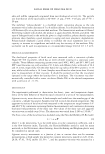
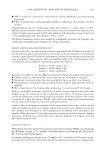
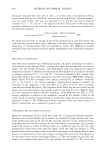
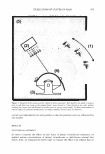
478 JOURNAL OF COSMETIC SCIENCE previously measured hair tress area (1 inch x 5 inches) with a micropipette without repositioning the hair tress. Each hair tress was treated with 100 µl of phenyl trimethi cone per gram of hair. The tress was permitted to air dry for one hour at ambient conditions (22° ± 1 ° C and 50 ± 5 % relative humidity). The luster of the treated hair was then remeasured in the dark box. The percent increase in luster was calculated by the following equation: (After treatment - Before treatment) Luster increase ( % ) = ,-r, x 100 Be1ore treatment All luster data represent an average of the results obtained on at least five tresses, and each tress was measured three times. Therefore, each luster value represents an average taken from 15 measurements. Data are expressed as mean ±SD. Differences between untreated tresses and tresses treated by phenyl trimethicone were evaluated by unpaired t-test. FIBER SURFACE EXAMINATION Hair fibers were mounted onto AFM sample pucks. An optical microscope was used to preliminarily image the hair fiber to ensure that there was no substance on the hair surface. For the sample treatment, each fiber-loaded puck was immersed in phenyl trimeticone solution at different concentrations and was permitted to air dry for one hour at ambient conditions (22° ± 1 ° C and 50 ± 5% relative humidity). The coating states of the fiber surfaces were then examined in the same area using AFM (PSIA, Sungnam, Korea) before and after treatment with phenyl trimethicone at ambient conditions (22° ± 1 ° C and 50 ± 5% relative humidity). Topographical images to evaluate the reduction of the roughness of the hair fiber were taken on 0.5% and 2% phenyl trimethicone-treated hair fibers. The roughness of the fibers was measured based on the images and was represented as the average roughness obtained from five different fibers for each concentration before and after treatment, using AFM software XEI 1. 5. The average roughness is defined as the arithmetic average of the absolute values of the surface height deviations, measured from the mean plane within the box cursor. Data are expressed as mean ± SD. Differences between untreated fibers and fibers treated by phenyl trimethicone were evaluated by paired t-test. CONSUMERS SUBJECTIVE SHINE EVALUATIONS Subjective assessments of tress luster were made by 15 untrained volunteer panelists. Panelists were recruited from our consumers and consisted of eight females and seven males between the ages of 20 and 40. We used the same five tresses, which had been randomly placed on the hair cylinder for the instrumental measurement. Each panelist ranked the tresses in order of relative shine in a darkened room so that the only illumination of the tresses was from the lamps inside the dark box (Figure 2). The panelists were asked to assign a rank to each hair tress using a scale ranging from 1 (most luster) to 5 (least luster) at one time, without touching the tresses, but were allowed to see the tresses at the various visual angles (Figure 2.). The rank numbers received by each sample were summed and analyzed by the ranking test method (13). The tests were

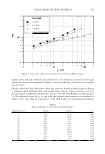
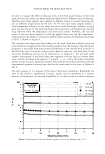
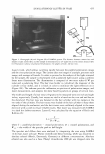
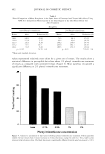
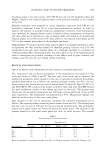
EVALUATION OF LUSTER IN HAIR · · . :�·:···,··· .. ,, ··::: . . ,:.-.·.'.· • ': - · "·· · -.· · . - . . , ' . . , . ' . . . . . . . . . . - 479 (1) Figure 2. Diagram of the system used for subjective shine assessment. Each panelist was asked to assign a rank to each hair tress, using a scale ranging from 1 (most luster) to 5 (least luster) at one time, without touching the tresses, bur was allowed to see the tresses at various visual angles. (1) Shine measurement at various angles, (2) polarized illumination, (3) sample cylinder, (4) hair tress, (5) dark box. carried out independently for each panelist so that the panelists were not influenced by one another. RESULTS INSTRUMENTAL ASSESSMENT In order to examine the effects on hair luster of phenyl trimethicone treatment, we applied various concentrations of phenyl trimethicone to dark-brown oriental hair tresses. First, we measured the luster value to evaluate the effect of an ethanol base on
Purchased for the exclusive use of nofirst nolast (unknown)
From: SCC Media Library & Resource Center (library.scconline.org)