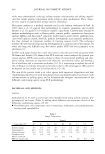
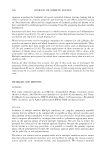
GLYCOLIC ACID IN W/0/W EMULSION 489 emulsions using a two-step process. Abil EM 90 was used in the lipophilic phase and MgS04 7H20 in the internal aqueous phase of the primary emulsion as in a similar study (22). Multiple emulsions were prepared by using lypophilic surfactant Abil EM 90 and hydrophilic surfactant Tween 80 in a two-step emulsification method. In order to improve the stability of multiple emulsions, preparation conditions of the formulations were optimized by changing factors such as oil phase volume, temperature, mixing rate and time, addition of electrolytes, type of mixing shaft, and densities of internal and external phases. GA (2 5 % ) and S (5 % ) were added to the external water phase and D (5 % ) to the internal water phase of the multiple emulsions. Dexpanthenol 5% was put into the inner aqueous phase of a multiple emulsion in order to regenerate the skin disorders formed by chemical peeling. Glycolic acid 25% was incorporated into the outer aqueous phase of a multiple emulsion to accelerate its chemical peeling effect. Strontium nitrate was also added to one of the formulations in order to investigate the probable lowering of side effects such as pain, burning, and itching caused by glycolic acid during chemical peeling. RES UL TS AND DISCUSSION EFFECTS OF PRODUCTION PARAMETERS ON THE STABILITY OF MULTIPLE EMULSIONS The composition and production parameters of the formulations investigated in this study are shown in Tables I and II. The first step of the study was to optimize the production parameters. Data obtained in the case of optimized conditions for primary emulsion formulation are as follows: the optimal oil phase volume was 20%, the sur factant chosen was among the ones tested, namely Span 20, Span 80, Span 20-80 (1:1), and Abil EM 90. We conducted the studies with all of these, and since Abil EM 90 gave the most satisfactory results, it was chosen and used in our study. The mixing time chosen was 15 min and the mixing rate was 1500 rpm, with an additional 15 min at 800 rpm, respectively. The temperature was maintained as 80°C. Magnesium sulphate was added as an electrolyte to the inner water phase. Data obtained in the case of optimized conditions for emulsion formulation are as follows: The optimal primary emulsion phase volume chosen was 80%. The mixing time and rate were 45 min at 500 rpm for the second-step emulsification. The hydrophilic surface active agent chosen was Tween 80 among the others tested. The addition of the primary emulsion to the outer water phase was slow, by small portions. The optimal Table I Formulations of Primary Emulsions Ingredients(%) Formulations Oil phase Abil EM 90 MgSO4 7H20 Water Dexpanthenol G 20 4 0.7 75.3 GD 20 4 0.7 70.3 5 GS 20 4 0.7 75.3 GDS 20 4 0.7 703 5 Ratio of ingredients in multiple emulsion is as 80:4:16 (Primary emulsion: Tween 80: Carbopol 2%).

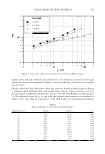
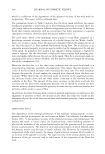
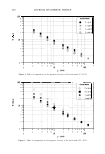
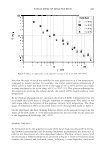
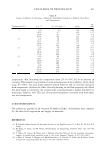
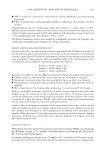
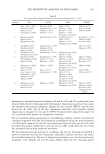
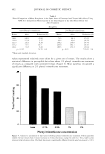
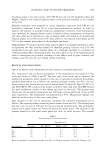
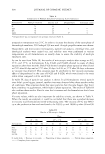
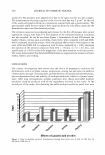
490 JOURNAL OF COSMETIC SCIENCE Table II Composition of Multiple Emulsions Containing Active Substances Formulations Multiple emulsion Glycolic acid G 75 25 GD 70 25 GS 70 25 GDS 70 25 * Dexpanthenol was incorporated into primary emulsion (Table I). Dexpanthenol 5 5* Strontium nitrate 5 5 preparation temperature was 25 ° C. In order to increase the density of the outer phase of the multiple emulsion, 2% Carbopol 934 was used. A triple propeller mixer was chosen. Organoleptic and microscopic investigations, particle size analysis, centrifuge tests, and rheological analysis were carried out, and stability tests were performed at various temperatures on all formulations, as usually done to assess the stability of multiple emulsions (23). As can be seen from Table III, the results of microscopic analysis after storage at 4°C, 25 ° C, and 37 ° C, in formulations F-G, F-GD, and F-GDS showed no signs of phase separation after three months. Only F-GS showed complete phase separation when stored at 25 ° C after 60 days and at 37 ° C after 30 days. In F-G, at 37 ° C after 90 days, a decrease in viscosity was observed. This situation may be attributed to the viscosity-increasing effect of dexpanthenol in the cases of F-GD and F-GDS, which were found to be more stable when compared to F-G and F-GS. In Table IV, data of particle size analysis is shown. In all formulations tested, particle sizes didn't grow bigger instead, smaller sizes were observed after three months under all conditions. This situation shows that since particles don't become bigger, they don't have a tendency to agglomerate, which leads to phase separation. The results of Table III also confirm these results. Particle sizes don't increase and the formulations don't have phase separation. Viscosity values, which are also important for stability criteria, are shown in Table V. When the results are analyzed, it could be concluded that there was a gradual decrease in viscosity in all formulations tested with passing time. The viscosity of F-G was 40467 cp at the production date and was found to be 2093 3 cp and 18600 cp after 60 and 90 Table III Results of Microscopic Analysis Days 40 ± 1 °C 25° ± 1 °C 37° ± 1 °C Formulations 7 30 60 90 7 30 60 90 7 30 60 90 F-G s s sf s+ s s s s+ s s S' + F-GD s s s s s s s s s s s s F-GS s s + + + +++ ++++ +++ ++++ F-GDS s s s ss s s s S' s s+ + + S: stable form. +: Decrease in viscosity. + +: Beginning of phase separation. + + +: Partial phase separation. + + + +: Complete phase separation.
Purchased for the exclusive use of nofirst nolast (unknown)
From: SCC Media Library & Resource Center (library.scconline.org)