HPLC DETERMINATION OF ARBUTIN 43
dicinal plant extracts, respectively. The method was also validated for limit of detection,
limit of quantitation, repeatability, reproducibility, and accuracy. The optimum con-
ditions and analytical characteristics for RP-HPLC determination of arbutin exhibited
good resolution, short analysis time, and rather high sensitivity. In the proposed method
for determining arbutin in skin-whitening creams, the working calibration curves over
the ranges of 0.5-30.0 µg/ml- 1 were established. The method was successfully applied
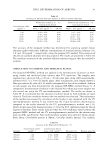
to the determination of arbutin in three commercial skin-whitening creams. The content
of arbutin found in the samples (Arbuwhite® cream, Super Whitening® cream, and
Shiseido® cream) were 0.76, 0.58, and 5.79 mg/g-1, respectively. The method was also
applied to the determination of arbutin in some medicinal plant extracts. The amounts
of arbutin in Betula alnoides Buch. Ham., Clerodendrum petasites S. Moore., Curculigo
latifolia Dryand. Var. latifolia, and Hesperethusa crenulata (Roxb.). Roem in the aqueous
extracts were 3. 5 0, 1. 5 0, 1.10, and O .12 µg/ g -1, respective! y. Arbutin from these
medicinal plants can be used for the production of skin-whitening cosmetics. The
benefits of the proposed method are simplicity, convenience, rapidity, sensitivity, good
precision, and accuracy. The method is suitable for routine analysis of arbutin in com-
mercial cosmetics and raw plant materials.
ACKNOWLEDGMENTS
The authors express their sincere thanks to the Graduate School and the Faculty of
Pharmacy, Chiang Mai University, for financial and chemical support. Saisunee
Liawruangrath expresses her sincere thanks to the Postgraduate Education and Research
Program in Chemistry (PERCH) for partial support.
REFERENCES
(1) H. Zhai and H. I. Maibach, Skin whitening agents, Cosmet. Toiletr., 116, 21 (2001).
(2) B. Stefania, C. Emanuela, and P. Mauro, Chemical and instrumental approaches to treat hyperpig-
mentation, Pigment Cell Res., 16, 101 (2003).
(3) A. Kawalier, Ann., 82, 241 (1852).
(4) C. Manich, Arch. Pharm., 250, 547 (1912).
(5} K. Maeda and M. Fukuda,]. Pharmacol. Exp. Ther., 276, 765 (1996).
(6) L. Petit and G. E. Pierard, Skin-lightening products revisited, Int. J. Cosmet. Sci., 25, 169 (2003).
(7) M. H. Assaf, A. A. Ali, M.A. Makboul, J.P. Beck, and R. Anton, Preliminary study of phenolic
glycosides from Origamun majorana Quantitative estimation of arbutin: Cytotoxic activity of hydro-
quinone, Planta Medica, 343 (1987).
(8) H. Matusda, M. Higashino, Y. Nakai, I. Iinuma, M. Kubo, and F. A. Lqang, Studies of cuticle drugs
from natural sources. IV. Inhibitory effects of some Arctostaphylos plants on melanin biosynthesis, Bio.
Pharm. Bull., 19, 153 (1996).
(9) J. A. Parrish, R.R. Anderson, F. Urbach, and D. Pitts, UVA: Biological Effects of Ultraviolet Radiation
with Emphasis on Human Responses to Long Wave Ultraviolet (Plenum Press, New York and London,
1978), pp. 151.
(10) Lj. Kraus and E. Stahl, Chromatography and photometry of arbutin, State Inst. Contr. Drug., 17, 252
(1968).
(11) B. Franciszek, D.-Z. Elzbieta, and C. Malgorzata, Spectrophotometric determination of arbutin in herb
raw materials using cerium (IV) and arsenazo III as reagents, Chem. Anal., 36, 13 (1991).
(12) G. Jiri and S. Iveta, Color reaction of arbutin with nitrous acid and its analytical applications, Folia
Pharm. Univ. Carol., 7, 29 (2003).
dicinal plant extracts, respectively. The method was also validated for limit of detection,
limit of quantitation, repeatability, reproducibility, and accuracy. The optimum con-
ditions and analytical characteristics for RP-HPLC determination of arbutin exhibited
good resolution, short analysis time, and rather high sensitivity. In the proposed method
for determining arbutin in skin-whitening creams, the working calibration curves over
the ranges of 0.5-30.0 µg/ml- 1 were established. The method was successfully applied
to the determination of arbutin in three commercial skin-whitening creams. The content
of arbutin found in the samples (Arbuwhite® cream, Super Whitening® cream, and
Shiseido® cream) were 0.76, 0.58, and 5.79 mg/g-1, respectively. The method was also
applied to the determination of arbutin in some medicinal plant extracts. The amounts
of arbutin in Betula alnoides Buch. Ham., Clerodendrum petasites S. Moore., Curculigo
latifolia Dryand. Var. latifolia, and Hesperethusa crenulata (Roxb.). Roem in the aqueous
extracts were 3. 5 0, 1. 5 0, 1.10, and O .12 µg/ g -1, respective! y. Arbutin from these
medicinal plants can be used for the production of skin-whitening cosmetics. The
benefits of the proposed method are simplicity, convenience, rapidity, sensitivity, good
precision, and accuracy. The method is suitable for routine analysis of arbutin in com-
mercial cosmetics and raw plant materials.
ACKNOWLEDGMENTS
The authors express their sincere thanks to the Graduate School and the Faculty of
Pharmacy, Chiang Mai University, for financial and chemical support. Saisunee
Liawruangrath expresses her sincere thanks to the Postgraduate Education and Research
Program in Chemistry (PERCH) for partial support.
REFERENCES
(1) H. Zhai and H. I. Maibach, Skin whitening agents, Cosmet. Toiletr., 116, 21 (2001).
(2) B. Stefania, C. Emanuela, and P. Mauro, Chemical and instrumental approaches to treat hyperpig-
mentation, Pigment Cell Res., 16, 101 (2003).
(3) A. Kawalier, Ann., 82, 241 (1852).
(4) C. Manich, Arch. Pharm., 250, 547 (1912).
(5} K. Maeda and M. Fukuda,]. Pharmacol. Exp. Ther., 276, 765 (1996).
(6) L. Petit and G. E. Pierard, Skin-lightening products revisited, Int. J. Cosmet. Sci., 25, 169 (2003).
(7) M. H. Assaf, A. A. Ali, M.A. Makboul, J.P. Beck, and R. Anton, Preliminary study of phenolic
glycosides from Origamun majorana Quantitative estimation of arbutin: Cytotoxic activity of hydro-
quinone, Planta Medica, 343 (1987).
(8) H. Matusda, M. Higashino, Y. Nakai, I. Iinuma, M. Kubo, and F. A. Lqang, Studies of cuticle drugs
from natural sources. IV. Inhibitory effects of some Arctostaphylos plants on melanin biosynthesis, Bio.
Pharm. Bull., 19, 153 (1996).
(9) J. A. Parrish, R.R. Anderson, F. Urbach, and D. Pitts, UVA: Biological Effects of Ultraviolet Radiation
with Emphasis on Human Responses to Long Wave Ultraviolet (Plenum Press, New York and London,
1978), pp. 151.
(10) Lj. Kraus and E. Stahl, Chromatography and photometry of arbutin, State Inst. Contr. Drug., 17, 252
(1968).
(11) B. Franciszek, D.-Z. Elzbieta, and C. Malgorzata, Spectrophotometric determination of arbutin in herb
raw materials using cerium (IV) and arsenazo III as reagents, Chem. Anal., 36, 13 (1991).
(12) G. Jiri and S. Iveta, Color reaction of arbutin with nitrous acid and its analytical applications, Folia
Pharm. Univ. Carol., 7, 29 (2003).