CLAY FACIAL MASKS 47
PRELIMINARY STABILITY TEST (PST)
The formulations were left at rest for 24 h before testing to ensure full water adsorption
(11,14). After this period, 5 g of each visually stable formulation (homogeneous visual
aspect) were submitted (three replicas) to centrifuge (model 208N, Fanem Ldta, Sao
Paulo, Brazil) testing. The formulations were evaluated 1000, 2000, and 3500 rev/min- 1
rotor speed, during 15 min at each velocity (15).
The formulations were classified, after centrifuge testing, according to liquid phase
separation volume: 7-10 ml (IM), intensely modified 4-6 ml (M), modified 1-3 ml
(SM), slightly modified and those without phase separation (N). Formulations classified
as normal were submitted to the accelerated stability test.
ACCELERATED ST ABILITY TEST (AST)
Yhe formulations were submitted to the stress conditions of temperature in a short
storage period. The amount of the formulations submitted to AST was 30 g, considering
that on each day of analysis there was a sample that did not return to storage conditions.
Samples were stored in polyethylene packing material. Temperatures, storage periods,
and days of analysis were (13,15):
(a) 45.0° ± 0.5°C 14 days analysis at the 1sr, 3rd ,7t\ and 14th days.
(b) -10.0° ± 0.5°C/24 h and 45.0° ± 0.5°C/24 h (temperature cycles)
12 days analysis at the 6t h and 12th days.
(c) 5.0° ± 0.5°C 14 days analysis at the 15\ 3rd ,7t\ and 14t h days.
Yhe formulations were first acclimatized for at least 1 h at room temperature
(24° ± 2.0°C) prior to testing, considering the first day of analysis (t1) as 24 h after the
preparation of the formulations.
Yhe physicochemical characteristics evaluated, on each day of analysis, were: organo-
leptic characteristics (visual aspect, color, and odor), pH value, and apparent viscosity
(13,15). The formulations were dispersed (1:10) in distilled water in order to measure
pH values. The apparent viscosity of the formulations was determined using a rotational
viscometer (model Visco Star R, Fungilab S.A.). The apparent viscosity measurements
were obtained under the following experimental conditions: 24° ± 2.0°C, 18 g samples,
TRll spindle, and rotation speed of 100 rpm. Analyses were accomplished in parallel
with a reference sample, stored at a controlled room temperature (22° ± 2°C).
RESULTS AND DISCUSSION
PRELIMINARY STABILITY TEST (PST)
The formulations presented a red color, an earthy characteristic odor, and pH values
ranging from 6.8 to 7 .1.
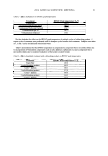
After centrifuge testing, the F2 formulation was intensely modified with a considerable
phase separation. Yhis instability was attributed to an insufficient viscosity of the
formulation to keep a high content of soiids dispersed. The clay types differed from each
other mainly by their mineral composition, which has an influence on the viscosity and
PRELIMINARY STABILITY TEST (PST)
The formulations were left at rest for 24 h before testing to ensure full water adsorption
(11,14). After this period, 5 g of each visually stable formulation (homogeneous visual
aspect) were submitted (three replicas) to centrifuge (model 208N, Fanem Ldta, Sao
Paulo, Brazil) testing. The formulations were evaluated 1000, 2000, and 3500 rev/min- 1
rotor speed, during 15 min at each velocity (15).
The formulations were classified, after centrifuge testing, according to liquid phase
separation volume: 7-10 ml (IM), intensely modified 4-6 ml (M), modified 1-3 ml
(SM), slightly modified and those without phase separation (N). Formulations classified
as normal were submitted to the accelerated stability test.
ACCELERATED ST ABILITY TEST (AST)
Yhe formulations were submitted to the stress conditions of temperature in a short
storage period. The amount of the formulations submitted to AST was 30 g, considering
that on each day of analysis there was a sample that did not return to storage conditions.
Samples were stored in polyethylene packing material. Temperatures, storage periods,
and days of analysis were (13,15):
(a) 45.0° ± 0.5°C 14 days analysis at the 1sr, 3rd ,7t\ and 14th days.
(b) -10.0° ± 0.5°C/24 h and 45.0° ± 0.5°C/24 h (temperature cycles)
12 days analysis at the 6t h and 12th days.
(c) 5.0° ± 0.5°C 14 days analysis at the 15\ 3rd ,7t\ and 14t h days.
Yhe formulations were first acclimatized for at least 1 h at room temperature
(24° ± 2.0°C) prior to testing, considering the first day of analysis (t1) as 24 h after the
preparation of the formulations.
Yhe physicochemical characteristics evaluated, on each day of analysis, were: organo-
leptic characteristics (visual aspect, color, and odor), pH value, and apparent viscosity
(13,15). The formulations were dispersed (1:10) in distilled water in order to measure
pH values. The apparent viscosity of the formulations was determined using a rotational
viscometer (model Visco Star R, Fungilab S.A.). The apparent viscosity measurements
were obtained under the following experimental conditions: 24° ± 2.0°C, 18 g samples,
TRll spindle, and rotation speed of 100 rpm. Analyses were accomplished in parallel
with a reference sample, stored at a controlled room temperature (22° ± 2°C).
RESULTS AND DISCUSSION
PRELIMINARY STABILITY TEST (PST)
The formulations presented a red color, an earthy characteristic odor, and pH values
ranging from 6.8 to 7 .1.
After centrifuge testing, the F2 formulation was intensely modified with a considerable
phase separation. Yhis instability was attributed to an insufficient viscosity of the
formulation to keep a high content of soiids dispersed. The clay types differed from each
other mainly by their mineral composition, which has an influence on the viscosity and