CLAY FACIAL MASKS 49
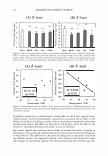
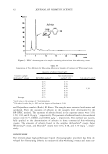
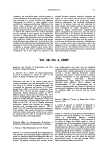
(�5.0 ± 0.5 °C ----22 ± 2 °C ____.,._45_0 ± 0.5 °C -----10.0 ± 0.5 °C/ 24 h 45.0 ± 0.5 °C/ 24 h
Z' 5000
·0 4000
•
U) 3000 5-
.....a..
C: � 2000
�
:
cu 1000
(o
1 3 7 14
Days of analyses wi.
5.0 ± 0.5 °e --a--:-22 ± 2 °C �45.0 :t 0.5 °C � .;.10.0 :t 0.5 °C/-24tt45.0 ± 0.5 °C/-24 h
� 5000 ·0
�
8
4000 -�
U)
� �3000
� 2000
a.
1000
(
0
1 3 7 14
Days of analyses
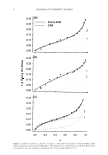
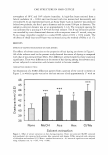
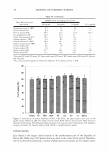
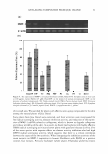
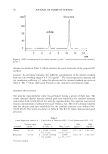
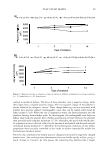
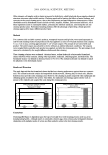
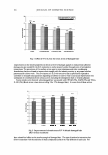
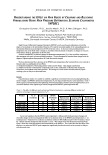
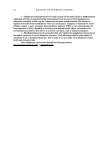
Figure 1. Apparent viscosity as a function of days of analysis at different temperatures in storage conditions
(a =Fl formulation b =F3 formulation).
stacked in sandwich fashion. The faces of these platelets carry a negative charge, while
their edges have a slightly positive charge. The net negative charge of the platelet is
mostly balanced by inorganic cations. These charge-balancing ions are associated with
platelet faces and are termed "exchangeable" since they can be readily substituted by
other cations (17 ,18). When the clay is dispersed in water, the latter penetrates into the
platelets, forcing them further apart. As this happens, the exchangeable ions begin to
diffuse away from the platelet faces. Further penetration of water between the platelets
then proceeds until complete separation (17,19). Generally, the speed with which plate-
let separation occurs is directly related to the amount of mechanical and thermal energies
introduced during hydration (7). Therefore, the technological conditions of clay masks'
preparation were concisely controlled in this study to achieve reproducible results (see
Formulations Studied, above).
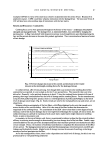
Once the clay is hydrated, the weakly positive charges are attracted to negatively charged
platelet faces. The resuiting three-dimensionai structure builds rapidly ar firsr, giving a
quick increase in viscosity. As time passes, the remaining free platelets take a longer
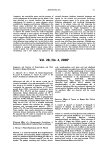
(�5.0 ± 0.5 °C ----22 ± 2 °C ____.,._45_0 ± 0.5 °C -----10.0 ± 0.5 °C/ 24 h 45.0 ± 0.5 °C/ 24 h
Z' 5000
·0 4000
•
U) 3000 5-
.....a..
C: � 2000
�
:
cu 1000
(o
1 3 7 14
Days of analyses wi.
5.0 ± 0.5 °e --a--:-22 ± 2 °C �45.0 :t 0.5 °C � .;.10.0 :t 0.5 °C/-24tt45.0 ± 0.5 °C/-24 h
� 5000 ·0
�
8
4000 -�
U)
� �3000
� 2000
a.
1000
(
0
1 3 7 14
Days of analyses
Figure 1. Apparent viscosity as a function of days of analysis at different temperatures in storage conditions
(a =Fl formulation b =F3 formulation).
stacked in sandwich fashion. The faces of these platelets carry a negative charge, while
their edges have a slightly positive charge. The net negative charge of the platelet is
mostly balanced by inorganic cations. These charge-balancing ions are associated with
platelet faces and are termed "exchangeable" since they can be readily substituted by
other cations (17 ,18). When the clay is dispersed in water, the latter penetrates into the
platelets, forcing them further apart. As this happens, the exchangeable ions begin to
diffuse away from the platelet faces. Further penetration of water between the platelets
then proceeds until complete separation (17,19). Generally, the speed with which plate-
let separation occurs is directly related to the amount of mechanical and thermal energies
introduced during hydration (7). Therefore, the technological conditions of clay masks'
preparation were concisely controlled in this study to achieve reproducible results (see
Formulations Studied, above).
Once the clay is hydrated, the weakly positive charges are attracted to negatively charged
platelet faces. The resuiting three-dimensionai structure builds rapidly ar firsr, giving a
quick increase in viscosity. As time passes, the remaining free platelets take a longer