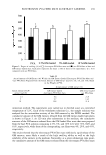
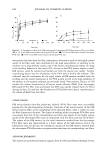
]. Cosmet. Sci., 59, 195-202 (May/June 2008) The effects of placental extract on fibroblast proliferation HEE-RYUNG CHO, JI-HO RYOU, JIN-WOO LEE, and MU-HYOUNG LEE, Department of Dermatology (H.-R.C., M.-H.L.) and East-West Medical Research Institute U.-W.L.)! College of Medicine, Kyunghee University, and Anacli Dermatologic Clinic U.-H.R.), Seoul, Korea. Accepted for publication February 11, 2008. Synopsis Human placental extract is used in the treatment of skin wrinkles and wounds. To date, no studies have evaluated the effects of placental extract on dermal fibroblast proliferation. To investigate the effects of placental extract versus ascorbic acid on fibroblast proliferation and transforming growth factor (TGF)-131 expression, cultured human fibroblasts were treated with placental extract (0, 0.08, 0.16, 0.32, and 0.64%) or 1-ascorbic acid-2-phosphate magnesium (0, 0.01, 0.1, 1.0, and 10 mM). Fibroblast proliferation was determined by MTT assay, and TGF-131 protein expression was analyzed by ELISA. The proliferation of fibroblasts increased significantly after treatment with placental extract at concentrations of 0.32 and 0.64% and with L-ascorbic acid-2-phosphate magnesium at concentrations of 1.0 and 10 mM. Placental extract demonstrated no significant effects on TGF-131 expression however, TGF-131 expression significantly increased after treatment with ascorbic acid at concentrations of 1.0 and 10 mM. Placental extract and ascorbic acid had similar effects on fibroblast proliferation however, placental extract did not significantly increase TGF-131 protein expression. INTRODUCTION Human placenta is a rich reservoir of bioactive molecules, including hormones, proteins, lipids, nucleic acids, glucosaminoglycans, amino acids, vitamins, and minerals. It pos sesses anti-inflammatory (1), anti-anaphylactic, antioxidative, anti-melanogenic (2), melanizing (3,4), moisturizing, and collagen-synthesizing properties, and is generally well tolerated in antiaging, rejuvenation, and aesthetic treatments. Human placenta has been used to treat many skin conditions, including melasma, freckles, wrinkles, atopic dermatitis, xerosis cutis, striae distensae, and wounds. Ascorbic acid (vitamin C) is an important regulator of collagen expression and appears to increase collagen biosynthesis in an age-dependent manner, serving as a potent stimulator for types I and III collagen expression in dermal fibroblasts. Transforming growth factor (TGF)-� plays a central role in the fibrogenic response of mesenchymal Address all correspondence to Mu-Hyoung Lee. 195

196 JOURNAL OF COSMETIC SCIENCE cells to injury it may also be involved in the deposition of connective tissue matrix proteins in diverse states such as angiogenesis and organogenesis, as well as in patho logical fibrotic states (5 ,6). TGF-J3 l induces collagen synthesis and has been shown to be upregulated in scars. In addition, TGF-J3 l has been shown to promote the growth of human fibroblasts into stratified layers, mimicking in vivo fibroplasia (7 ,8). Previous reports have described the anti-melanogenic effects of placental extract however, in a Medline search of the literature published between 195 7 and 2006, we found no studies evaluating the effects of placental extract on fibroblast proliferation associated with collagen synthesis. We investigated the effects of placental extract on fibroblast proliferation and TGF-J3 l expression. To validate our findings, we performed experiments on both placental extract and ascorbic acid, which has been shown to affect fibroblast proliferation. Placental extract increased fibroblast proliferation but did not significantly increase TGF-J31 expression compared to the controls. MATERIALS AND METHODS HUMAN SKIN FIBROBLAST CULTURE Primary cultures of normal human skin fibroblasts were established from newborn prepuce in Dulbecco's modified Eagle's medium (DMEM) supplemented with 10% fetal bovine serum (FBS), glutamine 2 mM, penicillin 100 U/ml, and streptomycin 100 µg/ml at 37 ° C in a humidified incubator containing 5% CO2 . The fibroblasts were cultured to 90% confluence and then subcultured. For all assays, fibroblasts at fourth passages were used. TREATMENT OF FIBROBLASTS WITH PLACENTAL EXTRACTS AND ASCORBIC ACID Cultured human fibroblasts were treated with placental extracts (Melsmon Pharmaceu tical Co. Ltd., Tokyo, Japan) and ascorbic acid (L-ascorbic acid-2-phosphate magnesium Sigma, St. Louis, MO). We stored the placental extract under temperatures between 2° and 8°C, and carried out the experiments as soon as the extract was received from the manufacturer, although the valid period is two years according to the instructions. The fibroblasts were exposed to various concentrations of placental extract (0, 0.08, 0.16, 0.32, and 0.64%) and ascorbic acid (0, 0.01, 0.10, 1, and 10 mM). We regarded cultured human fibroblasts without any treatment as the control. All experiments were performed independently three times. CELL PROLIFERATION ASSAY Cell proliferation was determined by MTT assay. A CellTiter 96 aqueous proliferation assay kit (Promega, Madison, WI) was used for the cell viability test in accordance with the manufacturer's instructions. Fibroblasts were seeded in 96-well plates at a density of 1 x 10⁴ cells/well and were incubated for 48 h. The fibroblasts were then treated with placental extract (0.08, 0.16, 0.32, and 0.64%) and ascorbic acid (0.01, 0.1, 1, and 10 mM) and incubated for 24 h. A total of 20 µl of Cell Titer reagent containing tetrazolium
Purchased for the exclusive use of nofirst nolast (unknown)
From: SCC Media Library & Resource Center (library.scconline.org)