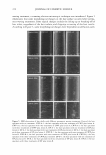
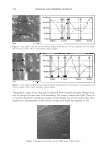
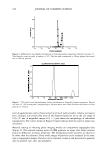
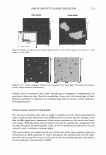
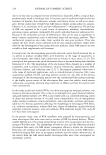
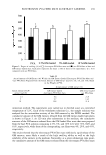
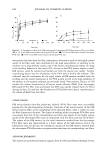
CHANGES IN HAIR DURING PERMANENT WAVING 213 Figure 5. (Continued) such as the perming method, the type of permanent waving lotion, and perming times. The most prominent change in the hair surface was observed in the hair sample with three treatments of DP permanent waving using permanent waving lotion B, indicating more severe damage (forming lifted-up scales) on the ragged surface of the permed hair (DP-B-3 of Figure 5). In contrast, there was little change in the hair samples with one to three treatments of CWP permanent waving using waving lotion A (CWP-A-1 of Figure 5), indicating no detectable hair damage. However, the hair samples with DP permanent waving using lotion A displayed moderate damage on the surface (DP-A-1 through DP-A-3 of Figure 5). These results suggest that the permanent waving method can induce changes in the hair surface. Another important result was that more severe damage to the hair scales was examined by the use of waving lotion B than by lotion A (CWP-B-2, CWP-B-3, DP-B-2, and

214 JOURNAL OF COSMETIC SCIENCE DP-B-3 of Figure 5). It is thought that the reason might result from an interaction of the chemical composition and its higher pH (pH 9.97) because the higher the pH of the waving lotion is, the greater the level of sodium thioglycolate is, which leads to more hair damage (2). Figure 5 also shows that the accumulative application of permanent waving treatment affects human head hair shafts. As shown in Figure 5, as the number of permanent waving treatments increased, the degree of surface damage to the hair shafts also in creased on the whole. However, there was no indication of change to the hair surface with a one-time performance of the permanent waving treatment (CWP-A-1, DP-A-1, CWP-B-1 and DP-B-1 of Figure 5). To minimize such hair damage, the optimal interval for repeated permanent waving may be necessary. CONCLUSIONS The permanent waving treatments had various influences on changes in human head hairs such as a decrease in hair protein content, a change in the electrophoretic pattern by SDS-PAGE, changes in such physical properties as tensile strength, diameter, hair swelling, elongation of hair shafts, and a change of surface morphology in the perma nent-treated hair shafts. These findings will provide customers with useful information about how hair changes during the process of permanent waving and how customers can minimize the hair damage resulting from repeated permanent waving treatments. ACKNOWLEDGMENTS This study was supported by a research fund from Dong-A University. REFERENCES (1) J. Gray, The World of Hair: A Scientific Companion (McMillan, New York, 1997), pp. 36-39, 57-73. (2) C.R. Robbins, Chemical and Physical Behavior of Human Hair, 4th ed. (Springer-Verlag, New York, 2002), pp. 105-152, 138-146, 386--473. (3) D. L. Nelson and M. M. Cox, "The Three-Dimensional Structure of Proteins," in Principles of Biochem istry, 4th ed., D. L. Nelson and M. M. Cox. Eds. (W. H. Freeman, New York, 2005), pp. 421-479. (4) A. Kuzuhara, Analysis of structural change in keratin fibers resulting from chemical treatments using Raman spectroscopy, Biopolymers, 77, 3 3 5-344 (2005 ). (5) A. Kuzuhara, Protein structural changes in keratin fibers induced by chemical modification using 2-iminothiolane hydrochloride: A Raman spectroscopic investigation, Biopolymers, 79, 173-184 (2005). (6) A. Kuzuhara, Analysis of structural changes in permanent waved human hair using Raman spectros copy, Biopolymers, 85(3), 274-283 (2007). (7) S. S. Sandhu and C. R. Robbins, A simple and sensitive technique, based on protein loss measurements, to assess surface damage to human hair, J. Soc. Cosmet. Chem., 44, 163-175 (1993). (8) N. Nishikawa, Y. Tanizawa, and S. Tanaka, Structural change of keratin protein in human hair by permanent waving treatment, Polymer, 39(16), 3835-3840 (1998). (9) H.J. Ahn and W-S Lee, An ultrastructural study of hair fiber damage and restoration following treatment with permanent hair dye, Int. J. Dermatol., 41, 88-92 (2002). (10) D. W. Deedrick and S. L. Koch, Microscopy of hair. Part 1: A practical guide and manual for human hairs, Forens. Sci. Communication, 6(1), 1--45 (2004). (11) B. C. Beard, A. Johnson, F. M. Cambria, and P. N. Trinh, Electron spectroscopy and microscopy applied to chemical and structural analysis of hair,j. Cosmet. Sci., 56, 65-77 (2005). (12) M-O. Han, J-A. Chun, J-Y. Seo, J-W. Lee, and C-H. Chung, A simple improved method for protein extraction from human head hairs,J. Cosmet. Sci., 58, 527-534 (2007).
Purchased for the exclusive use of nofirst nolast (unknown)
From: SCC Media Library & Resource Center (library.scconline.org)