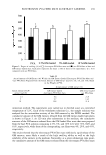
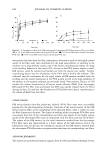
250 JOURNAL OF COSMETIC SCIENCE Review Article Novel cosmetic delivery systems: an application update V. B. Patravale and S. D. Mandawgade Department of Pharmaceutical Sciences and Technology, University Institute of Chemical Technology, Mumbai 400019, India Vandana B. Patravale, Reader in Pharmaceutics, Department of Pharmaceutical Sciences and Technology, University Institute of Chemical Technology (UICT), N. P. Marg, Matunga, Mumbai 400 019, India. Tel.: +91 022 24145616 Extn. 425 fax: +91 022 24145614 e-mail: vbpatravale@udct.org World consumers are nowadays more focused on their health and appearance. This trend is creating heightened demand for products formulated with natural and nutraceutical ingredients. Functional ingredients and innovative delivery systems are driving the new product development in the field of cosmetics. A significant number of innovative formulations are now being used in personal care with real consumer-perceivable benefits and optimized sensory attributes, resulting in an economic uplift of cosmetic industry. In fact, the U.S. market alone for novel cosmetic delivery systems has been projected to be more than $41 billion for the year 2007. Novel cosmetic delivery systems reviewed here possess enormous potential as next-generation smarter carrier systems. Original Article Increased carbonyl protein levels in the stratum comeum of the face during winter Y. Kobayashi, I. Iwai, N. Akutsu and T. Hirao Shiseido Life Science Research Center, 2-2-1 Hayabuchi, Tsuzuki-ku, Yokohama 224-8558, Japan Tetsuji Hirao, Shiseido Life Science Research Center, 2-2- 1 Hayabuchi, Tsuzuki-ku, Yokohama 224-8558, Japan. Tel.: +81 45 590 6000 fax: +81 45 590 6078 e-mail: tetsuji.hirao@to.shiseido.co.jp The stratum comeum (SC) is the interface be tween the body and the environment, and is continuously exposed to oxidative stress that results in carbonyl modification of proteins. We previously developed a simple and non invasive method to assess the stratum comeum carbonyl protein (SCCP) levels. In this study, we used this method to examine the seasonal changes in the SCCP levels and the relationship between the SCCP level and the physiological condition of the SC. SC was collected from the face of healthy Japanese volunteers by adhesive tape stripping and its carbonyl groups were determined by reaction with tluorescein-5-thiosemicarbazide. The average fluorescence intensity of the SC was calculated as the SCCP level. The SCCP level in the cheek was higher in winter than summer. The SCCP level was negatively correlated with the water content in the SC measured by the conductance and capacitance, and also negatively correlated with the extensibility of the skin measured by a Cutometer, suggesting that the mechanical properties of the skin can be affected by oxidative modification of the SC. These data suggest the involvement of oxidative modification of SC proteins in the generation of rough skin during winter. Original Article Confocal Raman microspectroscopy of stratum comeum: a pre-clinical validation study J. Wu and T. G. Polefka Colgate Palmolive Company, 909 River Road, Piscataway, NJ 08854, USA Joanna (Qiang) Wu, Colgate Palmolive Company, 909 River Road, Piscataway, NJ 08854, USA. Tel.: 732-878- 7264 fax: 732-878-7867 e-mail: joanna_wu@colpal.com Skin moisturization is not only important for maintaining skin functional properties but also has great impact on the skin's aesthetic properties. The top layer of the skin, the stratum comeum (SC), plays a key role in protecting and preventing against external aggressions as well as in regulating water flux in and out. Confocal Raman microspectroscopy is the first commercially available technique that provides a noninvasive, in vivo method to determine depth profiles of water concentration in the skin, however, in this case it was applied in an in vitro setting. As the first phase of validating the usefulness of confocal Raman microspectroscopy, we used porcine skin as a surrogate for human skin. Water concentration profiles were obtained u sing confocal Raman microspectroscopy from isolated pigskin SC and compared with that using the Karl Fischer titration method. The two methods correlated very well with a regression coefficient of 1.07 as well as a correlation coefficient, R2 = 0.989, which demonstrated the consistency and accuracy of confocal Raman microspectroscopy for water concentration determination. To evaluate the instrument's response to different skin care/cleansing products, a wide range of products were tested to compare their skin moisturization ability. Among those tested were a lotion, commercial soap bar, syndet bar, traditional non-emollient shower gel (water, Sodium Laureth Ether Sulfate (SLES), cocamidopropyl betaine system) and emollient containing shower gel (water, sunflower oil, SLES, cocamidopropyl betaine, glycerin, petrolatum). The results were consistent with what was expected. The water content on skin treated with (A) lotion was significantly higher than the non-treated control (B) syndet bar-treated skin had a significantly higher water content than soap-based bar-treated sites (C) non-emollient shower gel washed sites were more moisturized than soap based bar-treated samples and (D) emollient shower gel treated skin was significantly more hydrated than nonemollient shower gel washed skin. The unique and direct quantitative water content information provided by confocal Raman microspectroscopy offers a whole new perspective for fundamental skin moisturization studies and will play an important role in evaluating moisturizing profiles and the hydration potential of products designed for personal care in the cosmetic industry.

ABSTRACTS 251 Original Article In vitro skin permeation of sunscreen agents from 0/W emulsions L. Montenegro, C. Carbone, D. Paolino, R. Drago, A. H. Stancampiano and G. Puglisi Department of Phannaceutical Sciences, University of Catania, V.le A. Doria, 95125 Catania, Italy Lucia Montenegro, Department of Pharmaceutical Sciences, University of Catania, V.le A. Doria 6, 1-95125 Catania, Italy. Tel.: +39 095 7384010 fax: +39 095 7384211 e-mail: lmontene@unict.it The effects of different emulsifiers on the in vitro permeation through human skin of two sunscreen agents [octylmethoxycinnamate (OMC) and butylmethoxydirenzoylmethane (BMBM)] were investigated from 0/W emulsions. The test formulations were prepared using the same oil and aqueous phase ingredients and the following emulsifier and coemulsifier systems: Emulgade SE_ (ceteareth-12 and ceteareth-20 and cetearyl alcohol and cetyl palmitate) and glycerylmonostearate (emulsion 1 ) Brij 72_ (steareth-2), Brij 721_ (steareth-21) and cetearyl alcohol (emulsion 2) Phytocream_ (potassium palmitoyl-hydrolysed wheat protein and glyceryl stearate and cetearyl alcohol) and glycerylmonostearate (emulsion 3) Montanov 68_ (cetearyl glucoside and cetearyl alcohol) (emulsion 4) Xalifin-15_ (ClS-20 acid PEG-8 ester) and cetearyl alcohol (emulsion 5). The cumulative amount of OMC that permeated in vitro through human skin after 22 h from the formulations being tested decreased in the order 3 1 @ 4 5 2 and was about nine-fold higher from emulsion 3 compared with that from emulsion 2. As regards BMBM, no significant difference was observed as regards its skin permeation from emulsions 1, 3, 4 and 5, whereas formulation 2 allowed significantly lower amounts of BMBM to permeate the skin. In vitro release experiments of OMC and BMBM from emulsions 1-6 through cellulose acetate membranes showed that only emulsions 4 and 5 provided p seudo-first-order release rates only for OMC. The results of this study suggest that the type of emulsifying systems used to prepare an 0/W emulsion may strongly affect sunscreen skin permeation from these fonnulations. Therefore, the vehicle effects should be carefully considered in the formulation of sunscreen products.
Purchased for the exclusive use of nofirst nolast (unknown)
From: SCC Media Library & Resource Center (library.scconline.org)