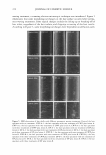
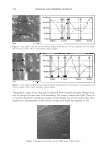
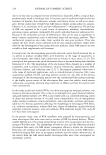
CHANGES IN HAIR DURING PERMANENT WAVING 205 For physicomorphological examinations, virgin hair samples (approximately 20 cm long) were also obtained from the same woman. Hair sample shafts were cut 15 cm from the scalp to provide hairs with minimal damage. The hair specimens with no chemical treatment were used and an expert with more than ten years of experience performed this experiment. Twenty pieces of the hair shafts of 80-89 µm diameter were grouped into one bundle (Figure 1). Each treatment consisted of three bundles. The prepared bundles were first rinsed with a neutral shampoo solution (pH 7 .8), washed with distilled water, dried, and stored in desiccators. The temperature and relative humidity of the desiccators were adjusted to 20°C and 65% for further use. PROTEIN EXTRACTION FROM HUMAN HEAD HAIRS After the collected hair samples were prepared after three washings using distilled water, the protein was extracted in a buffer solution containing 25 mM Tris-HCl (pH 8.5), 2.6 M thiourea, 5 M urea, and 5% 2-mercaptoethanol. The total protein was extracted by placing the hair materials into a tube or container containing the buffer solutions. After each sample group had been washed, 20 mg of each of the hair materials was incubated in the buffer solution (5 ml per 20 mg materials) at 50°C for 24 hr. After completion of their incubations, the mixtures were filtered through three layers of nylon mesh (200-mesh size) and a flow-through was used for the protein measurement. The detailed extraction method is described elsewhere (12). PROTEIN MEASUREMENT The amount of protein was measured with the protein-dye binding method of Bradford (13) using a commercial protein assay kit (Bio-Rad, Hercules, CA). For this analysis, 10 µl of the flow-through filtrate was transferred to a cuvette containing 200 µl of dye solution and 790 µl of distilled water to make 1000 µl in total. The amount of the total protein secreted into the buffer solutions was then quantitated at an optical density of 595 nm with a spectrophotometer (HP Agilent 8453, Palo Alto, CA). Each treatment was the mean value±standard deviation calculated in triplicate. SDS-PAGE EXPERIMENT For analysis of sodium dodecyl sulfate-polyacrylamide gel electrophoresis (SDS-PAGE), Figure 1. Features of human head hair samples prepared by different treatments. Twelve bundles including the control were used. Each wisp consists of 20 pieces of the hair shafts with 80-90 µm diameter.

206 JOURNAL OF COSMETIC SCIENCE 2 ml of the protein flow-through was concentrated with a Centricon centrifugal filter device (Millipore, Bedford, MA) by centrifuging the filtrate at 3000 x g for approxi mately 2.5-3 hr at 4°C. Thirty micrograms of the concentrated proteins were boiled for 5 min and cooled in ice for 2 min, and then analyzed using the Bio-Rad Mini-Gel system (Bio-Rad) according to the manufacturer's manual. A gel with 5% stacking and 15% separating acrylamide was employed and visualized after staining with Coomassie Bril liant Blue G-250. The gel stained was transferred to a container containing a destaining solution (10% isopropanol and 10% acetic acid, v/v) and destained three times with slow shaking. PERMANENT WAVING PROCEDURE To evaluate the effect of the perming method on the hair shafts, two types of hairstyle, the croquignole winding perm (CWP) and the digital perm (DP) were performed using two kinds of commercial permanent waving lotion, lotion A (cysteamine-HCl, pH 9.31, liquid type) and lotion B (sodium thioglycolate, pH 9.97, cream type). For the former method, the hair wisps (Figure 1) were sprayed with water, then evenly painted with a comb containing the waving lotions (approximately 1 g) and wound. After the wound hair wisps were heated in a heating cap at 50°C for 15 min, they were left at room temperature for 10 min. Thereafter, the test curl and plain rinse were conducted. After removing the residual water, a neutral solution containing sodium bromate (pH 6.29) was applied two times for 10 min each. The detailed procedure was carried out according to the supplier's manual. For the latter method (DP), a digital setting device was used. The setting procedure was the same as that described above except that the hair wisps treated with the waving lotions were dried first and wound with a digital electric rod heated to 100°-120°C for 10 min. The permanent waving treatment was conducted one to three times to evaluate com parative changes in protein content and profile and to evaluate the change in the physicomorphological properties of the hairs between perming treatments. MEASUREMENT OF PHYSICAL PROPER TIES For examination of the effect of the permanent waving treatment on the change in physical properties, four parameters (hair diameter, degree of swelling, tensile strength, and hair elongation) were introduced. These parameters were measured in a controlled room at 20°C under 50% RH (relative humidity), and each measurement was presented with a mean value±standard deviation calculated in triplicate. For measurement of the hair diameter, a micrometer caliper method was introduced. The hair diameter was measured at the medial point of the hair shaft. For measurement of the hair elongation, a thickness gauge (Saginamiya, BGM-3, Japan) was used, and the values were calculated according to the manufacturer's manual. The tensile strength was de termined with a tensile tester (Shimadzu, AGS-500, Japan) by using the initial length of 20 mm. Twenty samples per replication were used, and each measurement was calculated according to the manufacturer's manual.
Purchased for the exclusive use of nofirst nolast (unknown)
From: SCC Media Library & Resource Center (library.scconline.org)