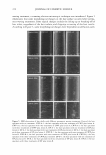
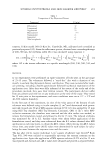
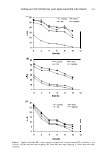
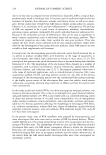
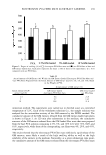
222 JOURNAL OF COSMETIC SCIENCE Plotting the LlE.I. values versus time, the AUC 0 _ 1 0 values were determined, for each subject, by calculating the areas between the response curve and the x-axis. The AUC 0 _ 1 0 values are inversely related to the tested substance's ability to inhibit MN-induced erythema and were determined before (baseline) and after the disruption of the skin barrier by tape stripping (Table II). Furthermore, to better outline the efficacy of the SPS formulation to increase the recovery rate of the skin barrier, the percentage of barrier recovery (P.B.R.) was determined (equation 2): AUCb l'me P.B.R. = AU�� x 100 (2) where AUCbaseline is the area under the response-time curve on non-stripped sites, while AVC y is the area under the response-time curve on the sites treated with the SPS and white formulations or not treated (control). P.B.R. values are shown in Figure 2 as may be noted, non-treated cutaneous sites are able to recover about 60% of skin barrier integrity seven days after tape stripping (p 0.01 versus baseline). Furthermore (Figure 2), the application of the SPS formulation on the stripped cutaneous site produced a lower recovery time compared to the recovery times of the white formulation and the control. In fact, three days after tape stripping, the sites treated with the SPS formulation showed a lower intensity of MN-induced erythema compared to the results of the first spectrophotometric determination obtained one day after the tape stripping. The SPS, white, and control formulations showed similar P.B.R. values one day after tape stripping (p 0.05) while the SPS formulation produced the highest value three days after tape stripping (p 0.01). After seven days all the damaged skin sites recovered their barrier integrity, and therefore all the P.B.R. values were very similar (p 0.05). The SPS formulation contained various phytosterols (Table I) that are the most abundant among plant species (18). These compounds (�-sitosterol, stigmasterol, and campesterol) are triterpenes similar to cholesterol, both in structure, given the four-ring steroid nucleus, the 3 �-hydroxyl group, and often a 5,6-double bound, and in function, given Table II AUC0_1 0 Values Obtained for Skin Sites Treated With White and SPS Formulations or Untreated (Control) and Determined Before (Baseline) and After One, Three, and Seven Days From Tape Stripping (T.S.) 1 day after T.S. 3 days after T.S. 7 days after T.S. Subject Baseline Control White SPS Control White SPS Control White SPS 88.5 422.7 432.1 353.3 340.7 392.8 124.9 135.9 129.3 108.1 2 86.3 417.5 420.6 333.7 351.9 470.2 136.7 138.6 128.6 102.8 3 71.5 378.1 380.1 318.5 329.4 389.6 108.5 136.1 124.9 106.4 4 103.9 471.6 512.6 400.7 415.2 412.9 184.7 162.6 171.4 141.2 5 89.6 420.5 429.9 349.8 338.6 319.4 127.5 136.8 129.9 109.7 6 81.4 410.5 412.9 310.9 346.5 407.7 130.6 124.8 113.3 90.1 7 100.3 448.9 461.1 376.2 359.8 404.4 158.8 183.3 140.9 121.6 8 79.9 356.4 425.6 326.4 296.5 398.4 129.4 141.3 132.6 114.5 Mean 87.6 415.7 434.3 346.2 347.3 399.4 137.6 144.9 133.8 111.8 ±S.D. 10.6 36.3 38.8 30.5 33.4 41.1 23.6 18.7 17.0 14.9

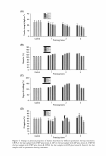
SOYBEAN PHYTOSTEROLS AND SKIN BARRIER RECOVERY 223 80 "' 70 60 50 Et:. 40 ai a.: 30 20 10 0 DCONTROL DWHITE SPS After 1 day After3 days Aftar7 days Figure 2. Percentage of barrier recovery (P.B.R.), obtained one day, three days, and seven days after tape stripping, for stripped skin sites treated with white and SPS formulations or not treated (control). their role in the stabilization of the phospholipid bilayers in the cell membrane. Both phytosterols and cholesterol present in the skin surface lipids were transferred from the plasma to the skin after their absorption from the diet in small quantities from the intestine (19). It is well known, furthermore, that cholesterol plays an important role in skin homeostasis, accelerating barrier recovery by regulating endogenous factors in the epidermis (20). From the results obtained it could be hypothesized that the increased recovery rate of skin barrier function, observed after SPS application in stripped cuta neous sites, could be due to a "cholesterol-like" mechanism involving phytosterol species contained in SPS form. CONCLUSION This study shows clearly that, related to the methodological strategies applied, soybean phytosterols exert positive results on skin repair after damage. Furthermore, the spec trophotometric evaluation used in the present study to determine the percutaneous absorption of an erythematogenous substance, such as MN, seems to be a valid alter native to traditional TEWL measurement to obtain, indirectly, evidence on the recovery rate of disrupted skin. REFERENCES (1) K. R. Feingold and P. M. Elias, "The Environmental Interface: Regulation of Permeability Barrier Homeostasis," in Dry Skin and Moisturizers, Chemistry and Function, M. Loden and H. I. Maibach. Eds. (CRC Press, Boca Raton, FL, 2000), pp. 45-58.
Purchased for the exclusive use of nofirst nolast (unknown)
From: SCC Media Library & Resource Center (library.scconline.org)