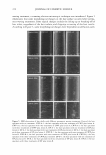
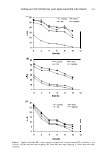
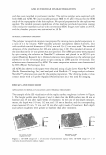
]. Cosmet. Sci., 59, 203-215 (May/June 2008) Effects of permanent waving on changes of protein and physicomorphological properties in human head hair MI-OK HAN, JAE-AN CHUN, JIN-WOO LEE, and CHUNG-HAN CHUNG, Department of Biotechnology, Dong-A University, Ha-Dan-Dong, Sa-Ha-Gu, Busan 604-714, South Korea. Accepted for publication February 11, 2008. Synopsis Two types of permanent waving [digital perm (DP) and croquignole winding perm (CWP)} and two waving lotions [cysteamine-HCl, pH 9.31, liquid type (lotion A) and sodium thioglycolate, pH 9.97, cream type (lotion B)} were used for this study. The protein content was decreased by permanent waving treatments on the whole, and the degree of reduction was dependent on the hair styling and waving lotion used. The greatest decrease (by 58%) was found in hairs processed with the three-treatment performance of DP using lotion B. SDS-PAGE identified the presence of the two most abundant polypeptides, with approximately 48 kDa and 60 kDa, and two large polypeptides, with approximately 200 kDa and 210 kDa, which would belong to the keratin family. Some physical properties of the hairs (tensile strength, diameter, swelling, and elongation) were examined with the permanent waving treatments. In general, the repeated waving treatment and the use of lotion B showed more negative effects on hair care than other treatments. Some morphological changes were observed with a scanning electron microscope (SEM). The most promi nent change in the hair surface was observed in the hair specimen with the three-treatment performance of DP using lotion B. More severe signs of damage appeared on the hair with lotion B than with lotion A. As the numbers of permanent waves increased, the degree of damage to the hair surface increased on the whole. However, there was no indication of changes to the hair surface with one permanent waving treatment, as determined by SEM analysis. INTRODUCTION Since modern permanent waving was introduced in the early 1940s, the permanent waving technique has been developed with the improvement of hair styling processes (1,2). Currently, a variety of methods of hair permanent waving are available, and the choice of the wave style depends on the taste of customers. Many factors related to hair styling, such as changes in chemical reducing solutions (waving lotions), temperature, and pH, are necessarily involved during the process of permanent waving. It is generally Address reprint requests and all correspondence to Chung-Han Chung. 203

204 JOURNAL OF COSMETIC SCIENCE accepted that the secondary structure and property of fibrous proteins such as hair keratins, which are major components in the hair cortex and which stabilize their quaternary structure by a disulfide-bridge, are correlated with their strength by enhanc ing covalent cross-links between polypeptide chains within the multihelical ropes and between adjacent chains in a supramolecular assembly. Accordingly, the biochemical basis of permanent waving is derived from the characteristic stretchability of a-keratins, which is caused by a change in a-helical conformation (3). In general, some factors and chemical properties of the waving lotion used in the process of permanent waving treatment affect the hair change. For example, the permanent waving lotions containing the reactive thiol or sulfhydryl groups (-SH) have been used to reduce the disulfide bonds of the hair and to form a permanent wave by allowing molecular changes in its component proteins (1,2,4-6). In addition, other factors such as heat and pH influence the permanent wave (1,2). Furthermore, repeated permanent waving treatments also influence the hair. The factors and the chemical properties described above play important roles in the process of permanent waving. Some workers reported that permanent treatment induced changes in some chemical compositions of hair such as a decrease in cystine and cysteic acid (2), elution of certain proteins (7) and changes in the a-helix content (6,8). Other research groups have provided some evidence that physicomorphological properties, such as changes in tensile strength and hair shape, hair elongation, diameter, and degree of swelling, were altered by the perming treat ments (2,9). Other workers conducted light and electron microscopic investigations and demonstrated various characteristic changes in the surface of human hairs after perma nent waving treatment (1,9-11). These microscopic observations showed that change on the surface of the hair shaft and the degree of hair damage occurring from treatment with the chemical solutions or during the permanent waving process depend on the perming method (1,2). The above studies are informative for human hair care because they can be utilized for minimizing hair damage arising from perming treatment. Consequently, this study is aimed at presenting some information about changes in protein content and profile in the hair shafts of Korean women, performed with two methods of permanent waving: the croquignole winding perm (CWP, a type of normal perm characterized by wrapping hair from the ends to the scalp with no thermal conditioning) and the digital perm (DP, a perm processed by a special perm machine to give a thermal-conditioning permanent wave). These methods are more popular than others for most Korean women. In addition, some changes in the physical properties of the hair shafts and their mor phological images observed with a scanning electron microscope are also reported and discussed in relation to the perming treatment. MATERIALS AND METHODS HUMAN HEAD HAIR MATERIALS For protein extraction from human head hairs, samples of human head hair shafts were collected from a healthy 22-year old woman with good conditioned hairs to minimize the experimental variations that may be caused in sampling sources by age or gender. The collected hair shaft samples were cut into small pieces with lengths of approximately 1-2 mm. These small pieces of the hair shafts were used for these experiments.
Purchased for the exclusive use of nofirst nolast (unknown)
From: SCC Media Library & Resource Center (library.scconline.org)