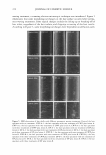
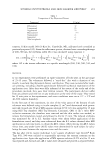
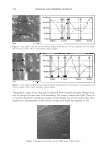
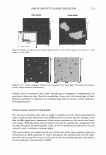
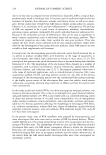
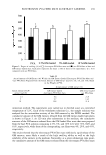
212 JOURNAL OF COSMETIC SCIENCE waving treatment, a scanning electron microscopic technique was introduced. Figure 5 illuminates that some morphological changes in the hair surface occurred after perma nent waving treatments. Some typical changes include the lifting-up or breaking-off of hair scales, raggedness of the hair surface, and chipping or tearing of the hair cuticle. According to Figure 5, some morphological changes were dependent on all factors used, Figure 5. SEM observation of hair shafts with different permanent waving treatments. Control: the hair specimen with no treatment. CWP-A-1: the hair specimen with one treatment of CWP plus lotion A. CWP-A-2: the hair specimen with two treatments of CWP plus lotion A. CWP-A-3: the hair specimen with three treatments of CWP plus lotion A. DP-A-1: the hair specimen with one treatment of DP plus lotion A. DP-A-2: the hair specimen with two treatments of DP plus lotion A. DP-A-3: the hair specimen with three treatments of DP plus lotion A. CWP-B-1: the hair specimen with one treatment of CWP plus lotion B. CWP-B-2 the hair specimen with two treatments of CWP plus lotion B. CWP-B-3: the hair specimen with three treatments of CWP plus lotion B. DP-B-1: the hair specimen with one treatment of DP plus lotion B. DP-B-2: the hair specimen with two treatments of DP plus lotion B. DP-B-3: the hair specimen with three treatments of DP plus lotion B.

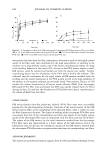
CHANGES IN HAIR DURING PERMANENT WAVING 213 Figure 5. (Continued) such as the perming method, the type of permanent waving lotion, and perming times. The most prominent change in the hair surface was observed in the hair sample with three treatments of DP permanent waving using permanent waving lotion B, indicating more severe damage (forming lifted-up scales) on the ragged surface of the permed hair (DP-B-3 of Figure 5). In contrast, there was little change in the hair samples with one to three treatments of CWP permanent waving using waving lotion A (CWP-A-1 of Figure 5), indicating no detectable hair damage. However, the hair samples with DP permanent waving using lotion A displayed moderate damage on the surface (DP-A-1 through DP-A-3 of Figure 5). These results suggest that the permanent waving method can induce changes in the hair surface. Another important result was that more severe damage to the hair scales was examined by the use of waving lotion B than by lotion A (CWP-B-2, CWP-B-3, DP-B-2, and
Purchased for the exclusive use of nofirst nolast (unknown)
From: SCC Media Library & Resource Center (library.scconline.org)