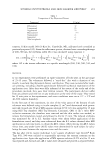
SOYBEAN PHYTOSTEROLS AND SKIN BARRIER RECOVERY 219 Table I Composition of Soy Phytosterol Extract Compound 13-Si tosterol Campesterol Stigmasterol Brassicasterol Stigmastanol Ergostanol Total tocopherols % (w/w) 47 25 22 2-3 l l l tometer, X-Rite model 968 (X-Rite Inc. Grandville, MI), calibrated and controlled as previously reported (15). From the reflectance spectra, obtained over a wavelength range of 400-700 nm, the erythema index (E.I.) was calculated using equation 1: E.I. = lOO[log - 1 -+ 1.5 ( log - 1 -+ log- 1 -)- 2(1og - 1 -+ log - 1 -)] (1) Rs6o \ Rs4o Rsso Rs10 R610 where 1/R is the inverse reflectance at a specific wavelength (560, 540, 580, 510, and 610). PROTOCOL In vivo experiments were performed on eight volunteers of both sexes in the age range of 25-35 years. The volunteers followed a "sterol-free" diet with a duration of one month, to exclude the phytosterol dietary contribution. They were recruited after medi cal screening, including a health questionnaire followed by physical examination of the application sites. After they were fully informed of the nature of the study and of the procedures involved, they gave their written consent. The participants did not suffer from any ailment and were not on any medication at the time of the study. They rested for 15 min prior to the experiments, and room conditions were set at 22° ± 2°C and 40-50% relative humidity. In the first part of the experiment, six sites of the volar aspect of the forearm of each volunteer were defined using a circular template (1 cm2) and demarcated with perma nent ink. In each site 50 µl of MN aqueous solution (0.5% w/v) was applied for 15 min using Hill Top chambers (Hill Top Research, Cincinnati, OH) (1 cm2). After MN occlusive treatment, the chambers were removed and the skin surface was washed, to remove the formulations tested, and allowed to dry for 15 min. The induced erythema was monitored for 10 h. E.I. baseline values were taken before application of the formulations tested, and they were subtracted from the E.I. values obtained after MN application at each time point, to obtain the LiE.I. values. After plotting the LiE.I. values versus time, area-under-curve (AUC) values were determined for each subject by calcu lating the areas between the response curve and the x-axis. The day after (24 h), twenty individual 1-cm2 squares of adhesive tape (Scotch® Book Tape 845, 3M) were utilized to sequentially tape-strip the stratum corneum on the application sites. Again the application of MN aqueous solution (0.5% w/v) for 15 min was repeated and, for each site, LiE.I. values were obtained and plotted as reported before.

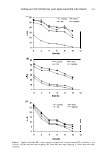
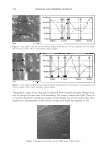
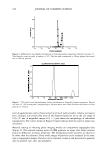
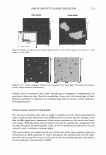
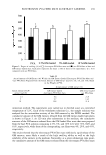
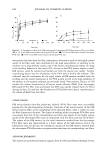
220 JOURNAL OF COSMETIC SCIENCE Afterwards, two of the six sites of the forearm were treated with 100 mg of a di-n-butyl adipate (Cetiol B) solution containing 5% (w/v) of soy phytosterols (SPS). Two other sites were treated with 100 mg of vehicle alone (white), while the last two remained untreated (control). The preparations were spread uniformly on the site by means of a solid glass rod and then they were removed after six hours. The topical application of the SPS and white formulations was repeated twice a day for the following seven days. MN application (0.5% w/v for 15 min) for each cutaneous site was effected after one, three, and seven days from stratum corneum removal and, again, the �E.I. values were obtained and plotted as reported above. STATISTICAL ANALYSIS Statistical differences in in vivo data were determined using repeated measure analysis of variance (ANOV A) followed by the Bonferroni-Dunn post hoc pair-wise com parison procedure. A probability, P, of less than 0.05 was considered significant in this study. RES UL TS AND DISCUSSION Since the biological response of an active compound is directly related to the amount penetrated into the skin, the percutaneous absorption of a drug is proportional to its pharmacological effect. Therefore, in the present study the effect of topical application of soy phytosterols on the skin barrier recovery rate was investigated in vivo, evaluating the MN percutaneous absorption following the erythema induced by the topical appli cation of the drug. It is in fact known that the intensity and the duration of vasodila tation generated by MN depends on its concentration in the dermal vasculature (16,17). Therefore it was possible to determine the rate of skin barrier recovery by monitoring the reflectance spectrophotometry of the MN-induced erythema. In fact, stratum corneum regeneration in damaged skin sites produced a decrease in MN percutaneous absorption and consequently a lower-intensity cutaneous erythema. A preliminary study was conducted to evaluate the effect of the topical application of soy phytosterols against MN-induced erythema on intact skin. The results demonstrated that these substances were inefficacious to inhibit the erythema when applied on intact skin (data not shown). In the first part of our research the skin erythemal response to the topical application of MN solution was determined in order to obtain the baseline values corresponding to skin barrier integrity. In Figure 1 are reported the typical time courses of MN-induced erythema on skin sites pretreated with the SPS and white formulations one (A), three (B) and seven (C) days after tape stripping. The experimental control was represented by skin sites to which was applied only MN solution. From the �E.I. values calculated at each site it was possible to monitor the extent of MN-induced skin erythema and the ability of the SPS formulation to modify this process after its preventive application onto damaged skin sites. This result give us indirectly some information about the efficacy of the substances contained in the SPS formulation to increase the recovery rate of skin barrier properties.
Purchased for the exclusive use of nofirst nolast (unknown)
From: SCC Media Library & Resource Center (library.scconline.org)