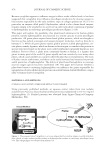
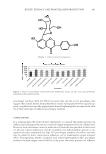
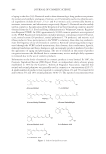
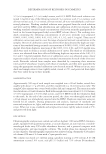
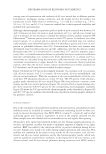
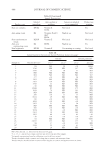
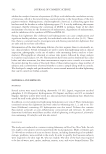
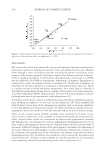
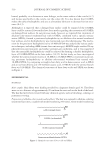
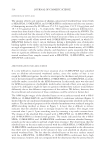
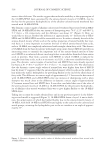
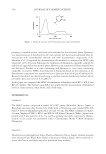
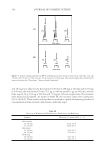
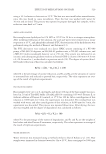
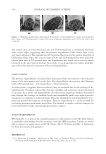
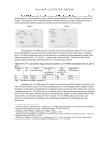
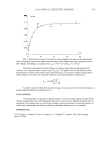
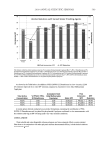
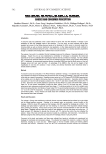
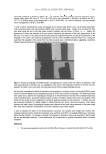
JOURNAL OF COSMETIC SCIENCE 486 of aging in the skin (5,6). Retinoids used in these dermatologic drug products are primar- ily isomers and synthetic analogues of retinoic acid. Commonly used active pharmaceuti- cal ingredients include all-trans-, 13-cis- and 9-cis-retinoic acid, commercially known as tretinoin, isotretinoin, and alitretinoin, respectively (Figure 1). Retinoids are also widely used in cosmetics. An indication of the frequency of use for retinoids in cosmetics may be obtained from the U.S. Food and Drug Administration’s Voluntary Cosmetic Registra- tion Program (VCRP). In 2008, approximately 30,000 cosmetic products were registered in the VCRP. Registered formulations included products containing retinol (160 prod- ucts), retinyl acetate (28 products), retinyl palmitate (1778 products), and retinoic acid (three products). Since participation in the VCRP is voluntary, these data may underesti- mate the frequency of use of retinoids in cosmetics. Retinoid-containing products regis- tered through the VCRP include moisturizers, skin cleaners, skin conditioners, lipstick, makeup foundations and bases, shampoos, and, increasingly, products marketed to reduce the appearance of aging and photoaging. The use of retinoids in this array of product categories increases the likelihood that a consumer may receive multiple daily exposures to retinoids due to the use of cosmetic products. Information on the levels of retinoids in cosmetic products is very limited. In 1987, the Cosmetic Ingredient Review (CIR) Expert Panel, an independent safety advisory group established in 1976 by the Cosmetic, Toiletry & Fragrance Association, reported that retinol and retinyl palmitate are generally used in cosmetics at concentrations ≤1% (7). A small number of products were reported to contain between 1% and 5% retinol (w/w) and between 5% and 10% retinyl palmitate (w/w) (7). The reported concentrations were Figure 1. Selected retinoid structures.

DETERMINATION OF RETINOIDS IN COSMETICS 487 not obtained from direct chemical analysis but from formulators of cosmetics who re- ported the number of their products falling within several ranges of retinoid concentra- tion. In 2005, the CIR Expert Panel re-examined the use of retinoids in cosmetics and found that the concentrations of retinol and retinyl palmitate used to formulate cosmetics had not substantially changed (8). Although there are currently uncertainties in the information on the frequency and level of use, it is clear that the use of retinoids in cosmetics is widespread. After reviewing ani- mal and clinical data available in 1987 and 2005, the CIR Expert Panel concluded that retinyl palmitate and retinol were safe as cosmetic ingredients in the then-current prac- tices of use and concentration. However, questions have persisted concerning the safety of exposure to retinoids in cosmetic products. Because topically applied retinoids such as retinol and retinyl palmitate readily penetrate the skin, systemic increases in retinoid levels could result from exposure to retinoid-containing cosmetics (9). Clinical studies have shown that no signifi cant increase in serum levels of retinol is observed following multiple topical applications of retinol or retinyl palmitate (10,11). However, since serum levels of retinol are in tight homeostatic control under most physiological conditions, serum concentrations of retinol may be insensitive indicators of vitamin A status under exposure conditions leading to vitamin A toxicity (12). Therefore, additional information is needed about the effects of topically applied retinol and retinyl palmitate on retinoid levels in tissues, such as tissues in the developing fetus, which are sensitive targets for retinoid toxicity (9). In addition, animal studies have shown that topically applied reti- noic acid can be photocarcinogenic (13). While these results are controversial and are found to vary with experimental conditions (13), concerns about the effects of topically applied retinoids such as retinyl palmitate on photocarcinogenesis have been raised and are being addressed by a study funded by the National Toxicology Program (14). Chemical identifi cation and quantitation of retinoids in cosmetics are needed to address the uncertainties in currently available information on the levels of retinoids in cosmetics and to provide data on exposure levels for use in risk assessments. Several reports of analysis of cosmetic products for retinoids have appeared. Scalia et al. have reported the use of supercritical fl uid extraction and isocratic, reversed-phase high-performance liquid chromatography (HPLC) for analysis of tocopheryl acetate and retinyl palmitate in cos- metic products (15). Using this method, they successfully analyzed one day cream con- taining 0.1% retinyl palmitate. Ceugniet et al. have described the use of an isocratic, reversed-phase HPLC method suitable for analysis of cosmetic skin creams (16). These investigators were able to chromatographically resolve and identify, through use of chro- matographic standards, retinaldehyde and its isomers, all-trans-retinol, 5,8-peroxyretinal, and 5,6-epoxyretinal. The method was used to analyze a commercial cosmetic formula- tion containing 0.05% retinalaldehyde. Similarly, an isocratic, reversed-phase HPLC method, optimized for separation of retinol, retinyl acetate, and retinyl palmitate, has been used for analysis of a body lotion containing 0.075% retinyl palmitate (17). The fat-soluble vitamins A, D, E, and K were also chromatographically separated using this method. Electrodeposition of retinal, retinol, and isomers of retinoic acid has also been investigated as an approach for determining the levels of retinoids in cosmetics (18). Fail- loux et al. have reported the use of Raman spectroscopy for the analysis of vitamin A degradation products in cosmetic product type matrices (19). In this work, specifi c condi- tions under which retinol degrades were examined. Retinol decomposition products were then identifi ed and quantifi ed by Raman spectroscopy. Flores-Perez et al. report the use of
Purchased for the exclusive use of nofirst nolast (unknown)
From: SCC Media Library & Resource Center (library.scconline.org)