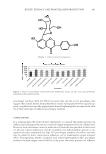
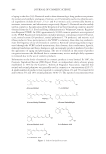
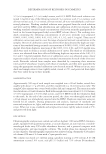
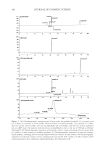
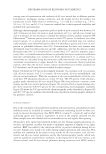
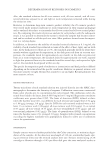
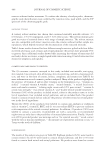
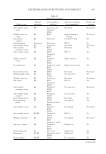
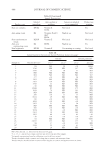
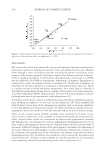
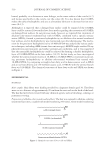
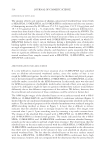
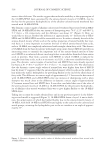
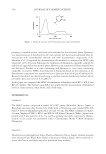
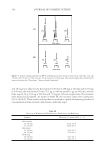
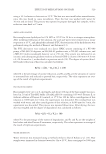
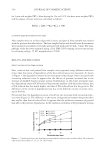
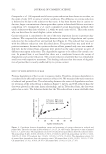
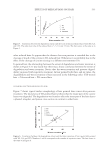
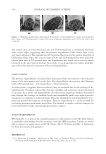
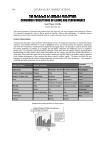
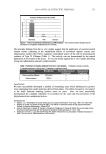
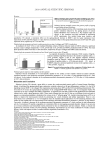
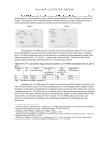
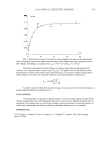
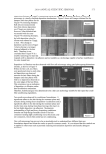
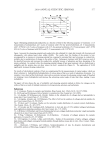
JOURNAL OF COSMETIC SCIENCE 510 bound, probably via a thioester or ester linkage, to the outer surface of the cuticle (4–7) and locates specifi cally in the cuticle, not the cortex (6). It is also known that 18-MEA makes the surface hydrophobic and acts as a boundary lubricant to decrease friction resis- tance (8–13). Although it is expected that a damaged hair surface could be repaired if the 18-MEA layer could be restored, few studies have been made regarding the restoration of 18-MEA on damaged hair surfaces. In our previous study, however, we reported that treatment of alkaline-color-treated weathered hair with 18-MEA, combined with a specifi c tertiary amine (SPDA), formed a persistent hydrophobicity on alkaline-color-treated weathered hair surfaces, and its hydrophobicity was maintained even after shampooing. The mecha- nism for the persistent hydrophobicity by 18-MEA/SPDA was analyzed by various analy- sis techniques, including AFM (atomic force microscopy), ARXPS (angle-resolved X-ray photoelectron spectroscopy), and surface pressure-area isotherms, and it was suggested that the sustainable hydrophobicity could be achieved by forming a durable hydrophobic layer of 18-MEA/SPDA on the hair surface (14,15). In this study, we have investigated whether the anteiso-branch moiety of 18-MEA in 18-MEA/SPDA is essential for provid- ing persistent hydrophobicity to alkaline-color-treated weathered hair treated with 18-MEA/SPDA, by comparing a straight-chain fatty acid (n-heneicosanoic acid, n-HEA) and an iso-branch fatty acid (19-methyleicosanic acid, 19-MEA) with the anteiso-branch fatty acid (18-MEA). The chemical structures of these fatty acids and SPDA are shown in Figure 1. EXPERIMENTAL MATERIALS Hair samples. Hair fi bers were kindly provided by a Japanese female aged 30. The fi bers were cut at a distance of approximately 20 cm from the root end on the back of the head. The hair had never been treated with any chemical agents, such as bleaching, coloring, or permanent waving. Preparation of alkaline-color-treated weathered hair. The hair was exposed to alkaline- coloring treatment four times, coupled with model weathering 360 times, where model weathering Figure 1. Chemical structures of fatty acids and SPDA.

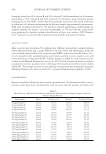
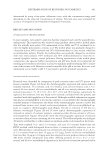
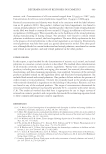
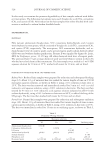
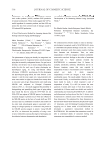
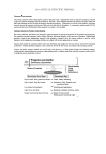
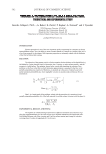
EFFECT OF ANTEISO-BRANCH MOIETY OF 18-MEA 511 (90 times) was done between every interval of alkaline coloring. This resulted in a process of alkaline coloring combined with daily weathering, that simulated a one-year period, assuming the hair is alkaline colored every three months. The model weathering treat- ment consists of a series of daily hair care procedures: shampooing, conditioning, drying with a hot dryer, and brushing. Hair tresses (5 g) were treated with an alkaline-colored lotion (3.5 wt% hydrogen peroxide, 0.76 wt% ammonia, 5.6 wt% ammonium bicarbon- ate, 2.0 wt% cethyl trimethylammonium chloride, 0.05 wt% EDTA/2Na, and water) for 20 minutes at room temperature at a liquor:fi ber ratio of 1:1. The tresses were then rinsed for one minute under running water. One-half milliliter of a plain shampoo (15 wt% of sodium polyoxyethylene lauryl ether sulfate (2.5 E.O.) with 2 wt% N,N-bis(2-hydroxyethyl)- dodecanamide solution adjusted to pH7 with phosphoric acid) was applied to the wet hair tresses, which were massaged by hand for 30 seconds. The hair tresses were then rinsed for 30 seconds under running water. One-half milliliter of a plain conditioner (2 wt% SPDA, 0.5 wt% benzyl alcohol, 3.0 wt% stearyl alcohol, 0.6 wt% lactic acid, and water) was applied to the wet hair tresses and distributed manually for 30 seconds, then left on for one minute. The hair tresses were rinsed for 30 seconds under running water. The hair tresses were then towel dried, dried under a hot dryer for three minutes, and brushed 20 times. Mica in conditioner treatment. A fresh mica sheet was used as a model for the hydrophilic surface of alkaline-color-treated weathered hair. Mica sheets of approximately 10 × 10 × 0.1-mm were cleaved on both sides immediately prior to use. They were then immersed in a conditioner solution for one minute at 40°C. The mica sheets were then rinsed under running distilled water for 30 seconds and naturally dried. Chemicals. The investigators obtained 18-methyleicosanic acid (18-MEA), 19-methylei- cosanic acid (19-MEA), and stearoxypropyldimethylamine (SPDA) by chemical synthesis (16,17). Other chemicals were commercially available. METHODS Measurement of dynamic contact angles of hair. The wetting forces of hair were measured by the Wilhelmy method, using a K100MK2 tensiometer (Kruss). Single hair fi bers were scanned over 3 mm at a velocity of 2 mm/min for the advancing mode. Dynamic contact angles were calculated from where F is the wetting force, d is the diameter of the hair, γ is the surface tension of water, and θ is the contact angle of the fi ber surface. The hair fi ber diameter was measured on the transverse section of each fi ber with a rotating fi ber diameter measurement system equipped with a laser (Kato Tech Co.) at 20°C and relative humidity (RH) of 65%. The wetting force measurements were also performed at 20°C, 65% RH. Quantitative analysis of fatty acids. The amount of fatty acids absorbed to the hair fi ber was measured using liquid chromatography/mass spectrometry (LC-MS, Agilent Technolo- gies, Palo Alto, CA). Hair fi bers were immersed in chloroform/methanol (1:1 by volume) for one hour at room temperature. The extracts were dried using a nitrogen stream. The residues were then dissolved in chloroform/methanol (1:9 by volume). In the system, an F = d p g cosq
Purchased for the exclusive use of nofirst nolast (unknown)
From: SCC Media Library & Resource Center (library.scconline.org)