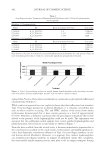
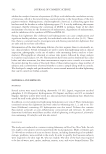
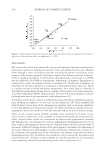
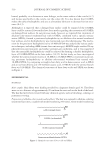
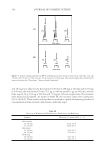
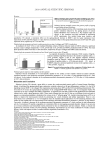
JOURNAL OF COSMETIC SCIENCE 512 1100 binary pump was connected to two mobile phases [M1, methanol/water (8:2 by volume) containing 100 mM ammonium acetate and 50 mM acetic acid and M2, meth- anol containing 100 mM ammonium acetate and 50 mM acetic acid] that were eluted at a fl ow rate of 0.2 ml/minute. The mobile phases were programmed consecutively, as fol- lows: a linear gradient of M1 100–0% (M2 0–100%) between 0 and 20 minutes, an iso- cratic elution of M1 0% (M2 100%) for 10 minutes, and an isocratic elution of M1 100% (M2 0%) from 30.1 to 40 minutes for column equilibrium (a total run time of 40 min- utes). The injection volume was 5 μl. The column (L-column ODS 2.1-mm inner diam- eter × 150 mm, Chemicals Evaluation and Research Institute, Tokyo, Japan) temperature was maintained at 40°C. ESI measurements in the mass spectrometer were performed with the following settings: polarity, negative heater temperature of nitrogen gas, 350°C fl ow of heated dry nitrogen gas, 11.0l/minute nebulizer gas pressure, 30 psi capillary voltage, −4000V fragmenter voltage, 200V. The selected ion monitoring (SIM) measure- ment in negative ion ESI was performed using unit mass resolution mode. To detect deprotonated ions for 18-MEA, 19-MEA, or n-HEA, m/z = 325.2 was monitored. Measurement of surface properties of mica by atomic force microscopy (AFM). AFM images of the adsorbed layer on the mica surfaces were obtained using a Nanoscope IIIa multi-mode AFM (Veeco Instruments, Santa Barbara, CA) with an E-scanner. Tapping mode imaging was used to obtain the topographic images of the adsorbed membrane layers. To ensure that imaging the membrane caused no damage, the tapping force was set at the lowest possible level. The nominal spring constants of the cantilevers are reported by the manu- facturer to be 20–100 N/m. All images presented in this work were obtained reproducibly over at least three spots on the sample surfaces. The images were acquired with a scan rate of either 0.5 or 1.0 Hz and were fl attened with a fi rst-order polynomial prior to analysis. The mechanical properties of the adsorbed membrane were analyzed by the AFM scratch- ing method (18–21). Scratching of the adsorbed membrane was performed in contact mode at a constant force, and a micro-fabricated tip made of silicon nitride (Si-N) and a cantilever, having a spring constant of 0.38 N/m, were used. First, an image (typically, 5 μm × 5 μm) of the adsorbed membrane was acquired then, a smaller area (typically 1 μm × 1 μm) was scanned while loading the hard tip onto the surface. Following this, the scanning was repeated over the larger area. This method is hereafter called “scratching.” Thus, if the absorbed layer was strongly bound to the surface, it was harder to remove. Measurements of the thicknesses of the adsorbed layers on the mica surfaces were ob- tained using a NanoScope V multi-mode AFM, equipped with an environment control cell, and the substrate temperature was controlled using a heating stage, which has been modifi ed to be programmable. First, the membrane thickness was measured at room temperature then, the temperature of the sample stage decreased at a rate of 1°C/minute to a temperature (25°C, 15°C, 5°C, 0°C, −5°C, and −10°C) where it was maintained for at least an hour. RESULTS AND DISCUSSION DYNAMIC CONTACT ANGLE MEASUREMENTS The contact angles of normal hair and alkaline-color-treated weathered hair are shown in Figure 2. The contact angle of normal hair was around 91.4° ± 4.6°, which means

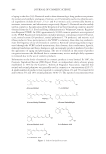
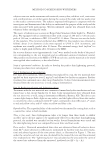
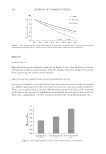
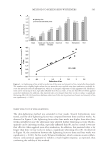
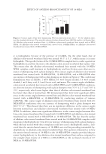
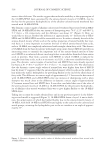
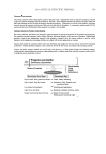
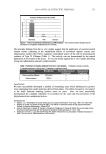
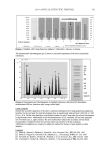
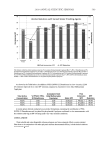
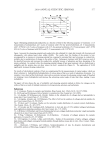
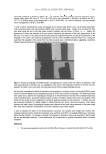
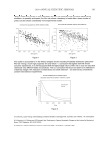
EFFECT OF ANTEISO-BRANCH MOIETY OF 18-MEA 513 it is hydrophobic because of the presence of 18-MEA. On the other hand, that of alkaline-color-treated weathered hair was around 66.3° ± 3.1°, which means it is more hydrophilic. The specifi c feature of the 18-MEA/SPDA complex was to confer a persistent hydrophobicity and low friction to the alkaline-color-treated weathered hair surface (14). This means that the alkaline-color-treated weathered hair treated with the 18-MEA/ SPDA complex could maintain its hydrophobicity and low friction even after one in- stance of shampooing with a plain shampoo. The contact angles of alkaline-color-treated weathered hair treated with 18-MEA/SPDA, 19-MEA/SPDA, and n-HEA/SPDA after one instance of shampooing with a plain shampoo are shown in Figure 2. The conditioner formulations were as follows: 2 wt% SPDA 0.5 wt% benzyl alcohol 3.0 wt% stearyl alcohol 1 wt% fatty acid 0.3 wt% lactic acid and water. The contact angles of alkaline- color-treated weathered hair treated with n-HEA/SPDA and 19-MEA/SPDA condition- ers after one instance of shampooing with a plain shampoo were 76.4° ± 2.5° and 79.6° ± 2.6°, respectively, which were higher than that of alkaline-color-treated weathered hair but lower than that of normal hair. We demonstrated that there were signifi cant differ- ences in the contact angles between normal hair and alkaline-color-treated weathered hair treated with n-HEA/SPDA or 19-MEA/SPDA by conducting analysis of variance (ANOVA). The contact angle of alkaline-color-treated weathered hair treated with 18- MEA/SPDA conditioner after one instance of shampooing with a plain shampoo was 88.0° ± 3.1°. This showed that there was no signifi cant difference in the contact angles between normal hair and alkaline-color-treated weathered hair treated with 18-MEA/ SPDA. In addition, there were signifi cant differences in the contact angles between alka- line-color-treated weathered hair treated with 18-MEA/SPDA and alkaline-color-treated weathered hair treated with n-HEA/SPDA or 19-MEA/SPDA. The fact that the surface of alkaline-color-treated weathered hair treated with the 18-MEA/SPDA complex could maintain its hydrophobicity even after one instance of shampooing with a plain shampoo, while the hair treated with other complexes could not create a hydrophobic surface, indi- cated that the anteiso-branch moiety of 18-MEA was vital for providing sustainable hy- drophobicity to alkaline-color-treated weathered hair. The question remained as to how the anteiso-branch moiety of 18-MEA in the 18-MEA/SPDA complex provided the per- sistent hydrophobicity to the alkaline-color-treated weathered hair surface compared to the straight-chain moiety of n-HEA in n-HEA/SPDA or the iso-branch moiety of 19- MEA in 19-MEA/SPDA. Figure 2. Contact angle of hair after shampooing. The bars represent means for n = 10 the whiskers repre- sent the standard deviations. The asterisks indicate p-values obtained from ANOVA analysis. (a) Normal hair. (b) Alkaline-color-treated weathered hair. (c) Alkaline-color-treated weathered hair treated with n-HEA/ SPDA. (d) Alkaline-color-treated weathered hair treated with 19-MEA/SPDA. (e) Alkaline-color-treated weathered hair treated with 18-MEA/SPDA.
Purchased for the exclusive use of nofirst nolast (unknown)
From: SCC Media Library & Resource Center (library.scconline.org)