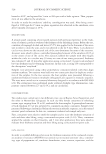
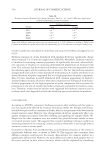
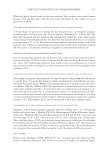
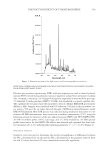
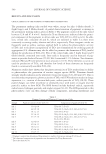
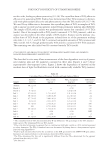
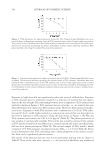
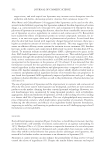
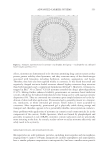
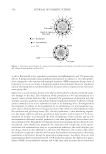
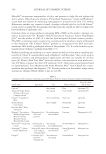
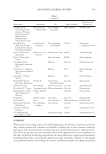
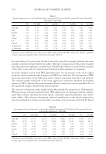
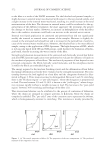
JOURNAL OF COSMETIC SCIENCE 542 Exposure to light alone did not signifi cantly reduce the survival of fi broblasts. Exposure to TiO2 (anatase) prior to irradiation resulted in a reduction of survival that was depen- dent on the dose of light. The relationship between level of exposure to TiO2 (anatase) and survival is shown in Figure 3. TiO2 (anatase) was not cytotoxic, i.e., no toxicity was seen when fi broblasts were exposed to TiO2 (anatase) alone. However, TiO2 (anatase) was pho- tocytotoxic. Exposure to both TiO2 (anatase) and a combination of 10 J/cm2 UVA radia- tion and 45 J/cm2 visible light resulted in a reduction in survival that was dependent on the level of exposure to TiO2 (anatase). Using the data shown in Figure 3, the PD50 for TiO2 (anatase) was found to be 0.82 ± 0.14 μg/cm2 (Table II). The photocytotoxicity of two samples of commercially available TiO2 (rutile) was similarly examined. One sample of TiO2 (rutile), found by X-ray diffraction to contain entirely the rutile crystalline form, did not elicit photocytotoxicity (Table II). The second sample of TiO2 (rutile), which contained 4.7% TiO2 (anatase), was photocytotoxic (PD50 = 1.2 ± 0.18 Table II). These results demonstrate that TiO2 containing only a small proportion of the anatase crystal- line form can be signifi cantly photocytotoxic. The results of the photocytotoxicity tests for ten permanent makeup inks are shown in Table II. None of the inks were cytotoxic, i.e., the survival of fi broblasts was unaffected Figure 2. UVA dependence for photocytotoxicity elicited by TiO2. Human dermal fi broblasts were incu- bated 18 hours with medium containing 2 μg/cm2 TiO2 (anatase) (open circles). Control samples received no TiO2 (closed circles). Fibroblasts were then irradiated with a combination of UVA radiation and visible light. Survival was assessed by determining the ability of fi broblasts to form colonies following irradiation. Data points represent the average ± standard deviation of four replicates. Figure 3. Concentration dependence for photocytotoxicity elicited by TiO2. Human dermal fi broblasts were incubated 18 hours with medium containing the indicated levels of TiO2 (anatase). Fibroblasts were then irradiated with a combination of 10 J/cm2 UVA radiation and 45 J/cm2 visible light (open circles). Control groups were treated with only TiO2 (anatase) (closed circles). Survival was assessed by determining the abil- ity of fi broblasts to form colonies following irradiation. Data points represent the average ± standard devia- tion of four replicates.

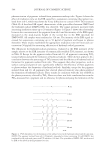
PHOTOCYTOTOXICITY OF TITANIUM DIOXIDE 543 by treatment with the inks alone (data not shown). However, eight inks were found to be photocytotoxic. Six of the photocytotoxic inks (inks 1, 2, 3, 6, 7, and 10) contained pre- dominately TiO2 (anatase). Ink 5 contained comparable amounts of TiO2 (anatase) and TiO2 (rutile). These results indicate that the photocytotoxicity of the inks is attributable to TiO2 (anatase). Ink 4, which contained only 0.6 % TiO2 (anatase), was also determined to be phototoxic. However, ink 4 contained additional pigments as evident from its color (fl esh-colored). These additional, unidentifi ed pigments may have contributed to the photocytotoxicity elicited by ink 4. The remaining inks, which contained only TiO2 (rutile) (inks 8 and 9), were not photocytotoxic. Inks used for permanent makeup are complex mixtures, generally containing mixtures of pigments dispersed in a multicomponent diluent (1). While it is plausible that the pig- ments contained in inks elicited the photocytotoxicity we observed, it is possible that components in the diluent may have enhanced or moderated the photocytotoxic response. To investigate this possibility, pigments were isolated from the inks and tested indepen- dently using the described in vitro method for assessing cytotoxicity and photocytotoxic- ity. The results are presented in Table II. No cytotoxicity was noted following treatment with pigments alone (data not shown). However, every pigment isolated from a photocy- totoxic ink was also photocytotoxic. In addition, pigments isolated from inks that were not photocytotoxic were also not photocytotoxic. These results indicate that the observed photocytotoxicity is attributable primarily to the pigments contained in the inks. For inks 1, 2, and 4, the PD50 determined for the ink was signifi cantly larger than the PD50 determined for the pigments isolated from the inks (Table II). This result suggests that these inks contain components that can moderate the photocytotoxicity of the pigments. We are currently developing methods to fractionate permanent makeup inks to deter- mine how interactions between components of an ink affect the ink’s photocytotoxicity. In addition to crystalline form, particle size and surface coating can moderate the photo- catalytic activity of TiO2. The reactions photocatalyzed by TiO2, and resulting in the formation of ROS, occur at the particle’s surface. Because the surface-area-to-mass ratio decreases as particle size increases, TiO2 composed of large particles has diminished pho- tocatalytic catalytic activity due to the relatively lower surface area. In addition, applica- tion of a surface coating is a common strategy for moderating the photocatalytic activity of TiO2 (24). Frequently used surface coatings include inorganic oxides (e.g., Al2O3 and SiO2), dimethicone, and stearic acid (40,41). Analysis by X-ray fl uorescence suggests that some of the inks (inks 2, 4, 8, 9, and 10) are formulated using TiO2 coated with Al2O3 or a combination of Al2O3 and SiO2 (Table I). However, several of these inks (inks 2, 4, and 10) were found to be photocytotoxic (Table II). These results are consistent with reports that coating TiO2, particularly the anatase crystalline form, with inorganic oxides pro- vides incomplete protection against photocatalysis and photocytotoxicity (36,40,42). GENERATION OF THE HYDROXYL RADICAL FOLLOWING PHOTOEXCITTION OF PIGMENTS ISOLATED FROM PERMANENT MAKEUP INKS Investigators have shown that ESR is a useful method for detecting ROS formed during photoexcitation of TiO2. The mechanisms underlying the photocatalytic activity, and particularly the photocytotoxicity, of TiO2 are not well understood. However, available studies indicate that the hydroxyl radical is the primary ROS responsible for the chemical and biochemical events initiated by photoexcited TiO2 (31,43). Therefore, we have mea- sured the formation of the hydroxyl radical to characterize the ROS generated during
Purchased for the exclusive use of nofirst nolast (unknown)
From: SCC Media Library & Resource Center (library.scconline.org)