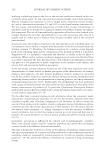
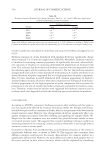
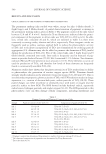
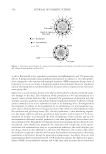
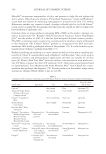
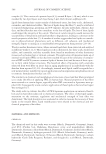
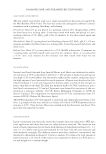
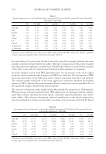
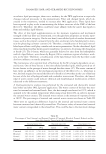
JOURNAL OF COSMETIC SCIENCE 570 the most affected. In particular, all the chemically treated hair samples showed a decrease mainly in cholesterol and cholesterol sulfate. The lipid composition of the permed sample bore the greatest resemblance to native hair. The bleached extract recorded lower amounts of free fatty acids, and the relaxed extract showed smaller amounts of ceramides. In all the samples treated with IWL liposomes there was an increase in the total of lipid analyzed, which confi rmed the absorption of IWL into the fi ber. The absorption of IWL liposomes descended in the following order: relaxed, untreated, bleached, and permed. The relaxed sample (subjected to the most aggressive treatment) absorbed the highest amount of IWL, whereas the permed sample (whose composition most resembled that of the untreated sample) absorbed the lowest amount. The selective absorption of the lipids by hair fi bers should be pointed out. Although the FFA percentage remained unaltered after IWL application, the damaged and the undam- aged fi bers mainly absorbed the polar lipids: ceramides, glysosilceramides, and choles- terol sulfate. This selective absorption induced equilibrium in the lipid composition, which resembled that of the untreated fi ber, resulting in lipid restoration (Table II). Based Table I Lipid Composition in % of Total Hair Fibers (untreated (UT), bleached (B), permed (P), and relaxed (R)) Obtained by TLC-FID UT UT+IWL B B+IWL P P+IWL R R+IWL Chol-Est 0.39 0.35 0.34 0.35 0.31 0.37 0.31 0.56 FFA 1.02 1.18 0.71 0.79 1.03 1.05 1.06 1.08 R-OH 0.14 0.14 0.09 0.09 0.08 0.06 0.07 0.13 Chol 0.11 0.13 0.06 0.10 0.05 0.07 0.08 0.17 Ceram. 0.20 0.34 0.18 0.16 0.15 0.19 0.10 0.18 GC 0.10 0.16 0.05 0.09 0.05 0.06 0.06 0.13 Chol-S 0.21 0.31 0.07 0.16 0.05 0.10 0.09 0.17 % Analyzed 2.17 2.61 1.50 1.74 1.72 1.90 1.77 2.42 % Extracted 2.81 3.33 2.34 2.79 2.52 1.82 3.09 2.76 Cholesterol ester (Chol-Est), free fatty acids (FFA), fatty alcohol (R-OH), cholesterol (Chol), ceramides (Ceram.), glycosyl ceramides (GC), and cholesterol sulfate (Chol-S). Table II Percentages of Lipid Extracted (%) from Hair Samples (untreated (UT), bleached (B), permed (P), and relaxed (R)) Obtained by TLC-FID UT UT+IWL B B+IWL P P+IWL R R+IWL Chol-Est 17.97 13.41 22.67 20.11 18.02 19.47 17.51 23.19 FFA 47.00 45.21 47.33 45.40 59.88 55.26 59.89 44.72 R-OH 6.45 5.36 6.00 5.17 4.65 3.16 3.95 5.38 Chol 5.07 4.98 4.00 5.75 2.91 3.68 4.52 7.04 Ceram. 9.22 13.03 12.00 9.20 8.72 10.00 5.65 7.45 GC 4.61 6.13 3.33 5.17 2.91 3.16 3.39 5.38 Chol-S 9.68 11.88 4.67 9.20 2.91 5.26 5.08 6.83 Cholesterol ester (Chol-Est), free fatty acids (FFA), fatty alcohol (R-OH), cholesterol (Chol), ceramides (Ceram.), glycosyl ceramides (GC), and cholesterol sulfate (Chol-S).

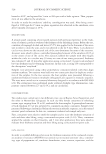
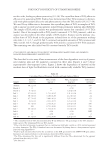
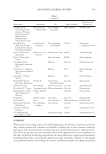
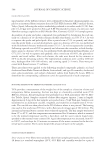
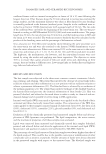
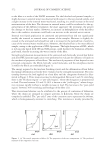
DAMAGED HAIR AND CERAMIDE-RICH LIPOSOMES 571 on relative lipid percentages, there was a tendency for the IWL application to repair the changes induced previously in the pretreatments. Polar and charged lipids, which de- creased in the treatments, tended to increase after IWL application. These lipids have been reported to play a role in maintaining the bilayer structure of the CMC of the hair fi ber (23). Therefore, the fi bers could have more affi nity with the native hair lipids to form and stabilize lipid bilayers. The effect of this lipid supplementation on the moisture regulation and mechanical strength of the hair fi ber was determined, even though these properties are mostly repre- sentative of protein integrity. On the one hand, intercellular lipids of another keratinized tissue, such as the stratum corneum from the skin, are known to be fundamental to main- tain the physiological water content (24). Therefore, a modifi cation of the lipid intercel- lular layers of hair could play a similar role in water permeation. On the other hand, lipid extraction from wool has shown poorer transference on stresses, decreasing the elongation at break (25). The b-layers, which are generally believed to arise from the hydrophobic ends of a lipid bilayer, were shown by Rogers (26) to constitute regions of relative weak- ness in the fi ber. Therefore, a modifi cation of the lipid bilayer from the hair fi ber could also have infl uence on tensile properties. The maintenance of an optimal level of hydration by the SC is largely dependent on sev- eral factors. One of these factors is the intercellular lamellar lipids, which provide an ef- fective barrier to the passage of water through the skin tissue (27). The water content of hair exerts an infl uence on the mechanical properties of the fi ber (22), i.e., when hair is wet, the load required to extend the fi ber or to break it is lower than in the case of dry hair because of the loss of hydrogen bonds and coulombic interactions. Therefore, the knowl- edge of water content could indicate chemical and morphological modifi cations of fi bers subjected to the different treatments. A thermogravimetric analysis was performed for the untreated and chemically treated hair before and after IWL liposome application. The water content of the hair was mea- sured at internal and external levels. First, the hair sample was heated at 65°C, which is assumed to be the normal temperature when using a hair dryer (28), in order to measure the external water content. The internal water content is the amount of evaporated water at 180°C. The percentages of internal and external water content are shown in Table III. There were no signifi cant differences found in the internal and external water content between untreated and chemically treated hair. The lowest values of internal and external water content corresponded to the relaxed hair. This could be due to the maximum damage Table III Percentages of Total, Internal, and External Content of Untreated, Bleached, Permed, Relaxed, and the Same Hair Samples Treated with IWL Liposomes Internal water (%) External water (%) Total water (%) Initial IWL Initial IWL Initial IWL Untreated 3.62 ± 0.12 3.70 ± 0.36 10.64 ± 1.09 10.49 ± 1.80 14.26 ± 0.98 14.19 ± 2.10 Bleached 3.81 ± 0.21 4.00 ± 0.16 10.54 ± 0.90 11.59 ± 0.66 14.35 ± 1.00 15.59 ± 0.82 Permed 3.92 ± 0.16 3.86 ± 0.16 10.51 ± 0.65 10.72 ± 0.45 14.43 ± 0.74 14.58 ± 0.60 Relaxed 3.56 ± 0.21 3.57 ± 0.13 10.42 ± 0.81 10.45 ± 0.43 13.98 ± 1.00 13.91 ± 0.52
Purchased for the exclusive use of nofirst nolast (unknown)
From: SCC Media Library & Resource Center (library.scconline.org)