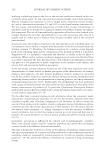
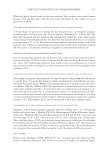
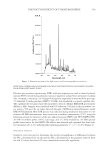
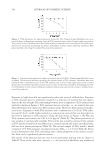
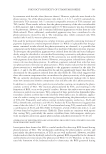
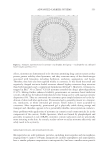
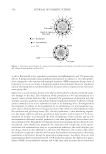
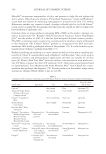
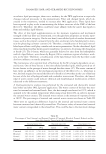
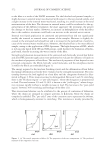
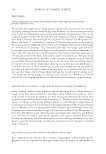
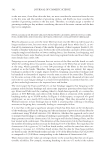
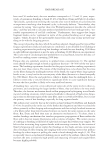
JOURNAL OF COSMETIC SCIENCE 572 to the fi ber as a result of the NaOH treatment. For the bleached and permed samples, a slight decrease in external water was observed with respect to the non-treated sample, and a slight increase in the internal water was found, resulting in a small increase in the total moisturization of the hair. The decrease in external water could be attributed to the ag- gressiveness of the different treatments: the more aggressive the treatment, the greater the damage to the hair surface. However, an increase in hydrophilicity of the hair fi ber due to the oxidative treatment could lead to an increase in the internal water content. Internal wool lipid application on untreated and pretreated hair did not signifi cantly modify the internal or external water content of the samples. Moisture is slightly de- creased in the untreated and relaxed hair and is increased in the permed hair, mainly be- cause of the external water modifi cation. However, the bleached hair is the most affected sample, owing to the application of IWL liposomes. The high absorption of IWL, which is rich in polar lipids with OH and NH groups, could facilitate the formation of hydro- gen bonds, thereby increasing the water content of the fi ber. Strength and relaxation measurements of the untreated and chemically treated hair before and after IWL liposome application were performed to evaluate the infl uence of lipids on the mechanical properties of hair fi bers. The mechanical properties of hair depend on two principal components: the fi brils, helically coiled molecules, and the amorphous matrix in which the fi brils are embedded (Figure 1). The energy required to fracture hair (breaking stress) and the deformation of hair before fracturing (deformation at break) were evaluated in the strength measurement. The rela- tionship between the load applied on a hair fi ber and the elongation obtained is illus- trated in Figure 2. Three main areas may be distinguished. Between 0 and 2% stretching there is the “Hookean region” or “pre-yield region,” where the elongation is proportional to load. The area between 2% and 25-30% is known as the “yield region,” where elonga- tion increases rapidly without a notable increase in load. The last area is the “post-yield region” between 30% stretching and breakage of the fi ber (21). This stress-strain behavior can be attributed to the process of conversion of α-keratin, where the chains are arranged in compact patterns, to β-keratin, where the chains are completely unfolded. The “pre-yield” zone of the extension curve represents the α-form, which is homogeneously resistant to stretching. This resistance is mainly provided by Figure 1. (a) The tensile properties of fi ber. (b) The properties of the two components. (c) The predicted response of the composite structure.

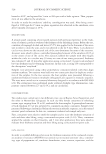
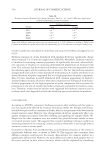
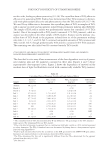
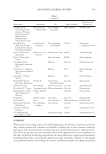
DAMAGED HAIR AND CERAMIDE-RICH LIPOSOMES 573 hydrogen bonds, which are present between turns and stabilize the α-helix. The “yield region” represents the transition from α-keratin to β-keratin, the chains unfolding with- out offering any resistance. The “post-yield region” shows the resistance of β confi gura- tion to stretching up to the disruption point. Breaking stress, deformation at break, and work necessary to break the fi ber were evaluated for all the fi bers studied in the strength measurement. The results are shown in Table IV. The highest value of the energy required to break hair (breaking stress) corresponded to the untreated sample. This value indicated a high hair reticulation proportional to the amount of crosslinks. The chemically treated hair revealed differences in the breaking stress. The more aggressive the treatment, the greater the damage to the reticular integ- rity of the hair: the relaxed treatment proved to be the most aggressive because of the facility of the hair to break, and the bleached treatment was the least aggressive. The deformation at break indicates the resistance of hair to break and is related to its internal lubricity. The high value of this deformation in the case of the bleached and permed samples with respect to the untreated one could be due to its higher water content in the previous thermogravimetric study. The water inside the fi ber can act like a lubricant, rendering the hair less rigid and facilitating the displacement of the fi brils. The high value obtained in the case of the relaxed sample was not signifi cant because of its low breaking stress value. The breaking work was calculated to combine the effect of the breaking stress and the deformation at break. Again the chemically treated fi bers had lower values than the untreated ones, the relaxed samples being the most affected. Figure 2. Schematic diagram for load-elongation curves for human hair fi bers. I. Hookean region. II. Yield region. III. Post-yield region. Table IV Values Obtained in the Strength Measurements Breaking stress (MPa) Deformation at break (%) Breaking work Initial IWL Initial IWL Initial IWL Untreated 1052.6 ± 146 1039.5 ± 241 47.9 ± 1.9 49.6 ± 2.3 50419.1 ± 8640 51559.2 ± 6043 Bleached 976.22 ± 161 965.58 ± 272 49.9 ± 7.5 55.1 ± 5.6 48713.4 ± 10297 53203.5 ± 10548 Permed 884.31 ± 234 869.52 ± 294 48.2 ± 9.8 49.7 ± 6.9 42623.7 ± 17711 43215.1 ± 11992 Relaxed 652.71 ± 170 606.1 ± 163 58.7 ± 4.0 56.4 ± 4.3 38314.1 ± 8015 34184.0 ± 16408
Purchased for the exclusive use of nofirst nolast (unknown)
From: SCC Media Library & Resource Center (library.scconline.org)