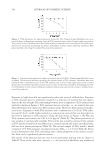
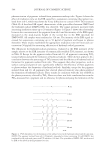
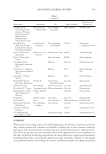
JOURNAL OF COSMETIC SCIENCE 574 After the application of IWL liposomes, the same strength measurements were performed. A notable increase in the breaking stress, deformation at break, and breaking work were observed in the case of the untreated sample. The IWL liposome application increased the deformation at break of the bleached and permed samples, although the breaking work was only slightly increased. Finally, no improvement was found in the relaxed fi ber after IWL application. Indeed, the deformation at break, breaking stress, and breaking work were diminished. The relaxation of the fi ber is attributed to the breakage of various physical and chemical crosslinks and to their reformation with the passage of time. Longer relaxation time means that hair has more bonds to break and form again, with the result that its integrity is improved. Based on time, these bonds are divided into three main groups (29): weak, intermediate, and strong bonds. Weak bonds have a short relaxation time below ten sec- onds, and they include hydrogen bonds, salt linkages, and van der Waals and electrostatic forces. Intermediate bonds have relaxation times between ten seconds and ten minutes, and they correspond to bonds between matrix and fi lament components. Finally, strong bonds have a relaxation time exceeding ten minutes and include the mainly disulfi de bonds. The fi bers were extended up to 30% of the length before the relaxation analysis. The low and intermediate relaxation times (tshort and tinterm), the relaxed stress at these times (σshort and σinterm), and the non-relaxed stress (σnon-relaxed) were measured in the relaxation anal- ysis (Table V). The percentage of σshort, σinterm, and σnon-relaxed indicate the proportion of weak, intermediate, and disulfi de bonds, respectively, in the breaking stress, which is discussed above. In the case of σshort and the tshort, a decrease in the amount of weak bonds was observed in bleached and permed samples, where a reduction in the lipidic composition was also de- tected in this study. Depletion of hair lipids made up of charged groups and groups such as OH and NH can contribute to a decrease in the amount of hydrogen bonds and elec- trostatic forces. The relaxed hair showed a signifi cant decrease in σnon-relaxed, which indi- cated damage in the disulfi de bonds after NaOH treatment. Subsequently, the percentage of weak bonds was even higher than in the untreated sample. In all the hair samples, the application of IWL involved a marked change in the σshort, indicating an increase in the weak bonds. The best results obtained in the weak bonds after applying IWL liposomes were found in the case of the untreated and bleached samples, Table V Values Obtained in the Relaxation Measurement σshort (%) tshort (s) σinterm. (%) tinterm. (s) σnon-relaxed (%) Initial IWL Initial IWL Initial IWL Initial IWL Initial IWL Untreated 15.33 19.86 5.95 6.67 11.59 16.86 80.50 95.32 73.81 63.77 Bleached 11.71 18.49 5.32 6.34 8.69 15.98 59.80 84.33 79.83 66.22 Permed 11.87 15.04 5.56 5.55 7.66 8.90 52.99 76.90 80.82 76.28 Relaxed 17.63 22.13 4.23 3.12 12.61 19.37 62.66 48.24 69.90 58.43 Short relaxed stress (σshort), short relaxation time (tshort), intermediate relaxed stress (σinterm.), intermediate relaxation time (tinterm.), and non-relaxed stress (σnon-relaxed).

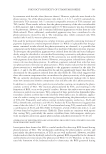
DAMAGED HAIR AND CERAMIDE-RICH LIPOSOMES 575 where an increase in the tshort was also observed. This could be related to the high lipid absorption of these two samples. As seen in the lipid analysis, the IWL liposomes trig- gered an increase mainly in the content of polar lipids (ceramides, glycosilceramides, and cholesterol sulfate). All these lipids have N-H and O-H groups, which can form hydro- gen bonds, and some of them are charged, with the result that they can interact with other charged groups. All these lipids could account for an increase in the amount of weak bonds in hair fi bers. The σinterm and the tinterm indicated that the amount of intermediate bonds decreased in the treated fi bers as well as in the case of weak bonds. An increase in intermediate relaxed stress and intermediate relaxation time was observed when IWL liposomes were applied. Again, the IWL application improved the cohesion between the matrix and fi laments, especially in the case of the untreated and bleached samples. Some variations in non-relaxed stress caused modifi cations in the percentage of disulfi de bonds of the protein structure. After the application of IWL liposomes, strong bonds normally decreased because of the increase in the percentage of weak bonds, which were generated by IWL liposomes. These new lipids (IWL) were not able to form or destroy disulfi de bonds. The strength and relaxation studies indicate a high resistance to break of the untreated, bleached, and permed samples post-treated with IWL liposomes. This was accompanied by an increase in the short and intermediate relaxed stress. This indicates an increase in hydrogen bonds and electrostatic forces and an improvement in cohesion between the matrix and the fi laments, probably because of some lipid recovery. CONCLUSIONS Lipid analysis of chemically treated samples showed a reduction in the amount of lipids, cholesterol and cholesterol sulfate being the most affected. The permed sample had a lipid composition that most resembled native hair. The bleached extract showed lower amounts of free fatty acids, and the relaxed extract had smaller amounts of ceramides. Lipid recovery of damaged human hair by the application of IWL liposomes can be cor- roborated by lipid analysis of the hair. An increase in the lipids analyzed confi rms the absorption of IWL into the fi ber. There is a selective absorption of polar lipids, ceramides, glycosilceramides, and cholesterol sulfate by the undamaged and damaged hair fi bers. The role of cholesterol sulfate in maintaining the bilayer structure could be related to moisture retention, elasticity, and the strength of the fi bers. The thermogravimetric analyses showed few differences in the water content of the hair as a result of chemical pretreatments and IWL liposome application. There was a small decrease in the external water content owing to the pretreatments, whereas an increase was observed after IWL liposome application, especially in the case of bleached hair. Lower breaking stresses were obtained in all the chemically treated hairs, which indicated lower hair reticulation. The application of IWL improved breaking stress and deforma- tion at break and led to an increase in the breaking work of untreated hair. Little im- provement was obtained in the case of the chemically treated hair. Only a slight increase in the resistance to break was observed in the bleached and permed samples. Moreover, the relaxation study showed a decrease in weak and intermediate bonds in the chemically
Purchased for the exclusive use of nofirst nolast (unknown)
From: SCC Media Library & Resource Center (library.scconline.org)